Rome rewards travellers who slow down. Five days from a single central base gives you time for the big set pieces without a forced march, and room for the quieter layers that make the city unforgettable. This itinerary keeps you close to the historic centre, mixes headline sights with hands-on moments, and leaves space for a proper lunch. Book timed tickets for the Colosseum and the Vatican well ahead, wear shoes you can walk cobblestones in, and if this is your first visit read our Rome first-time guide and getting from the airport before you go.
Itinerary at a glance
| Day | Area | Signature experience |
|---|---|---|
| 1 | Ancient Rome | Sunset over the Forum from the Palatine |
| 2 | Vatican City and Prati | Climbing the dome of St Peter’s |
| 3 | Baroque centre and the Ghetto | Walking one of Europe’s oldest Jewish quarters |
| 4 | Trastevere and the Appian Way | Lanes, catacombs and the old Roman road |
| 5 | Day trip | Tivoli’s fountains or empty Ostia Antica |
Day 1: Ancient Rome
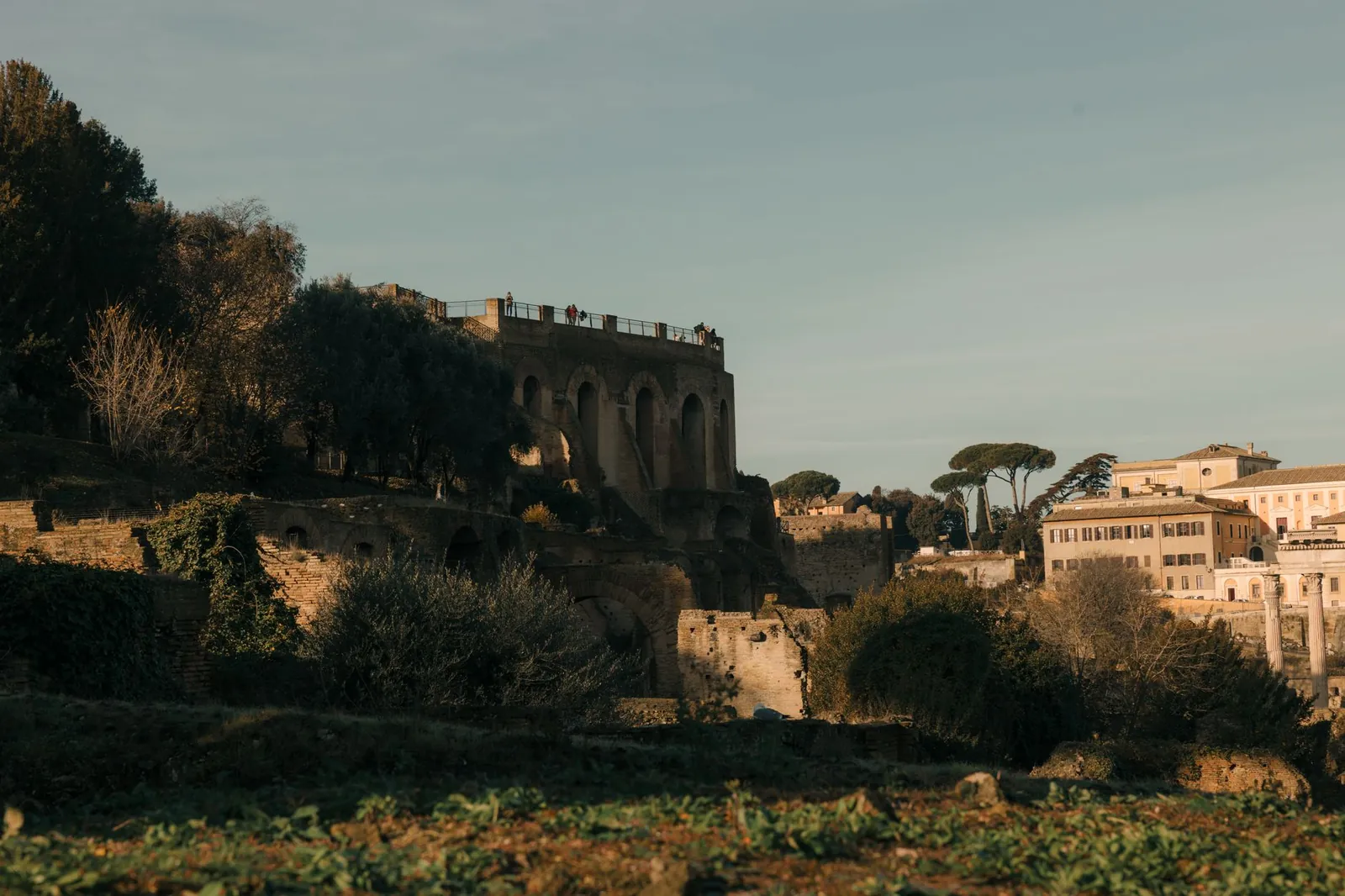
Start at the Colosseo, the amphitheatre that still sets the scale of the city, then cross to the Foro Romano and up onto the Palatino, the hill where emperors lived above the ruins of the Republic. A combined ticket covers all three, and prices and hours shift with the season, so confirm on the official site before you buy. For lunch, walk up into Monti, the oldest neighbourhood in the city, for a plate of classic Roman pasta. Note that carbonara and amatriciana are built on guanciale, which is pork, and carbonara also uses raw egg; cacio e pepe is the reliable vegetarian choice. Cool off with a gelato as you wander back down the Fori Imperiali.
Signature experience: time your Palatine visit for late afternoon and watch the light turn gold over the Forum from the hill.
Optional guided tour: a licensed archaeologist-led tour of the Forum and Palatine turns a field of stones into a living city.
Wow moment of the day: a short walk from the Colosseum, the Basilica of San Clemente lets you descend through three stacked eras in one building, a 12th-century church above a 4th-century basilica above a Roman house with a Mithraic temple, spring water still running in the dark at the bottom.
Day 2: The Vatican
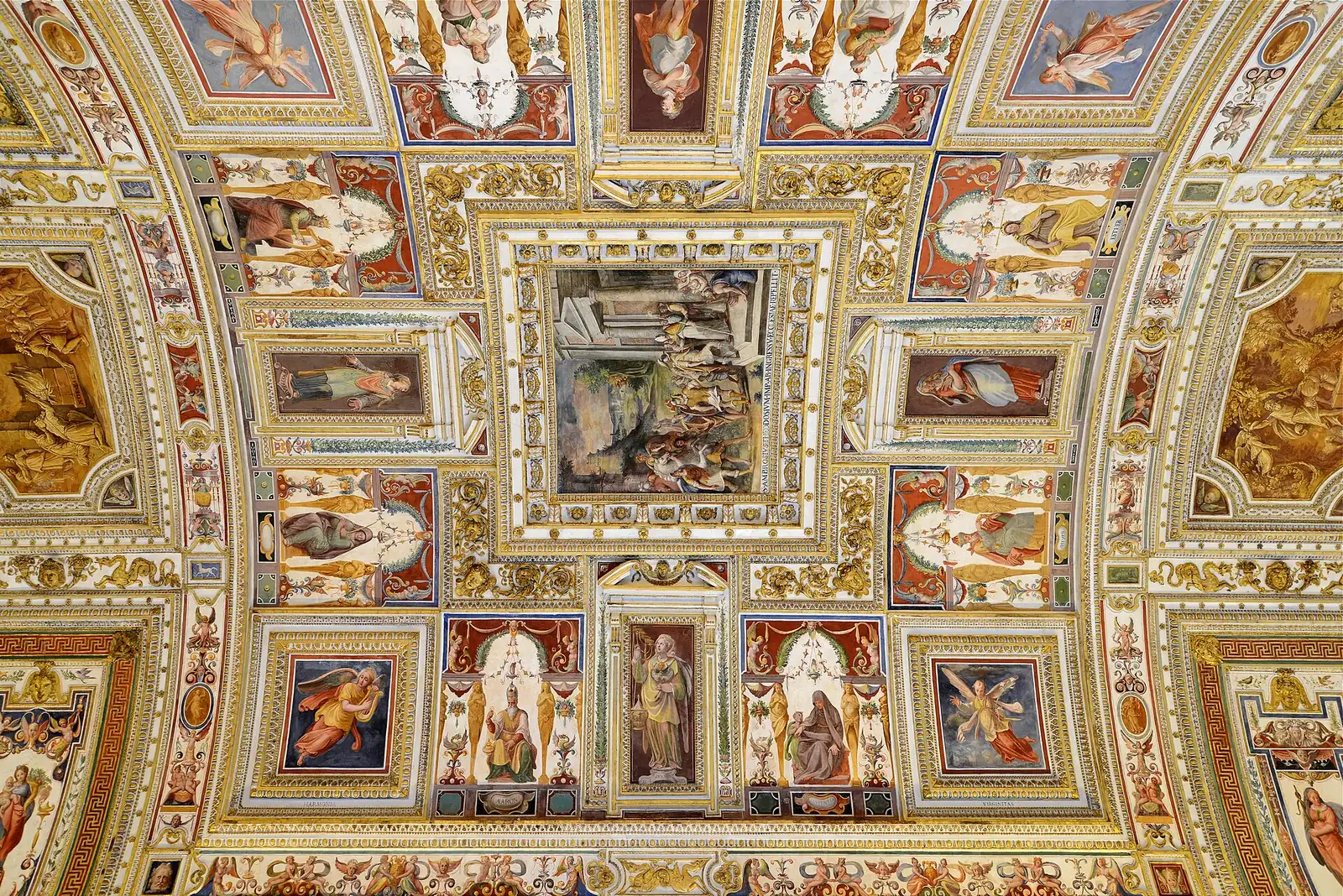
The Musei Vaticani demand a booked, timed entry, ideally an early slot, and the route ends at the Sistine Chapel, where you stand under Michelangelo’s ceiling in a room where silence is requested. From there continue to the Basilica di San Pietro, vast and hushed, home to Michelangelo’s Pietà. Dress with shoulders and knees covered for both. Cross the river into Prati afterwards for pizza al taglio, sold by weight and eaten on your feet, then an espresso taken standing at the bar like a local.
Signature experience: climb to the dome of St Peter’s for a sweeping view across the rooftops and out to the hills. The final stretch is a narrow, sloping stairwell, not for anyone uneasy with tight spaces; a lift covers the lower section.
Optional guided tour: a skip-the-line Vatican tour with a knowledgeable guide is genuinely worth it here given the crowds.
Wow moment of the day: step into St Peter’s Square early, before the queues form, and watch Bernini’s colonnade catch the first light.
Day 3: Baroque Rome and the Ghetto
Give the morning to the great set pieces of the centre. The Pantheon still carries the largest unreinforced concrete dome ever built, with its open oculus. From there stroll to the Fontana di Trevi, on to Piazza Navona with its Bernini fountains, and finish at the Scalinata di Trinità dei Monti rising above Piazza di Spagna. Detour into the Chiesa di San Luigi dei Francesi to see three Caravaggios lit for a coin.
Signature experience: walk the Jewish Ghetto, one of the oldest in Europe, taking in the Great Synagogue and its museum, then eat in the Roman Jewish tradition. Order carciofi alla giudia, whole artichokes fried until crisp, in season roughly autumn through spring; they are naturally vegan. Many kitchens here follow kosher rules, so meat and dairy are kept separate.
Optional guided tour: a walking tour of the Ghetto led by a local historian brings out centuries of layered history in a few compact streets.
Wow moment of the day: the Portico d’Ottavia, a Roman ruin fused into the fabric of the quarter, framing the synagogue behind it.
Day 4: Trastevere and the Appian Way
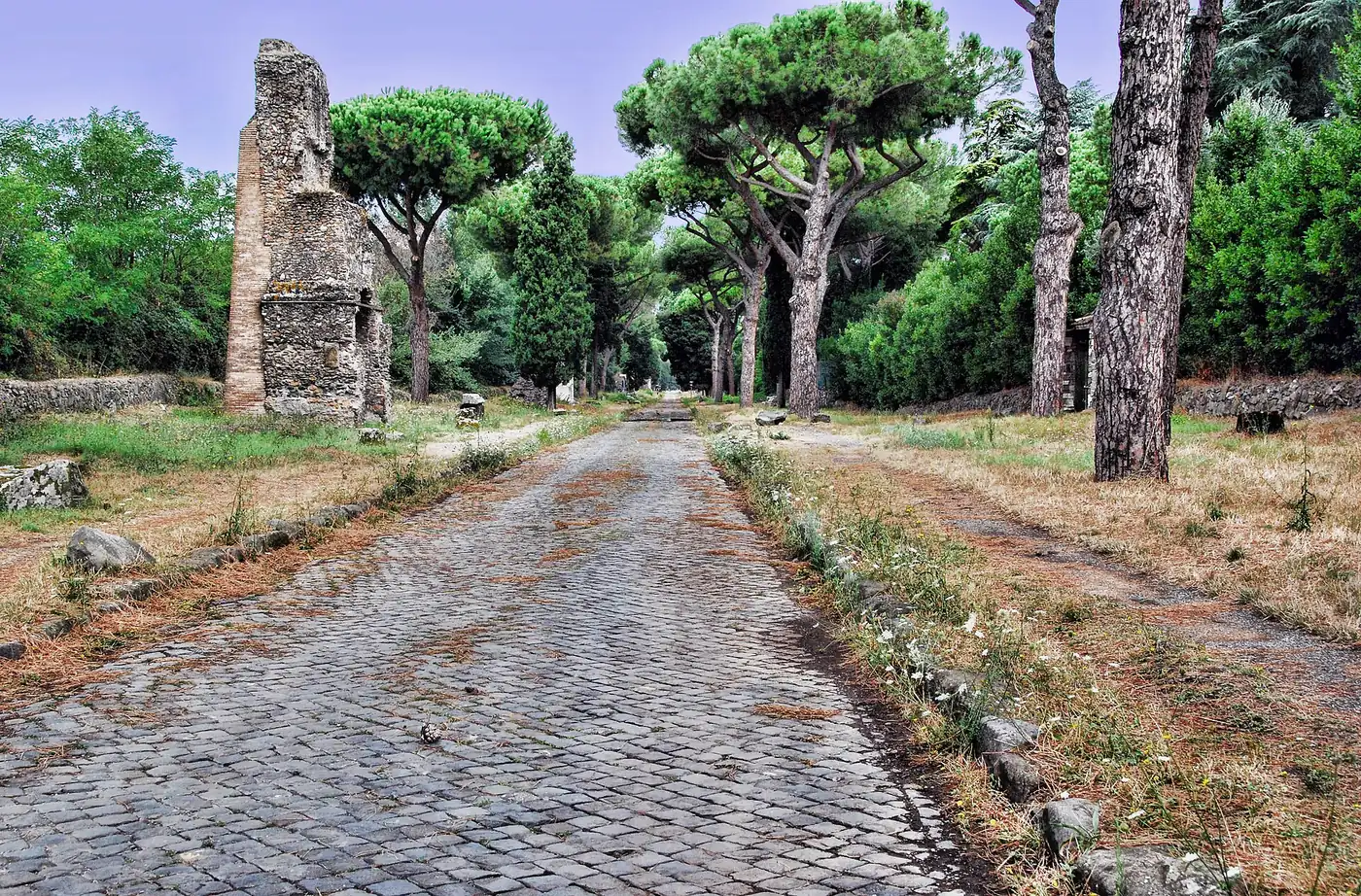
Spend the morning lost in Trastevere, a warren of ochre lanes, ivy and small workshops on the far bank of the Tiber. Climb to the Gianicolo viewpoint for a panorama over the whole centre. Lunch in a neighbourhood trattoria: try supplì, fried rice croquettes with a molten cheese centre, and a bowl of pasta. In the afternoon head out to the Appian Way, the old Roman road, and go underground into the catacombs, only ever with the site’s own guides.
Signature experience: walk a stretch of the original basalt paving of the Appian Way, quiet and green, lined with tombs and umbrella pines.
Optional guided tour: a combined catacombs and Appian Way tour handles the logistics of a sight that sits outside the walkable centre.
Wow moment of the day: the Giardino degli Aranci on the Aventine, an orange-tree garden with a still, framed view of St Peter’s dome across the river.
Day 5: Day trip
Choose your escape. Tivoli, in the hills, pairs the Renaissance water theatre of Villa d’Este with the sprawling ruins of Hadrian’s Villa. Or take the train out to the Parco Archeologico di Ostia Antica, the ruined port city of ancient Rome, remarkably intact and far emptier than Pompeii, where you can wander mosaic floors and a theatre almost alone. Both work as a relaxed half or full day; check return times and see our guide to Italian trains for the local line.
Signature experience: climb the steps of Ostia’s Roman theatre, or stand in the fountain garden at Villa d’Este as the jets play.
Optional guided tour: a half-day guided trip smooths the transport and adds context to sites with little signage.
Wow moment of the day: at Ostia, the ancient bar counter with its marble menu still in place, or at Tivoli, the Hundred Fountains running the length of a shaded terrace.
Practical tips
Stay central, near Monti, the Pantheon or Trastevere, so you can walk home to rest in the afternoon heat and return out in the evening. Rome is warm and busy in high summer, so plan indoor sights for the middle of the day and check our weather by month note. Carry water and refill at the street fountains. Book the Colosseum and Vatican the moment your dates are fixed. For dietary needs, Roman kitchens handle vegetarians well and many now offer gluten-free pasta, though it is worth asking. Still deciding how to combine cities? Our Rome or Florence comparison and the broader first-time-in-Italy guide will help you plan the wider trip.