You have cleared passport control at Fiumicino, collected your bag, and now Rome is 30 kilometers of unknown between you and your first carbonara. The good news: this is one of Europe’s easiest airport-to-city runs, with a fast train, cheap buses and an honest flat-rate taxi. The better news: once you know the handful of numbers below, nobody in the arrivals hall can overcharge you. Here is every option, for both Roman airports.
Know your airport
Rome has two. Fiumicino (FCO), officially Leonardo da Vinci, is the main international hub, 30 kilometers southwest of the center, and where almost all long-haul flights land. Ciampino (CIA) is the compact budget-airline base 15 kilometers southeast, used mainly by Ryanair and friends. The transfer picture is completely different at each, so check your booking before you plan.
Fiumicino option 1: the Leonardo Express
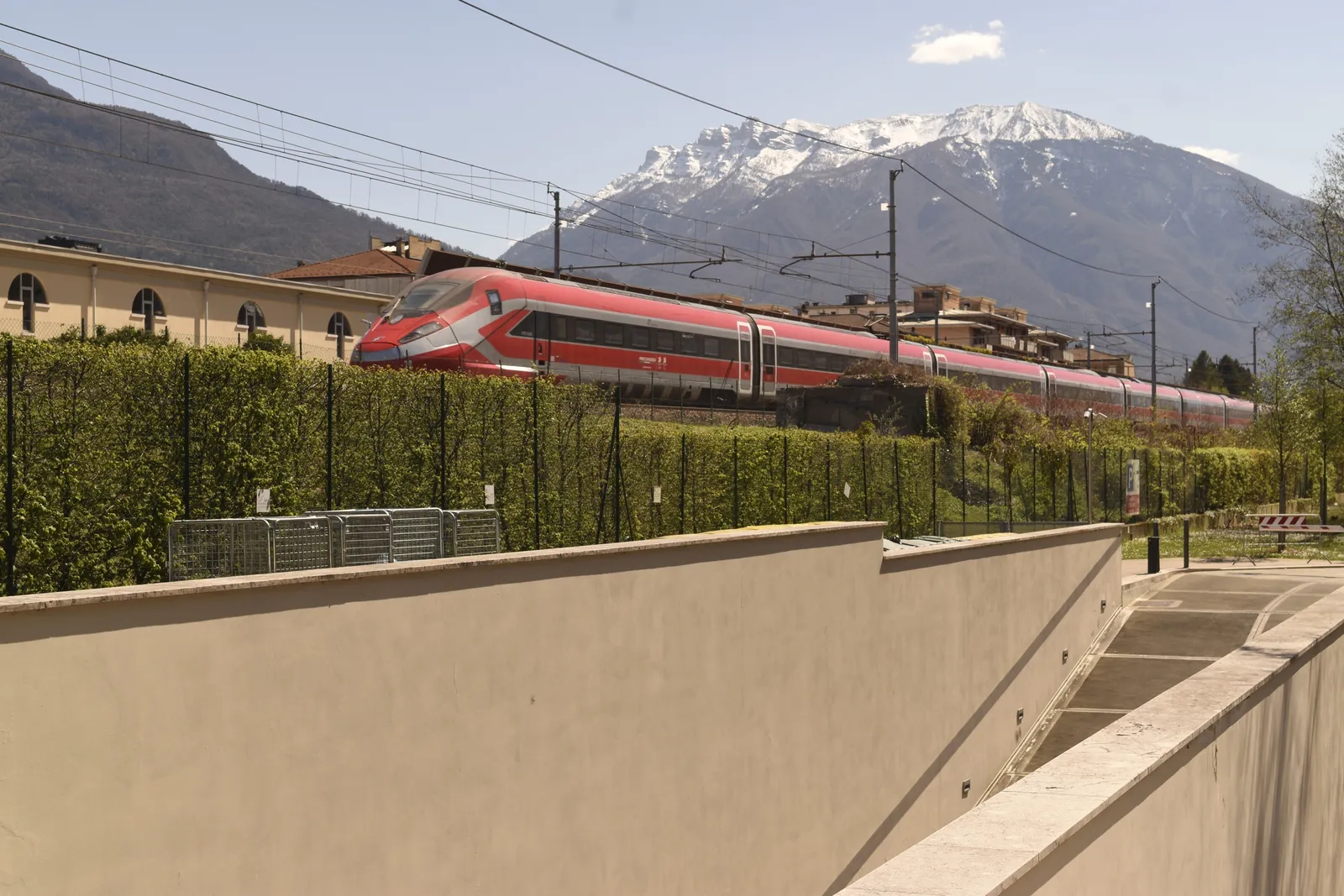
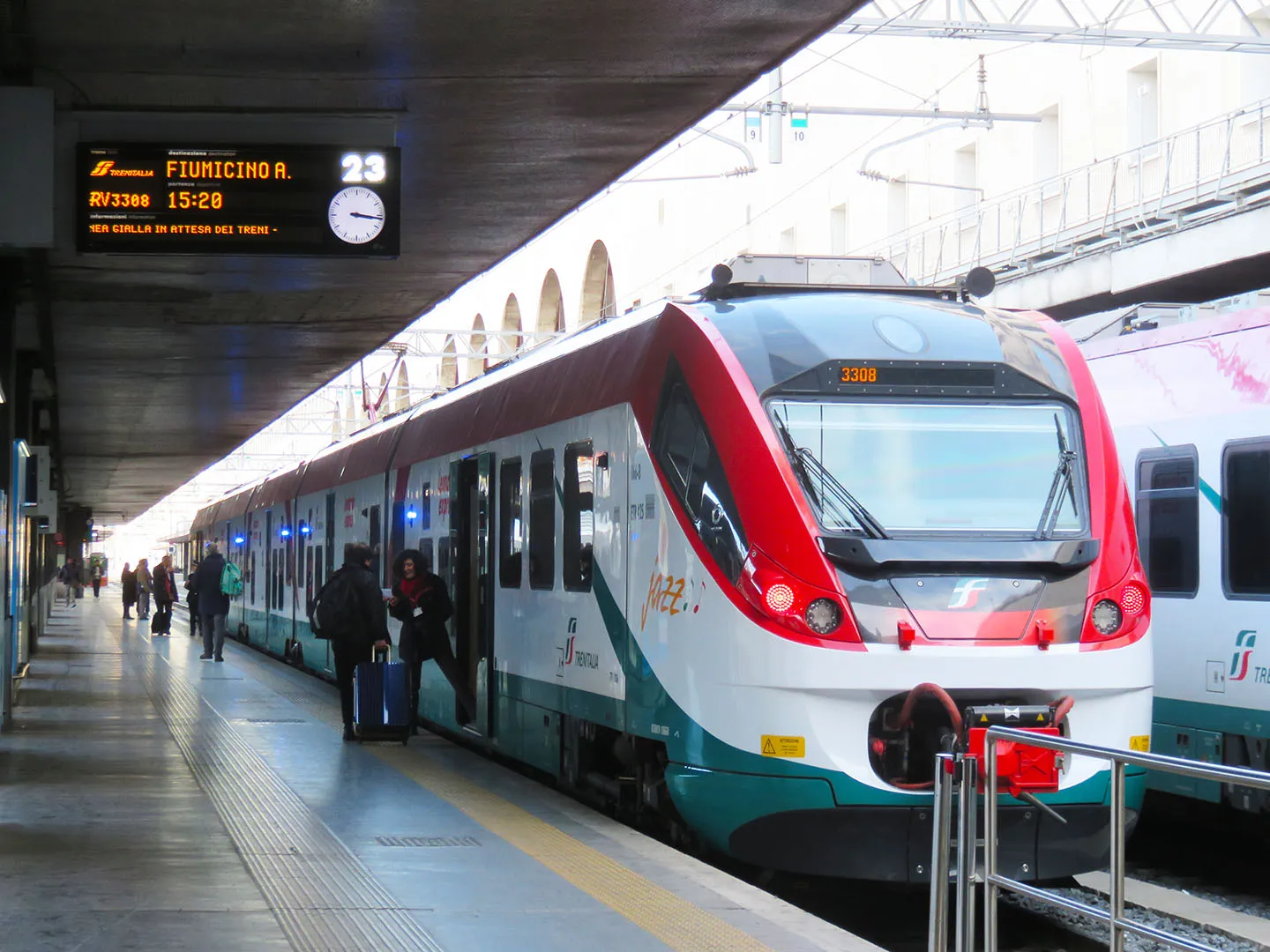
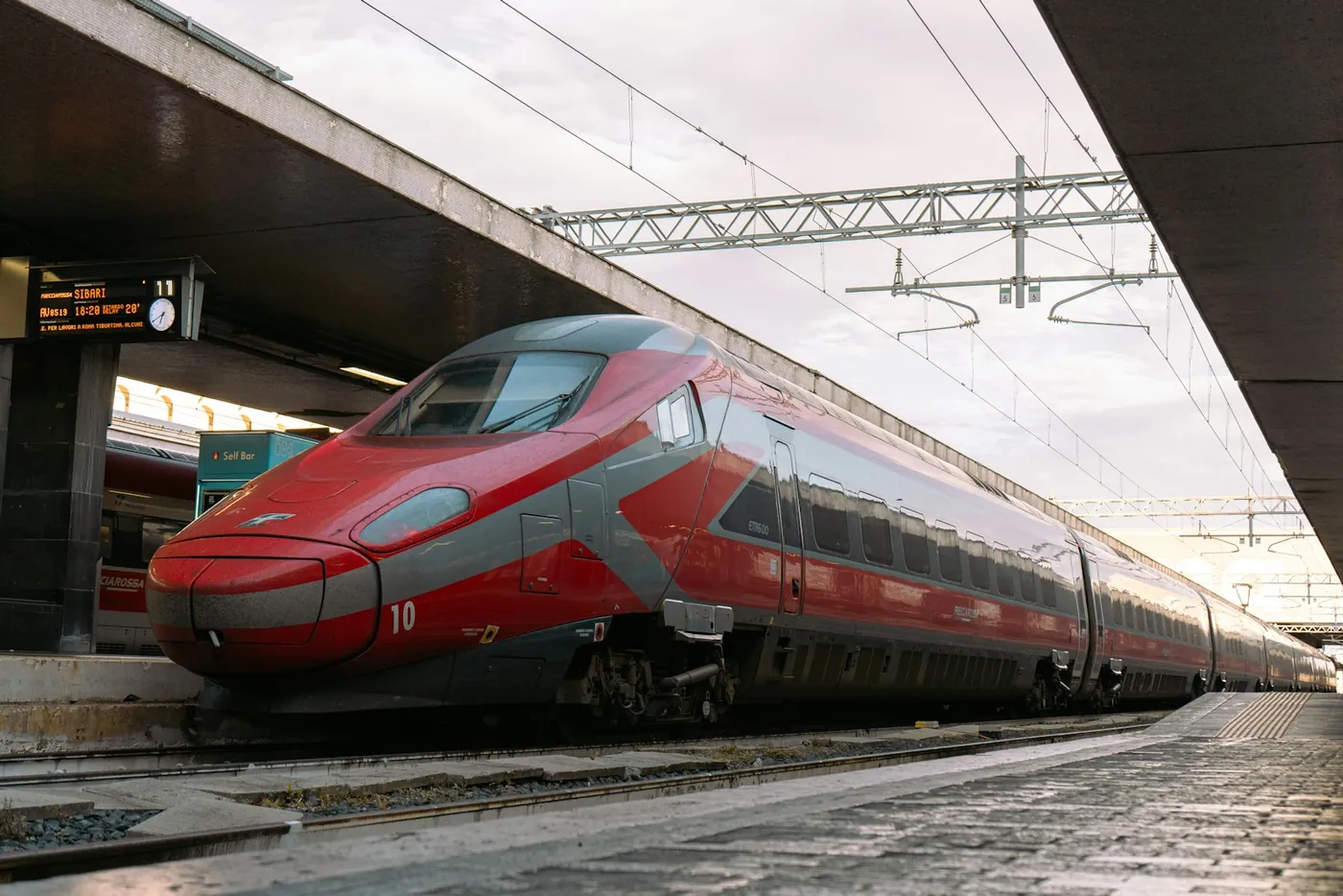
The default, and for most travelers the right answer. The Leonardo Express is a nonstop train from the airport’s own station (follow the train signs from arrivals, a 5 to 10 minute walk) straight to Roma Termini, the city’s central station. Around 14 EUR, about 32 minutes, departures roughly every 15 minutes from early morning until late evening. No traffic, no negotiating, luggage racks on board, and Termini connects to both metro lines and half the hotels in town.
Buy tickets at the machines, online, or in the Trenitalia app; e-tickets need no validation, but a paper ticket must be stamped in the small machines before boarding. Children under a certain age ride free with a paying adult, worth checking for families.
Fiumicino option 2: the FL1 regional train
The lesser-known sibling. The FL1 regional line leaves from the same airport station but crosses the city’s other stations instead of Termini: Trastevere, Ostiense and Tiburtina, for about 8 EUR. If your hotel sits in Trastevere or near Ostiense, this is both cheaper and closer than the Express plus a taxi across town. It runs every 15 minutes or so on weekdays, half-hourly on weekends, and takes about 30 to 45 minutes depending on your stop.
Fiumicino option 3: buses and taxis
Coaches are the budget play: Terravision, SIT and Flixbus run from outside Terminal 3 to the Termini area for roughly 6 to 10 EUR, taking 45 to 60 minutes when traffic behaves, longer at rush hour. Book online in summer for the cheapest fares and a guaranteed seat.
Taxis are refreshingly simple: Rome’s official white cabs charge a fixed fare of 55 EUR from Fiumicino to anywhere inside the Aurelian walls, which covers the entire historic center, luggage and up to four passengers included. That price is set by the city and cannot be bumped up for traffic, suitcases or a fourth passenger, so a driver who tries is out of order. The one catch: if your hotel sits outside the walls, in Parioli or EUR for instance, the fixed fare does not apply and the meter runs from the airport. Use only the official rank outside arrivals, confirm “tariffa fissa?” as you get in, and wave off anyone soliciting rides inside the terminal; the polished gentleman asking “taxi?” by the baggage carousel is never your friend. Licensed private transfers (NCC) booked in advance run slightly above the taxi rate but include a named driver waiting with a sign, gold after a midnight landing.
Pick the hotel before the transferA room near Termini makes the train seamless, one in Trastevere pairs with the FL1, and the flat-rate taxi covers everywhere in betweenCiampino: small airport, simple choices
Ciampino has no direct train, but distances are short. The easy answer is the direct coach to Termini: Terravision, SIT and Schiaffini all run it for about 6 EUR, taking around 40 minutes. The fixed-fare taxi from Ciampino to anywhere inside the Aurelian walls is 40 EUR, a genuinely good deal split between two or more people. The budget-purist route pairs a short local bus with a regional train from Ciampino town station to Termini for a few euros total, but with bags after a 6am Ryanair landing, most people are happier on the coach.
All options at a glance
| Route | Price (approx.) | Time | Best for |
|---|---|---|---|
| FCO Leonardo Express to Termini | 14 EUR | 32 min | Speed, reliability, most travelers |
| FCO FL1 regional train | 8 EUR | 30 to 45 min | Trastevere, Ostiense, Tiburtina stays |
| FCO coach to Termini | 6 to 10 EUR | 45 to 60 min | Tight budgets, no rush |
| FCO fixed-fare taxi | 55 EUR | 30 to 50 min | Groups, luggage, late arrivals |
| CIA coach to Termini | 6 EUR | 40 min | Almost everyone at Ciampino |
| CIA fixed-fare taxi | 40 EUR | 30 min | Pairs and groups, early flights |
A quick word on Milan, and onward travel
Landing in the north instead? Milan Malpensa (MXP) follows the same logic: the Malpensa Express train reaches the city in about 50 minutes for around 13 EUR, comfortably beating the 100 EUR-plus taxi ride, and coaches fill the budget slot. The pattern holds across Italy: airport trains first, coaches for savings, flat-rate or fixed-quote taxis when you are tired.
And once you are at Termini, the fun part begins: the station is the launchpad for Italy’s high-speed rail network, with Florence 90 minutes away and Venice under four hours. If this is your first landing in the country, our first time in Italy guide helps shape the route, and the first time in Rome guide covers what to do the moment you drop your bags.
The short version
From Fiumicino, take the Leonardo Express to Termini (14 EUR, 32 minutes) unless you are staying in Trastevere, where the 8 EUR FL1 wins, or traveling as a loaded-down group, where the 55 EUR fixed-fare taxi earns its keep. From Ciampino, the 6 EUR coach or the 40 EUR fixed taxi. Use only official white cabs from the rank, confirm the fixed fare and check your address is inside the Aurelian walls, and save the airport rental car for trips that skip the city entirely. Rome can be chaotic; getting there from the airport, mercifully, is not.
Where you go from Termini is the more interesting question. North is Florence, ninety minutes away and a completely different city in pace and scale; our comparison of Rome and Florence covers whether it deserves nights of its own or a day trip. South is the coast, which is the other thing people fly into Rome for; our comparison of the Amalfi Coast and Cinque Terre sets out which one actually fits a Rome-based trip.