Florence is a city you can cross in twenty minutes and never finish exploring. The whole Renaissance was born in these few compact streets, and it is still here, in the dome that engineers said could not be built, in the galleries that hold the most famous paintings and statues in the world, in the workshops where artisans still hammer gold leaf by hand. For a first-timer it can feel like drinking from a fire hose. Give it two well-planned days, and it becomes one of the most rewarding cities in Italy.
Two days, walked
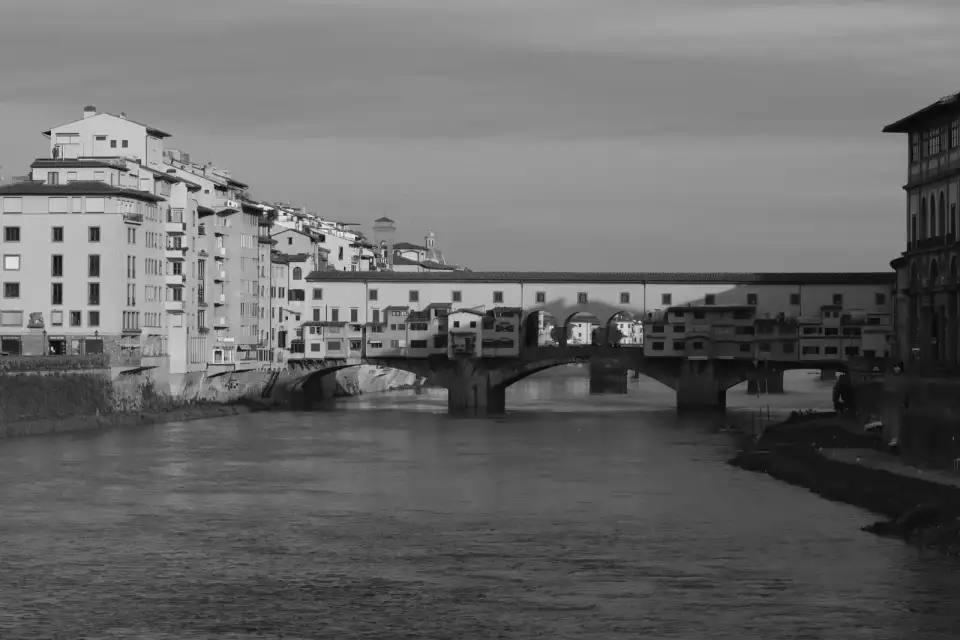
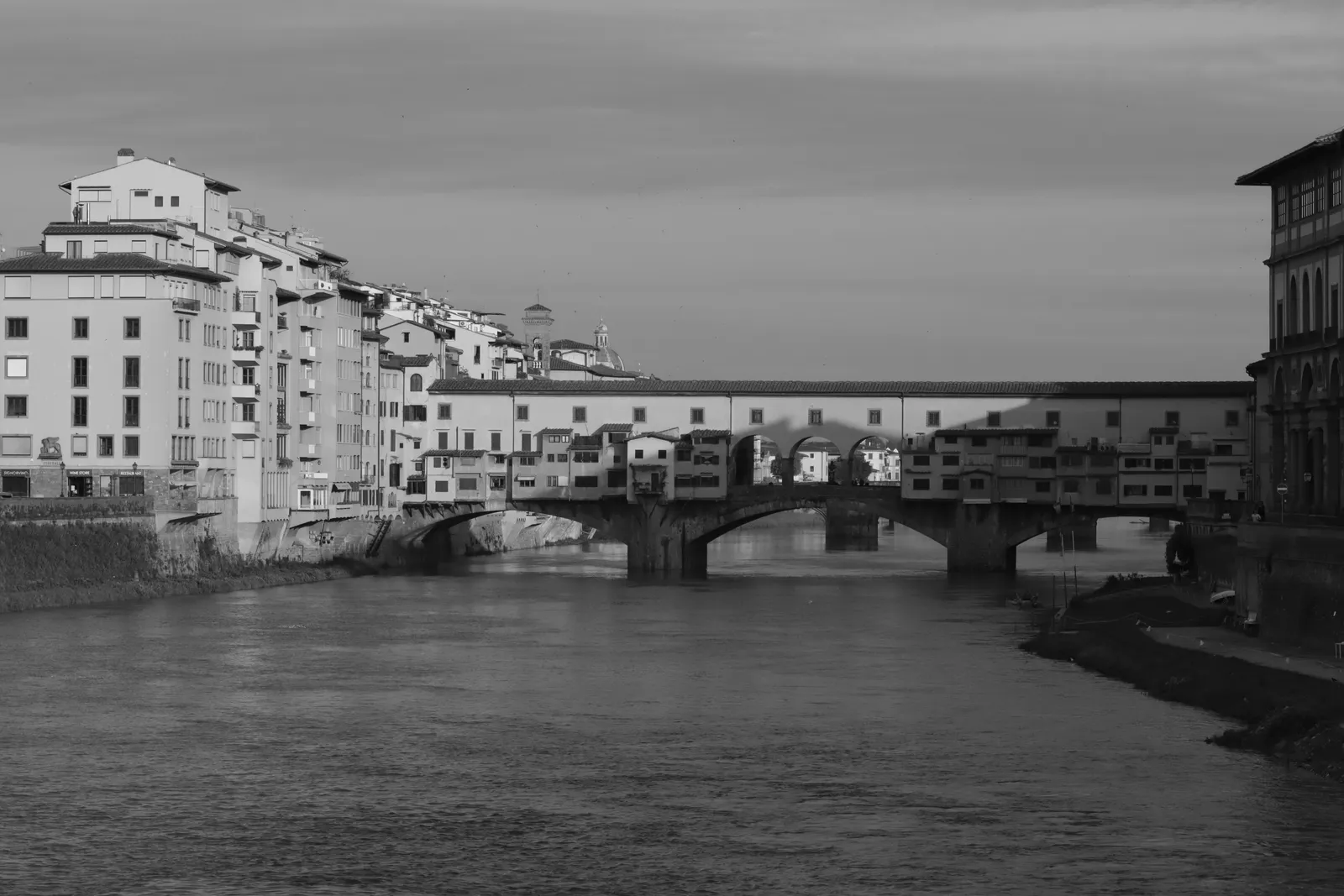
Florence is small, flat and gloriously walkable, so a first visit fits neatly into two days on foot. Day one belongs to the Duomo complex and the Uffizi: climb the cathedral dome or the Giotto bell tower for the view, then lose yourself in the greatest painting collection on earth. Day two is for Michelangelo’s David at the Accademia, the Ponte Vecchio, and the artisan Oltrarno across the river, ending at a sunset viewpoint over the city.
Two days covers the essentials without a forced march. A third day lets you slow down, or head out into the Tuscan hills.
How the two days actually run
The rhythm matters more than the list. Put your climb first thing in the morning, when the steps are cool and the light is clean, and your gallery slot either at opening or late in the afternoon, which are the two quiet ends of a very busy middle. Keep the hours between noon and three for lunch, churches and shade, because that is when every queue in the centre is at its worst.
Do not schedule both galleries on the same day. The Uffizi alone is two to three hours of concentration, and stacking the Accademia on top turns the best art in the world into a chore. Spreading them across two mornings costs you nothing and changes the whole experience.
The Duomo: climb it, do not just photograph it
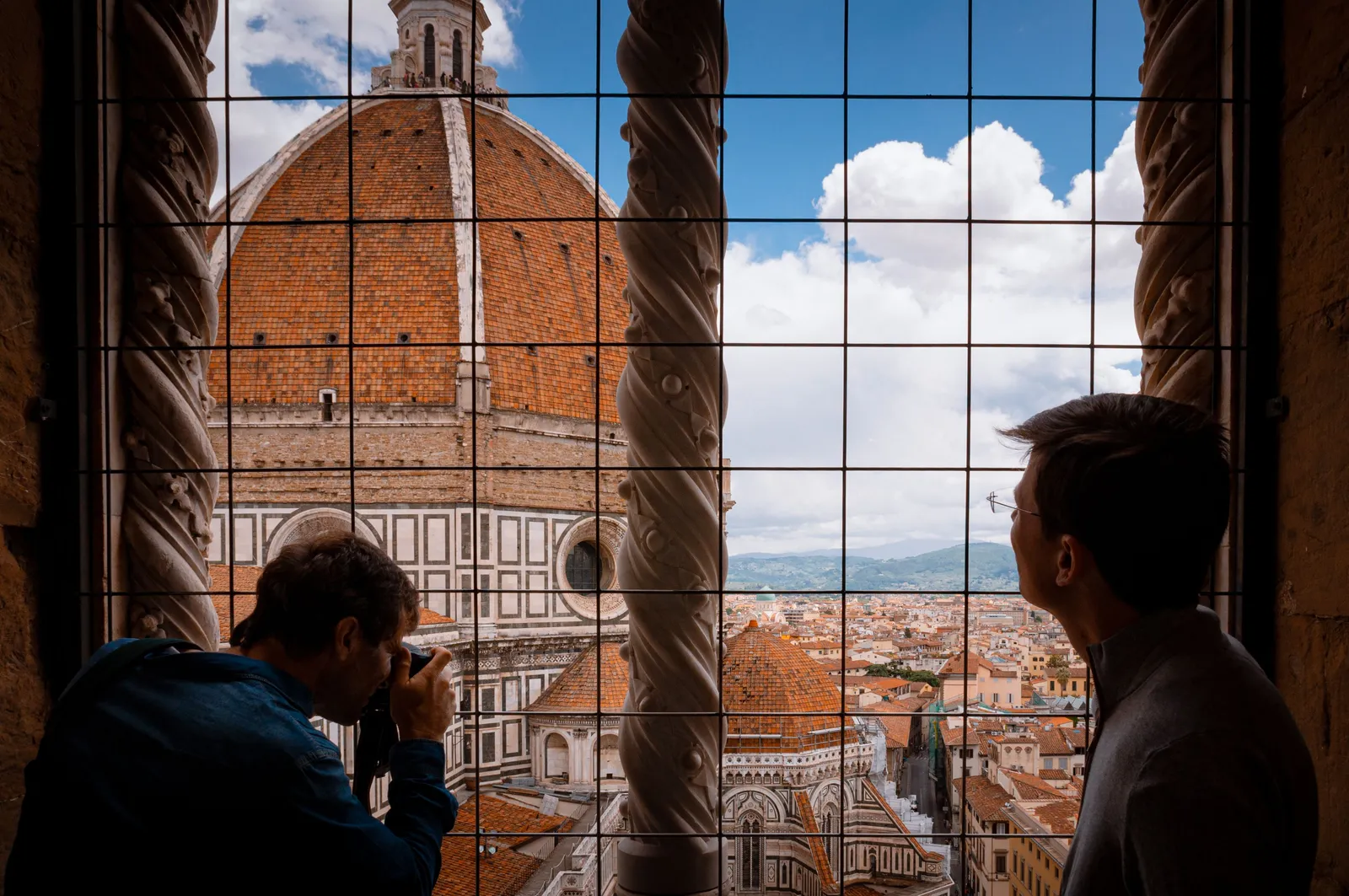
The Duomo, Florence Cathedral, and its terracotta dome by Brunelleschi define the skyline. The cathedral itself is free to enter, but the experiences that stay with you cost extra and need booking: climbing the dome (463 steps, book a timed slot well ahead) and the Giotto bell tower beside it. Both reward you with a rooftop view over the red-tiled city and the green hills beyond.
Buy a combined ticket for the complex, which also covers the Baptistery and its golden doors, and reserve your dome climb online, it is the one thing here that genuinely sells out.
The part of the complex most people walk past
The combined ticket also covers the cathedral museum, and it is the quiet highlight of the whole complex. The famous bronze Baptistery doors you photograph outside are replicas; the originals are indoors, restored and displayed at eye level where you can actually see the panels. The museum also holds a late Michelangelo and the machinery and models from the building of the dome, which turns the climb you did that morning into something you understand rather than just something you survived.
One honest warning about the climb itself: the dome route is narrow, enclosed and has no way back once you start. It is not a good choice for anyone who dislikes tight spaces, and neither climb has a lift.
The art: the Uffizi and the Accademia
Two galleries hold the heart of the Renaissance, and both demand advance tickets. The Uffizi Gallery is a marathon of masterpieces, Botticelli’s Birth of Venus and Primavera, Leonardo, Michelangelo and Raphael, best tackled in a focused two to three hours rather than a full exhausting day. The Accademia is smaller and quicker, but it holds Michelangelo’s David, more overwhelming in person than any photo prepares you for.
Book timed-entry, skip-the-line tickets for both before you go, and choose the first slot of the morning or the last of the afternoon to sidestep the crush. A guided tour is worth it at the Uffizi in particular, where context turns a blur of frames into a story.
The galleries nobody queues for
If the two headline collections leave you hungry rather than exhausted, Florence has a second tier that would be the main event in most cities. The Bargello holds the great Renaissance sculpture, Donatello included, in a fraction of the crowd. The Medici Chapels at San Lorenzo hold Michelangelo’s tombs. Palazzo Vecchio lets you walk the city’s political heart and climb its tower for a different rooftop view. And across the river, the Brancacci Chapel frescoes are the ones the young Michelangelo came to study.
Pick one of these rather than adding a third blockbuster. The difference between a good Florence trip and an exhausting one is almost always how many famous things were crammed into the same afternoon.
Bring the Renaissance to life with a guideA guided Uffizi or David tour turns a queue and a crowd into a story you rememberBooking: what genuinely sells out
Not everything needs a reservation, and knowing which is which saves both money and anxiety. The three things to lock in before you travel are the dome climb, the Uffizi and the Accademia, all timed entry and all capable of selling out weeks ahead in the warm months. Popular restaurants are the fourth, and a day’s notice is usually enough.
Everything else can be decided on the day. Note also that many Italian state museums close on Mondays, which catches out plenty of short trips, so check the opening days for your exact dates rather than assuming a weekday is safe. City museum passes exist and can make sense if you are visiting a lot in a short stay, but the terms and price change, so compare against the individual tickets you actually want rather than buying on principle.
Where to base yourself
Stay central and Florence unfolds at your feet. The historic centre near the Duomo or Piazza della Signoria puts every major sight within a short stroll, ideal on a two-day trip. For a more local feel, cross the river to the Oltrarno and Santo Spirito, a quieter, artisan quarter of workshops, wine bars and neighbourhood trattorias, often better value and just as walkable.
Because the centre is so compact, you will not need buses or trams for sightseeing. A well-placed hotel here saves you time and drops you straight into the atmosphere.
Two things to weigh before booking. The area immediately around the station is convenient and cheaper but much less charming, and it is worth walking ten minutes further in for a better street. And central Florence is noisy at night in the busy months, so if you sleep lightly, ask for a courtyard-facing room rather than one over a piazza.
Eating in Florence
Florentine food is hearty and rustic: the giant bistecca alla fiorentina steak, ribollita bread soup, and lampredotto tripe sandwiches from street carts for the brave. Eat in the Sant’Ambrogio market area or the Oltrarno for local prices, and finish with gelato from an artisan gelateria.
A few habits will improve every meal. Coffee costs less standing at the bar than sitting at a table, and that is a posted price difference rather than a trick. The bistecca is sold by weight and served rare by tradition, so it is a dish to share rather than order each. And the best value in the centre tends to be one street back from wherever the view is, because in Florence you pay for the piazza.
Sunsets and viewpoints
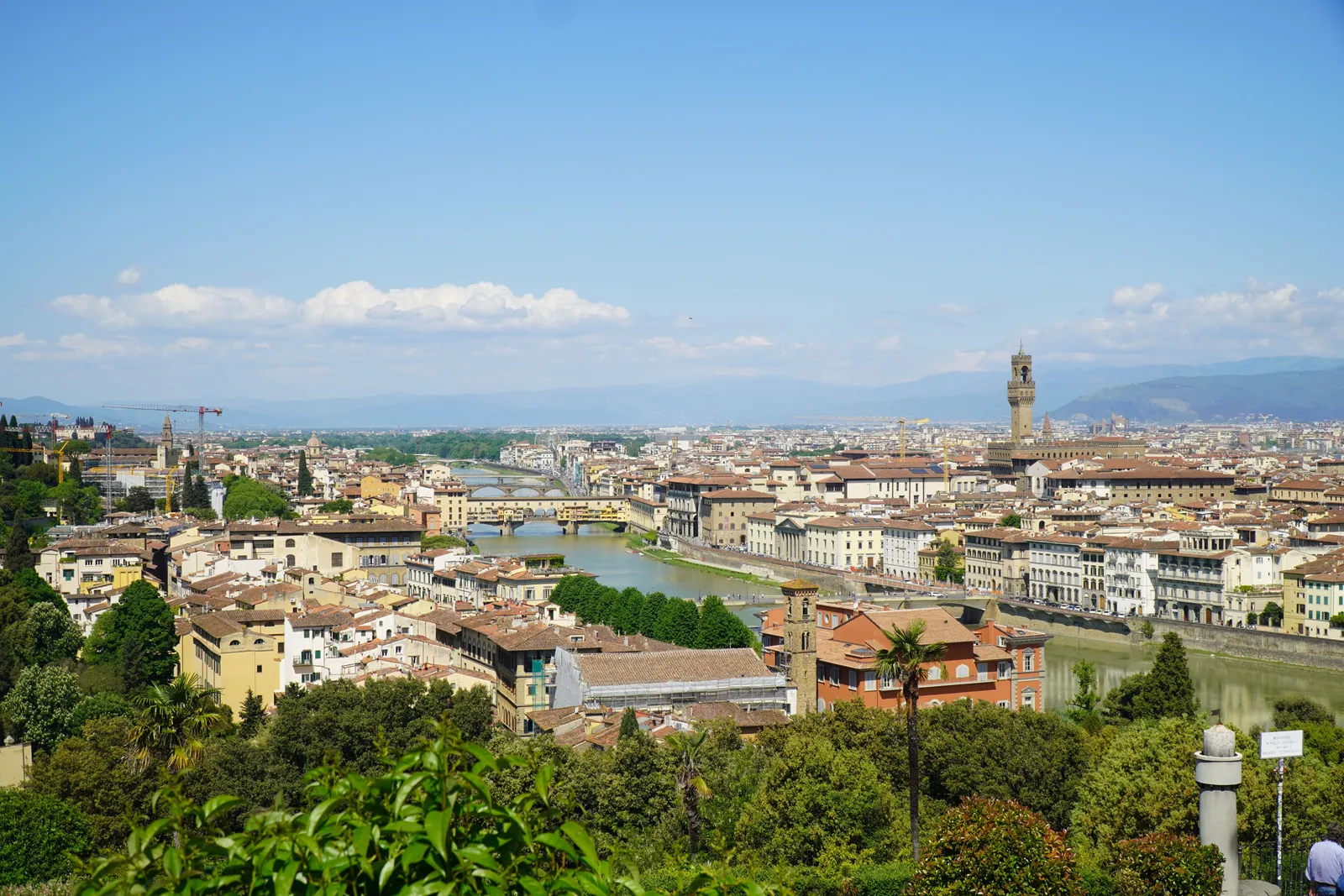
End at least one day at a viewpoint. Piazzale Michelangelo across the river gives you the classic postcard panorama of the whole city and its dome, and it is at its most magical as the sun goes down and the terracotta glows. The nearby San Miniato al Monte church is quieter and just as lovely.
The walk up is steeper than it looks on a map and takes a good twenty minutes from the river, so allow time and go up in the cooler part of the evening. Arrive well before the sun actually sets, because the best light lands on the city several minutes before it disappears, and the terrace fills as the hour approaches.
Getting there, and getting around
Florence sits on the main high-speed line, so it is barely an hour and a half from Rome and around two hours from Venice or Milan by fast train, arriving at the central Santa Maria Novella station a short walk from the Duomo. There is no need to fly between the Italian cities when the trains are this quick and central.
Florence has its own small airport, connected to the centre by tram, and Pisa’s larger airport is a straightforward train ride away, which makes it a common arrival point for cheaper flights. Once you are here, walking is the answer to almost everything.
The one genuine trap is driving. The historic centre is a camera-enforced restricted traffic zone, and a wrong turn produces a fine that arrives months later through your rental company. If Tuscany by car is part of the plan, collect the vehicle when you leave the city rather than when you arrive.
Florence or the other one?
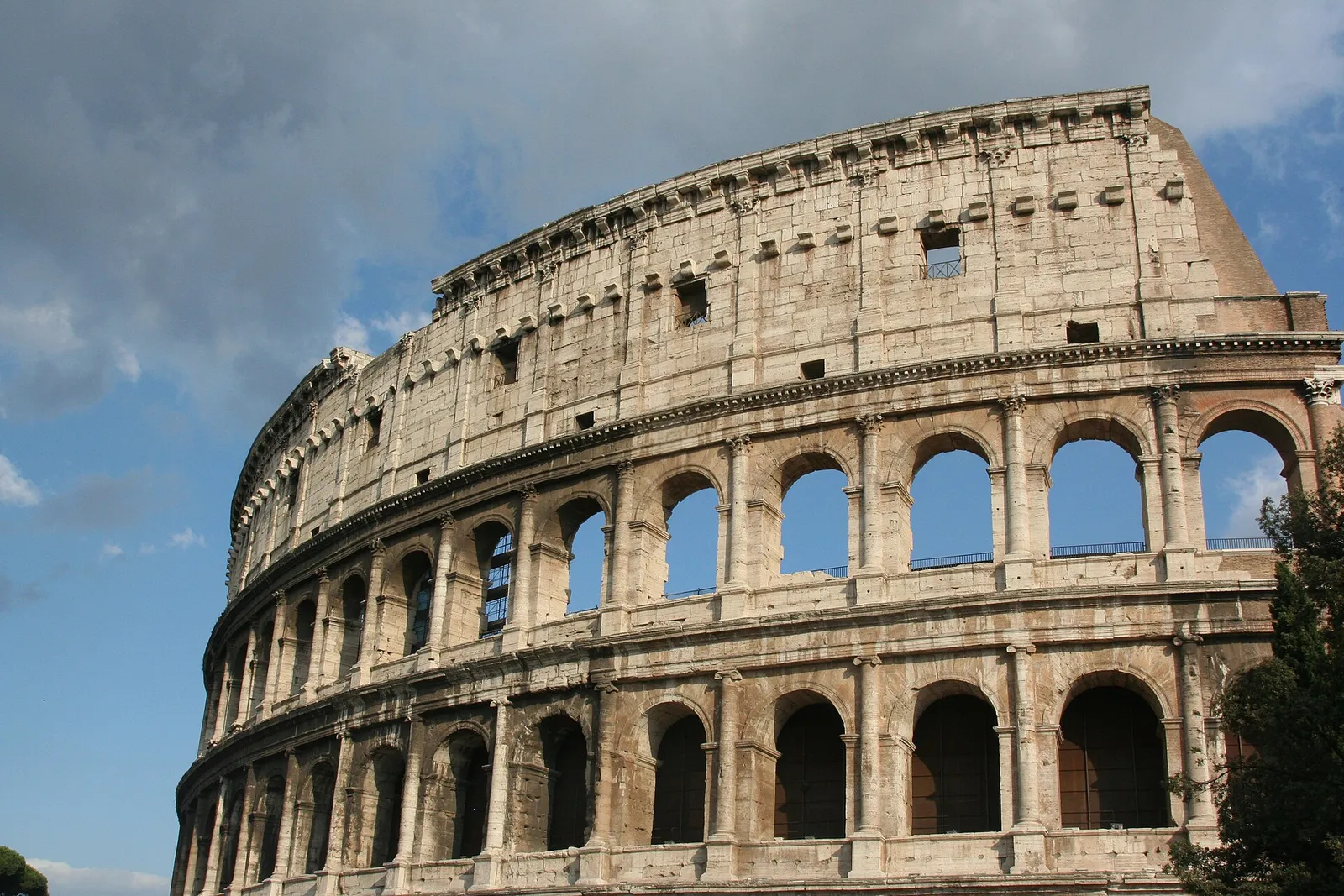
Plenty of first trips come down to a choice between Florence and Rome, especially on a short holiday, and the honest answer is that they are different holidays rather than different sizes of the same one. Florence is compact, walkable and concentrated: two days genuinely covers the headlines. Rome is vast, layered and impossible to finish, and it punishes a two-day visit far more than Florence does.
If the decision is still open, our comparison of Rome and Florence sets them side by side on pace, budget, crowds and what each does better.
Small courtesies and practicalities
A few small habits smooth the visit: dress modestly, with shoulders and knees covered, for the churches, order coffee standing at the bar to pay less, and book your dinners a day ahead for the popular trattorias, which fill early. Above all, do not try to see every gallery, Florence has more art than any city can absorb in a weekend, so choose a handful of masterpieces and let the rest wait for next time.
Expect a small city tax per person per night, usually collected at the hotel and separate from the room rate. Carry a refillable bottle, since public fountains in the centre are common and the water is good. Pickpocketing is the ordinary risk of any crowded tourist city rather than a Florence speciality, and it concentrates exactly where you would expect, around the station and the busiest squares. And because timed tickets, flights and a lot of the trip are paid for well in advance, it is worth understanding what is and is not covered if plans change: our guide to travel insurance for Italy covers that.
If you have a third day
A third day lets Florence breathe, and gives you two lovely choices. Stay in the city and slow down: cross to the Oltrarno to watch artisans at work in their leather, gold and picture-frame workshops, tour the vast Pitti Palace and wander the terraced Boboli Gardens behind it, or simply linger over long meals and side-street churches at a gentler pace.
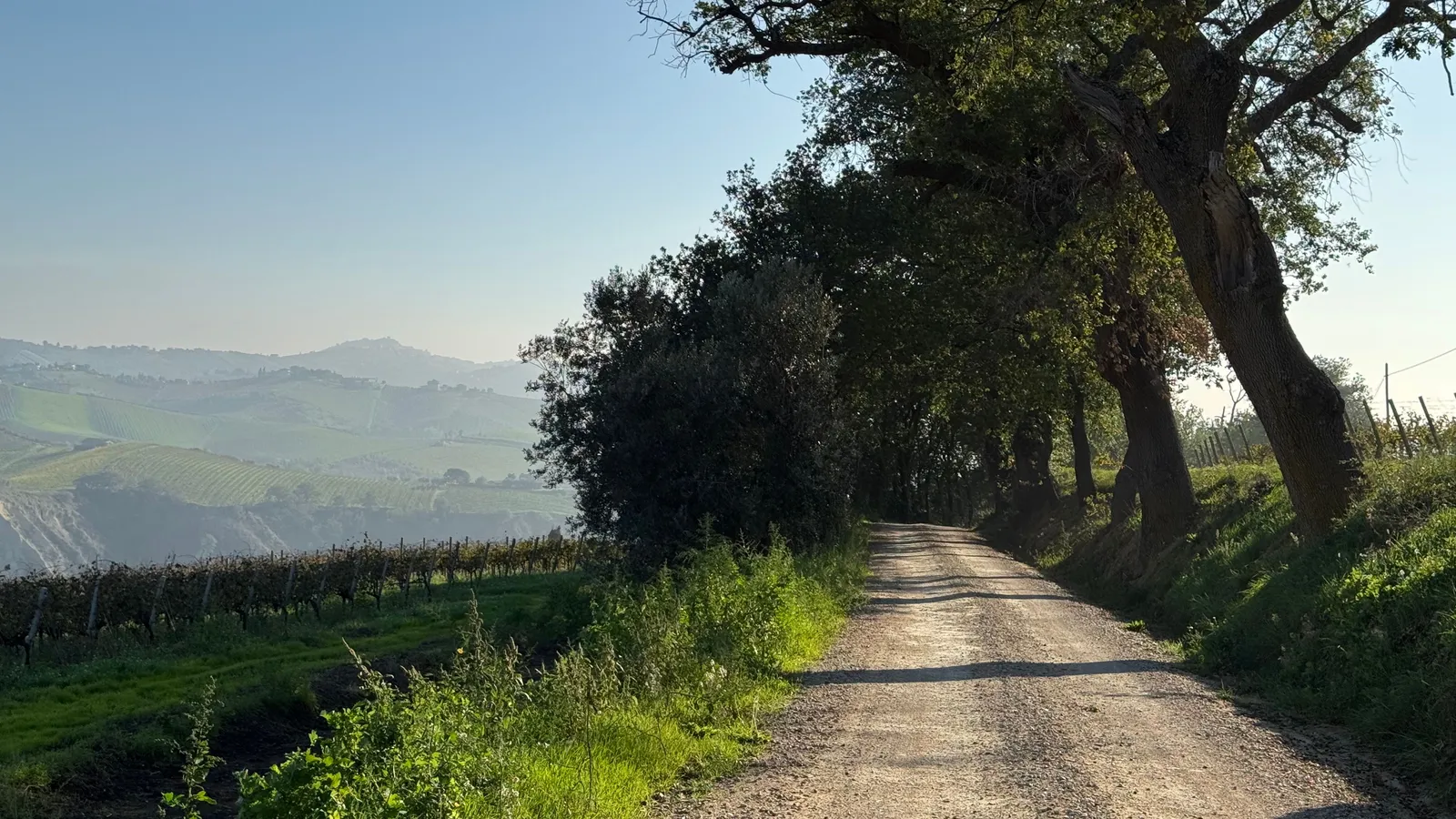
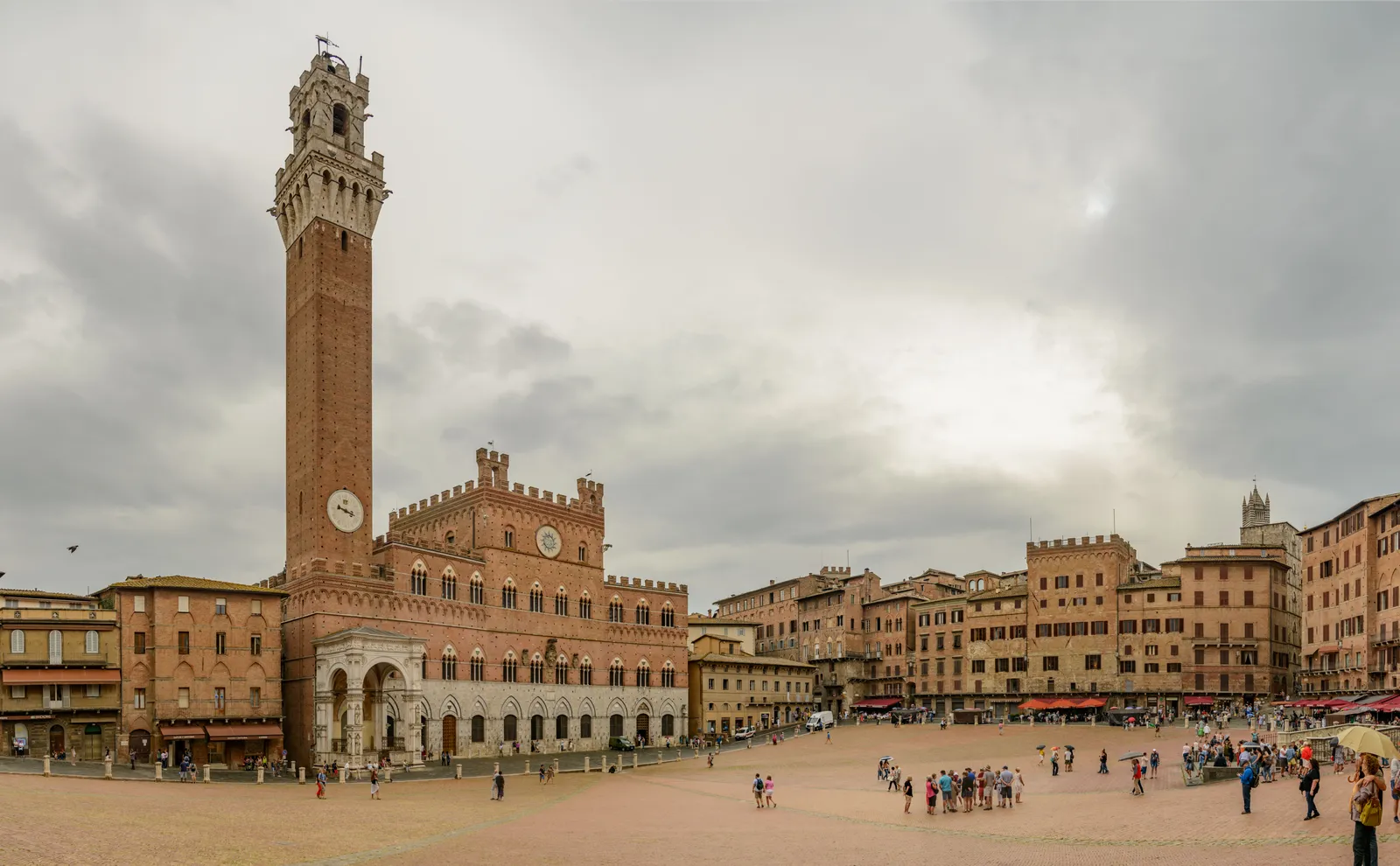
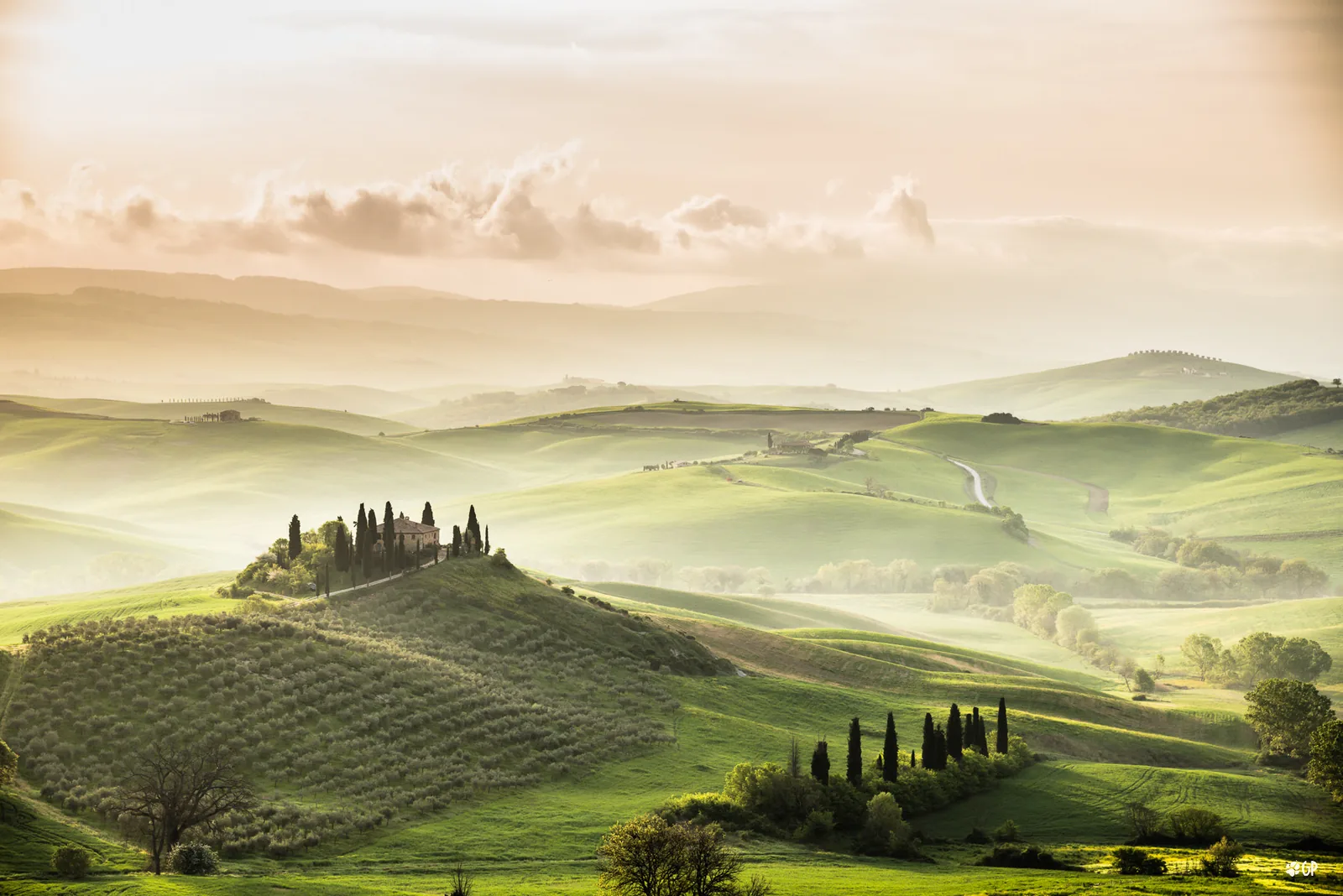
Or head out into Tuscany, which begins right at Florence’s doorstep. Siena, a little over an hour away on the direct bus and rather longer by train, is a perfectly preserved medieval city built around its shell-shaped square, the Campo. San Gimignano bristles with medieval towers, and the Chianti wine road unrolls its vineyards between the two cities. A guided day trip, or a hire car, turns your third day into a taste of the Tuscan countryside.
The short version
Give Florence two walkable days, one for the Duomo and the Uffizi, one for David, the Ponte Vecchio and the Oltrarno. Book the dome climb, the Uffizi and the Accademia before you go, split the two galleries across two mornings, and check that neither of your days is a Monday. Stay central so you can walk, leave the car outside the restricted zone, eat across the river for local prices, and climb to Piazzale Michelangelo for sunset. Do that, and the cradle of the Renaissance will feel like the highlight of your Italian trip.
Are you giving Florence two days or three, and what would you drop to make room?