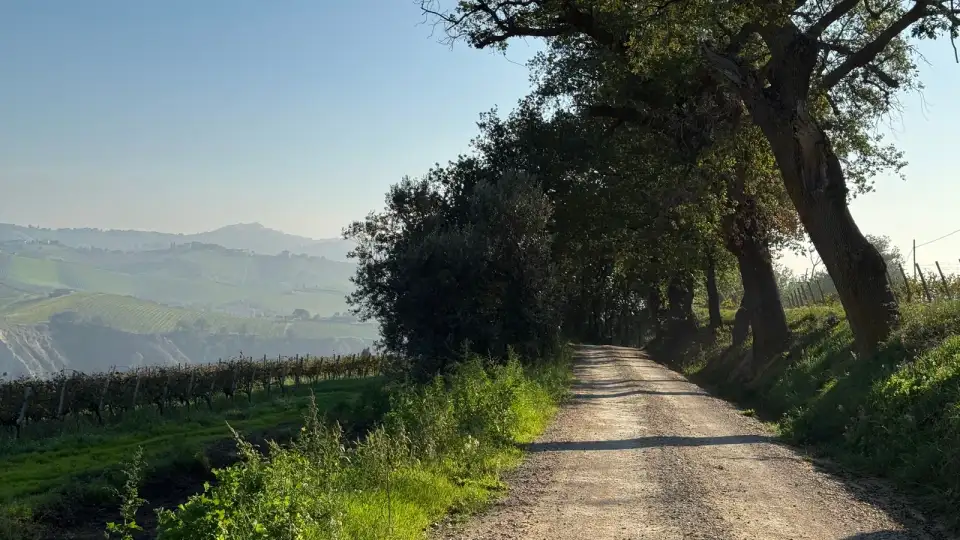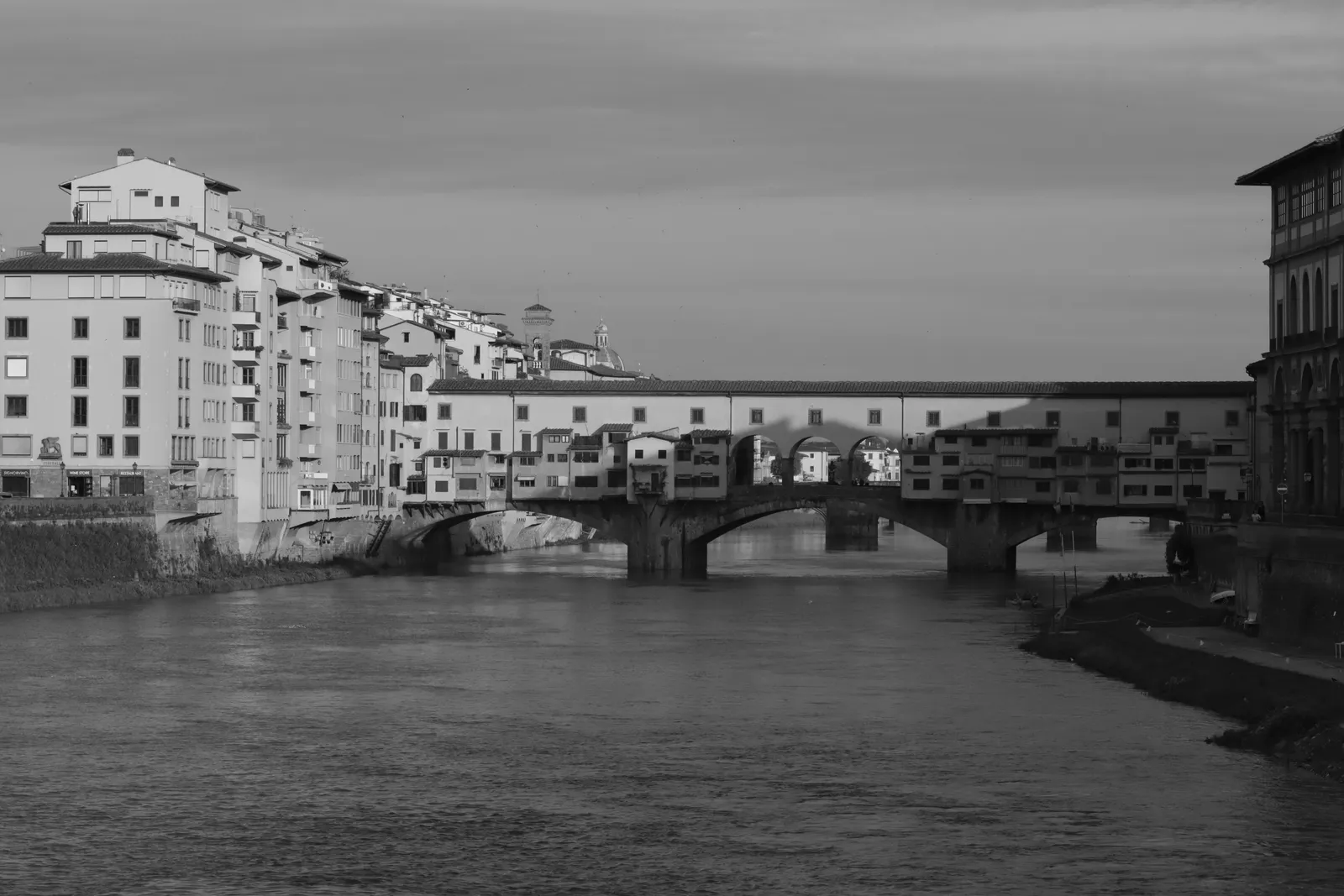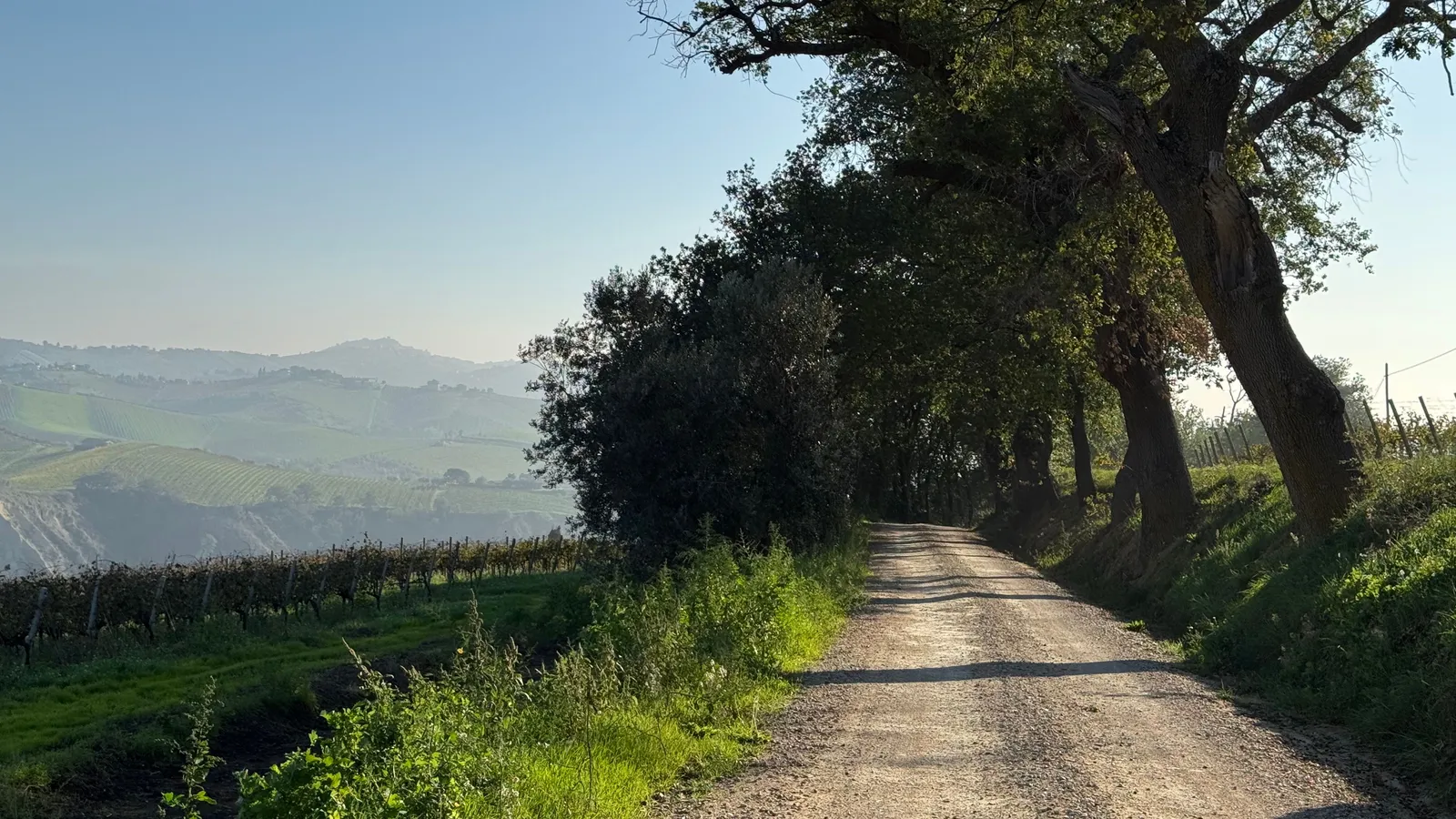
Between Florence and Siena lies the Tuscany of every daydream: rows of vines combed across golden hills, cypress trees standing sentinel along the ridgelines, stone villages where the wine is older than the country. This is Chianti, and the best way to drink it in is to drive the SR222, the winding wine road that ties it all together, stopping at cellars and hill towns as the mood takes you. Here is how to plan a Chianti wine trip that is all pleasure and no stress.
The SR222: the road itself is the destination
The SR222, known locally as the Chiantigiana, is the two-lane ribbon of tarmac that snakes through the heart of Chianti, connecting Florence and Siena across roughly 70 km of glorious countryside. It is not the fast way between the two cities, it is the beautiful way, and the whole point is to take it slowly.
Along the route sit the region’s great wine villages: Greve in Chianti with its funnel-shaped square, Panzano famous for its butcher and its views, Radda and Castellina perched on their ridges. Drive it with no fixed schedule, pull over when a view or a cellar sign catches your eye, and let the day unspool. Rent a car in Florence or Siena to do it, the freedom is the whole experience.
Two things about the road itself are worth knowing before you set off. It is genuinely slow, so treat 70 km as most of a day rather than an hour, and the distances between estates are short but the gradients and bends are not. And many of the best cellars sit on white gravel side roads, the strade bianche, that peel off the main route and look alarming the first time. They are perfectly drivable in an ordinary car, just dusty and slow.
Getting to Chianti in the first place
Most Chianti trips start in Florence, which is the obvious gateway: the northern end of the SR222 is barely outside the city, and the rental desks are easy to reach. If Florence is your base, our first-timer guide to Florence covers the city side of the trip, including the part that matters most here, which is where to collect a car without driving into the restricted centre.
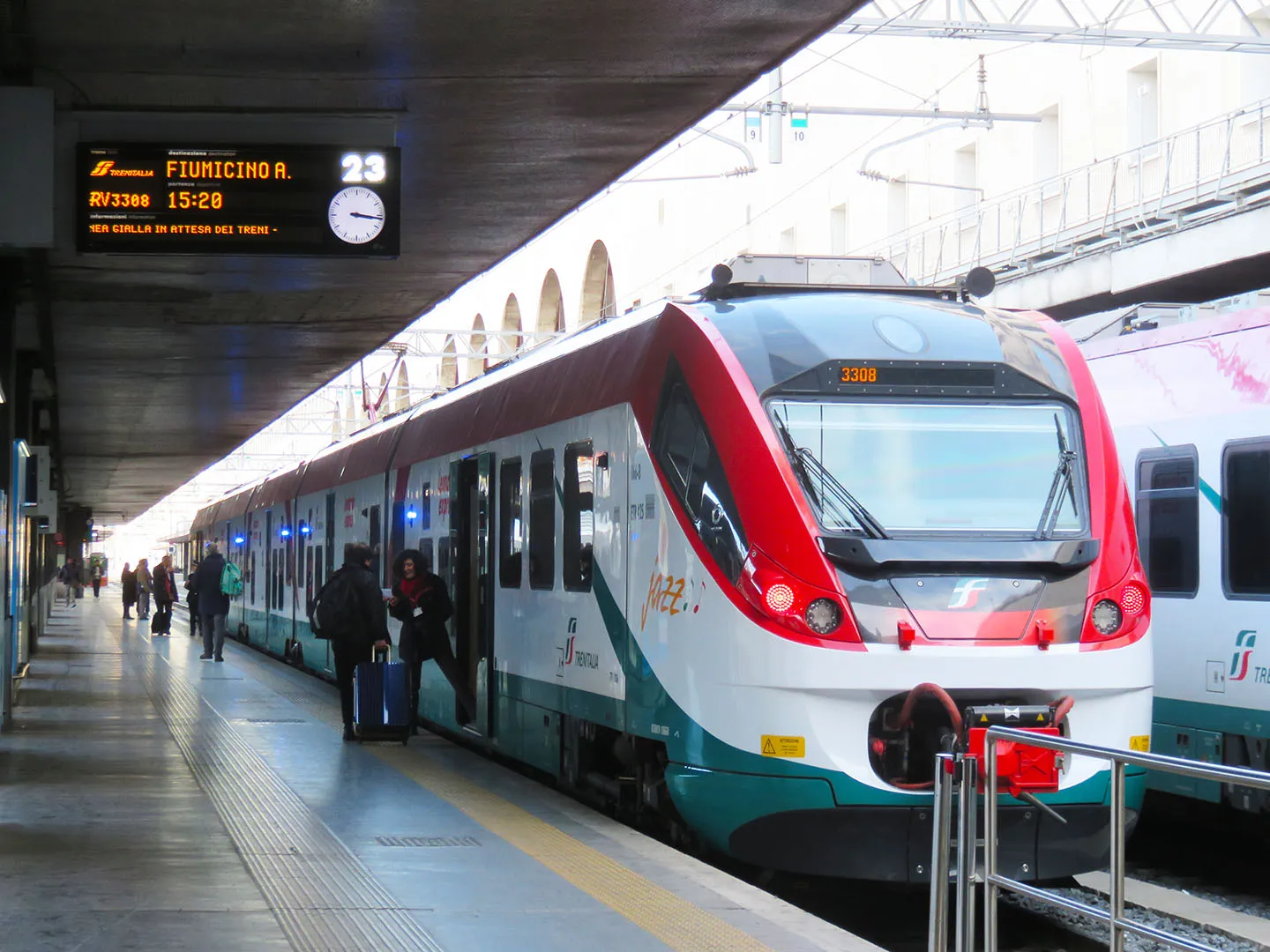
Plenty of people arrive from further afield, though. If your flight lands in Rome and Tuscany is the second leg, the sequence that works is airport to city by train, then a fast train north, then a car collected at the Tuscan end rather than driven up the motorway. Our guide to Rome airport transfers covers that first hop. If you are still deciding which city anchors your trip at all, our comparison of Rome and Florence is the right place to settle it.
The wine: Chianti Classico, decoded
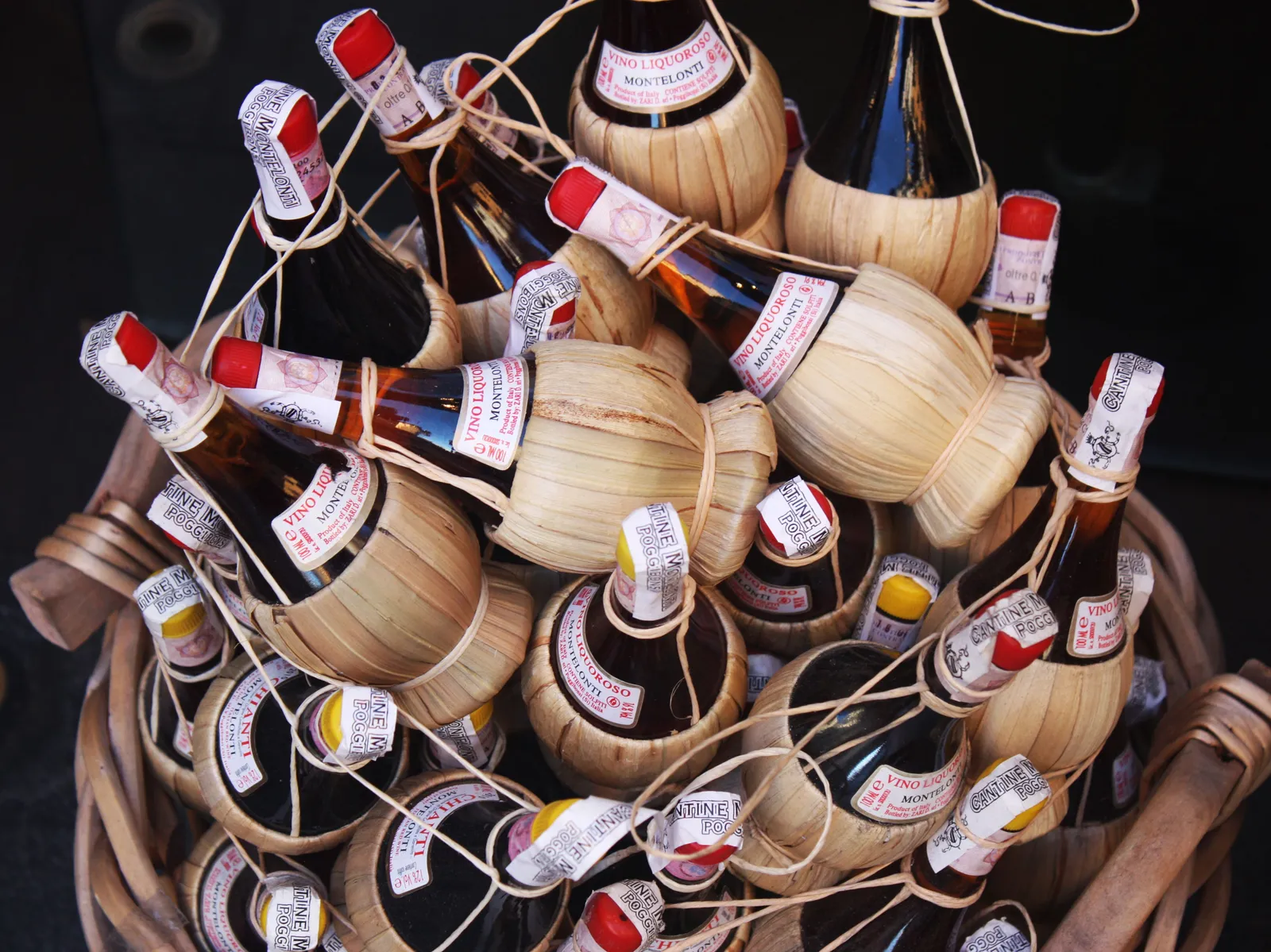
The wine that matters here is Chianti Classico, made from the Sangiovese grape and marked by the black rooster (Gallo Nero) seal on the bottle, the emblem of the historic Chianti Classico zone between Florence and Siena. It is not the straw-bottle Chianti of old cliché, but a serious, food-friendly red that ranges from bright and cherryish to deep, oak-aged Riserva and the top Gran Selezione.
At a tasting you will often try several styles side by side, sometimes with the estate’s olive oil and a plate of pecorino and salami. Ask about the difference between annata, Riserva and Gran Selezione, and you will leave understanding Chianti far better than any label could teach you.
Reading a Chianti label
Two distinctions unlock almost everything. First, Chianti Classico is not the same as Chianti: the Classico zone is the historic heartland between the two cities, and the black rooster on the neck is how you spot it. Wider Chianti comes from a much larger area and is generally lighter and cheaper. Second, the blend is built on Sangiovese, which must make up at least 80 per cent of a Chianti Classico, which is why the wines share that signature sour-cherry brightness however different the estates feel.
You will also meet bottles from these same hills that carry no rooster at all, labelled simply IGT. Those are often the estate’s experiment with international grapes, the style the wine world nicknamed Super Tuscan. They are not a lesser wine, just a different rulebook, and asking an estate why they make one is a good way to get the honest version of their story. Save room at the end for a small glass of Vin Santo with hard almond biscuits, which is how a Tuscan meal is supposed to finish.
Tastings: book ahead, and the driving question
Most Chianti wineries are working farms that welcome visitors by appointment, so for guided tastings and cellar tours, book a day or more in advance, especially in the busy months, to be sure of a spot and a warm welcome. Larger estates and village enotecas (wine bars) are more forgiving of walk-ins, but a reservation is always the safer bet.
Then there is the obvious problem: someone has to drive those winding roads afterward. You have two good options. Either nominate a designated driver who tastes lightly and spits, and keep it to one or two estates, or skip the wheel entirely and book a guided wine tour with a driver, so everyone can taste freely while a local takes the hairpins. For a trip built around the wine, the guided route is the relaxed choice. Italy’s drink-drive limit is stricter than the one drivers from the US, England and Wales are used to, and stricter again for young and newly qualified drivers, so check the current limit rather than assuming the rule you drive by at home travels with you.
If you are picking up the car yourself, arrange an International Driving Permit at home first. Rental desks in Italy expect non-EU licence holders to produce one alongside their own licence, and drivers on US, Australian, Canadian and South African licences are regularly refused the car without it. It cannot be obtained after you arrive.
Rent the car in Florence or SienaA small car unlocks the whole SR222, the hill towns and the cellars off the main roadWhat a tasting is actually like
If you have never done this before, the format is friendlier than it sounds. A booked visit usually runs an hour or more: a walk through the vineyard or the barrel cellar, an explanation of how the estate works, then several wines poured in order, frequently with the estate’s own olive oil, bread, pecorino and salami. Estates normally charge a modest fee for the experience, and some will credit it against a purchase, though this varies and is worth asking when you book.
Nobody expects expertise, and the questions that get the best answers are the simple ones: what changed in this vintage, why does this slope ripen differently, which of these would you drink tonight. Spitting is completely normal and not remotely rude, especially if you are driving. Two estates in a day is the sweet spot and three is the ceiling, because the roads between them are slow and a rushed tasting is no tasting at all.
Where to base yourself
You can day-trip into Chianti from Florence or Siena, both an easy drive from the SR222, and this suits travellers who want a city base with countryside excursions. But the region truly shines if you stay a night or two among the vines, in a converted farmhouse (agriturismo) or a village inn.
Sleeping in Chianti means golden-hour walks through the vineyards, dinner under the stars, and the freedom to taste without watching the clock for the drive back to the city. Greve, Panzano, Radda and Castellina all make lovely, well-placed bases, and an agriturismo often comes with its own wine and a pool overlooking the hills.
Choose by what you want the evening to feel like. Greve is the most convenient and the liveliest, with shops and restaurants on the square. Panzano and Radda are smaller and quieter, better for the version of this trip where dinner is the day’s main event. Castellina sits well for pushing on towards Siena the next morning. An agriturismo out among the vines gives you the view but commits you to driving to dinner, so check what is walkable before you book.
When to go, month by month
Late spring and early autumn are the answer, and it is worth knowing why. May and June give you green vines, long light and comfortable heat. July and August are hot, hazy and busy, and the middle of the day is best spent in a cellar rather than on a hillside. September is the region’s high point: the vendemmia, the grape harvest, fills the roads with tractors and the cellars with activity, and the light turns golden.
October keeps the colour as the leaves turn and loses most of the crowds, which makes it a quiet favourite. From late autumn into winter the region genuinely slows down, with many estates on reduced hours or closed to visitors, so a February wine trip needs a lot more advance checking and delivers a lot less atmosphere.
Beyond the wine
Chianti is not only cellars. Break up the tastings with the hill towns: climb Greve’s arcaded square, browse Panzano’s legendary butcher shop, and walk the ramparts of tiny Radda and Castellina. Time your trip for September and you land in the harvest, the vendemmia, when the whole region hums with picking and pressing.
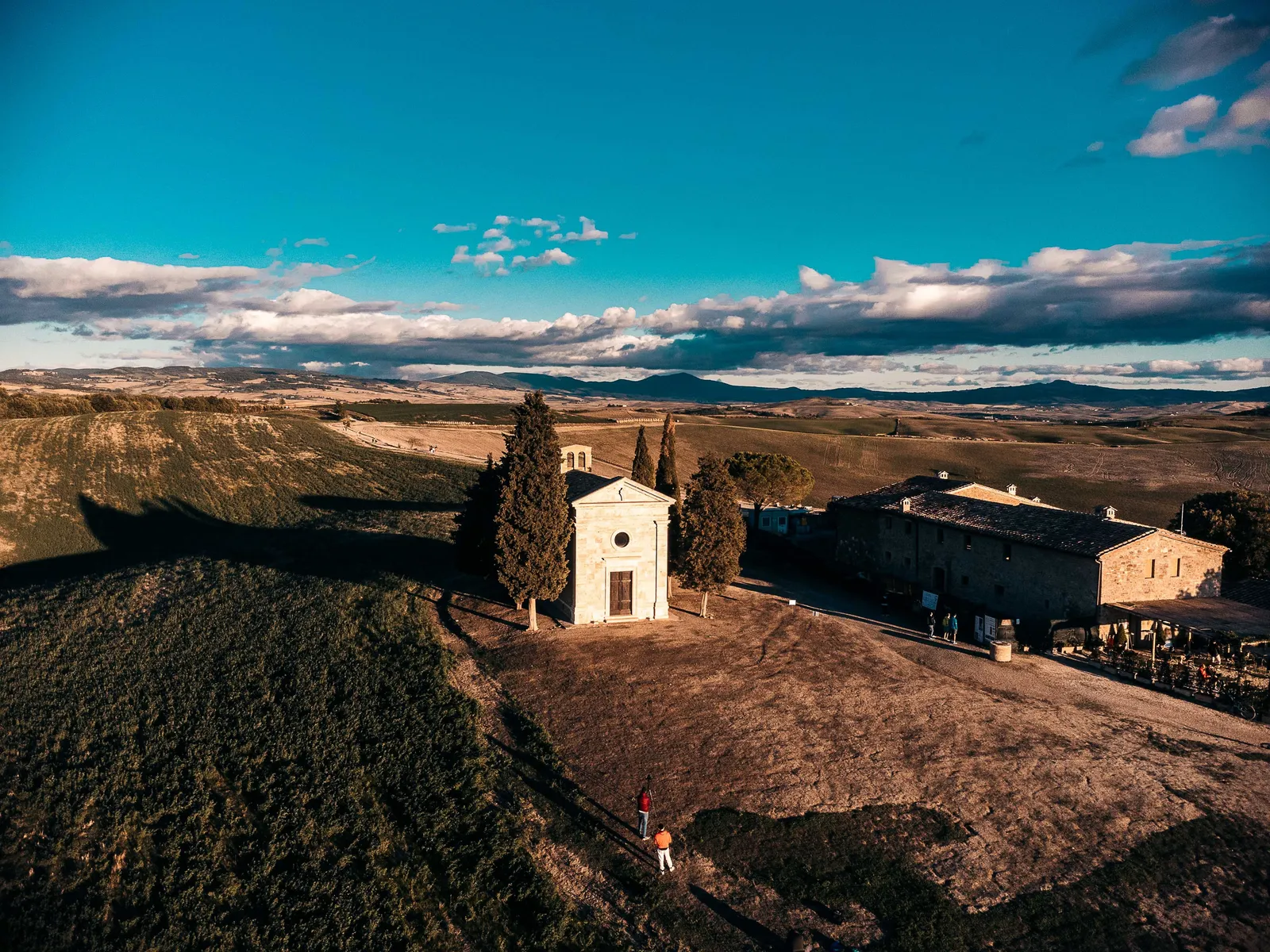
Bring an appetite for the food too: Tuscan cooking is rustic and generous, from ribollita and wild boar ragù to the region’s famous bistecca. And save room in your suitcase, a bottle or two of Chianti Classico, bought straight from the cellar that made it, is the best souvenir Tuscany can offer.
The practical bits that catch people out
Three things spoil more Chianti days than bad weather. The first is the restricted traffic zone, the ZTL, in the historic centres of Florence, Siena and several smaller towns: camera-enforced, easy to drift into by accident, and the fine arrives months later via the rental company. Park outside the walls and walk in, every time.
The second is parking in the villages themselves, which is limited and often paid, so aim to arrive early or late rather than at one in the afternoon. The third is taking the wine home. Estates will pack bottles for travel or arrange shipping, but what you may bring in duty free depends entirely on your destination country, and the allowance is different for the UK, Ireland, the US, Canada, Australia, New Zealand and South Africa. Check your own rules before you buy the case rather than after.
If you would rather not drive at all
Not driving is a completely legitimate way to do this. A guided small-group tour from Florence or Siena is the simplest version: someone else takes the bends, the estates are pre-booked, and everybody tastes. Private drivers cost more and buy you the freedom to linger.
Public transport is thinner but not absent, and a bus does link Florence with Greve, which makes a low-key day in one village perfectly possible. What it will not do is get you to estates scattered down gravel lanes, so treat it as a way to see a Chianti town rather than the wine road. E-bike tours are the other good answer for reasonably fit travellers, since the hills are relentless and the assistance turns them back into scenery.
The short version
Rent a car in Florence or Siena, drive the scenic SR222 slowly, and stop at the hill towns of Greve, Panzano, Radda and Castellina. Book your winery tastings a day ahead, learn to read the black-rooster seal, and either nominate a driver or take a guided tour so you can taste freely. Keep it to two estates a day, stay out of the ZTLs, come in spring or autumn, and if you can, sleep a night among the vines. Do that, and the Chianti wine road delivers the Tuscany you came for.
Would you rather drive the Chiantigiana yourself, or hand the keys over and taste everything?