Italy sits inside the Schengen area, which means one set of European rules decides who can enter, for how long, and with what paperwork. The good news: for most travellers, entry is simple and visa-free. The catch: the rules are changing, with new biometric border checks already rolling out and an online travel authorization on the way. Here is the whole picture, in plain language, so you can board your flight with confidence.
One note before anything else: entry rules depend on the passport you carry, not where you live. Everything below describes the general framework. Check the specifics for your own nationality with the Italian consulate or the official EU website before you book.
Who needs a visa, and who does not
Italy applies the common Schengen visa policy. Citizens of roughly 60 visa-exempt countries and territories, including the United States, United Kingdom, Canada, Australia, New Zealand, Japan, South Korea, Singapore, Brazil and Mexico, can visit for tourism or business without a visa for up to 90 days in any 180-day period. EU and EEA citizens can enter freely with a national ID card or passport and are not subject to the 90-day cap.
British travellers sit in the visa-exempt group rather than the EU one. Since Brexit a UK passport is a third-country passport at the Italian border: you queue in the non-EU lanes, your days count against the same 90 in 180, and the passport validity rules below apply to you in full.
Travellers whose nationality is not on the exempt list, including citizens of India, China, South Africa, the Philippines, Vietnam and many others, need a Schengen short-stay (Type C) visa before travelling. Apply through the Italian consulate or its visa center in your country of residence, ideally four to eight weeks ahead. Standard requirements include a completed form, photos, travel medical insurance with at least 30,000 EUR of coverage, proof of accommodation and funds, and a round-trip booking.
If you want to stay longer than 90 days
The Schengen short-stay rules cover holidays, not lives. Anyone planning to stay beyond 90 days, or to study, work or retire in Italy, is in the territory of a national long-stay visa issued by Italy itself rather than the shared Schengen one, followed by a residence permit application after arrival. That is a different process with different paperwork and much longer lead times, and it is worth starting months rather than weeks ahead. If your plan is a long, slow European trip rather than a move, the more common answer is to structure the itinerary around the 90-day pot below.
Which countries actually count as Schengen
The overlap with the EU is close but not exact, and assuming they are the same is a reliable way to miscount your days. Not every EU country is in Schengen, and not every Schengen country is in the EU: Switzerland, Norway and Iceland are inside the zone without being EU members. Before you count a border crossing as an exit, check whether the country you are moving to is inside or outside the area, because it changes whether the clock keeps running.
The 90/180 rule, demystified
The rule trips up more travellers than any visa form. You get 90 days inside the entire Schengen area within any rolling 180-day window. Not 90 days in Italy plus 90 in France: one shared pot for all 29 Schengen countries. The window is not a calendar reset either. On any day you are in Schengen, look back 180 days and count your days inside the zone; the total must stay at 90 or below.
Leaving for a non-Schengen neighbour such as the UK or Albania stops the clock but never resets it. If long stays are your plan, count carefully, keep evidence of your movements, and remember that overstaying can bring fines and future entry bans.
How to count it without getting it wrong
Two details do most of the damage. First, both your arrival day and your departure day count as full days inside the zone, even if you land at midnight and leave at dawn. Second, the window moves with you rather than resetting on a fixed date, so the question is never “how many days have I used this year” but “how many days was I inside the zone in the 180 days before today”.
The safe habit for anyone who visits Europe more than once a year is to keep a simple running list of entry and exit dates, and to leave a margin rather than planning to the ninetieth day. The official EU calculator exists for exactly this, and the new digital border records mean the authorities now have a precise count whether or not you do.
EES: biometric checks are now the norm
The EU Entry/Exit System (EES) has replaced ink passport stamps for non-EU travellers at Schengen’s external borders. Introduced gradually from October 2025, it has been fully operational across all 29 countries since 10 April 2026. On your first crossing under the system, you register your fingerprints and a facial image at a kiosk or with a border officer, and your entries and exits are then logged digitally. Subsequent trips are quicker, since the system recognizes you.
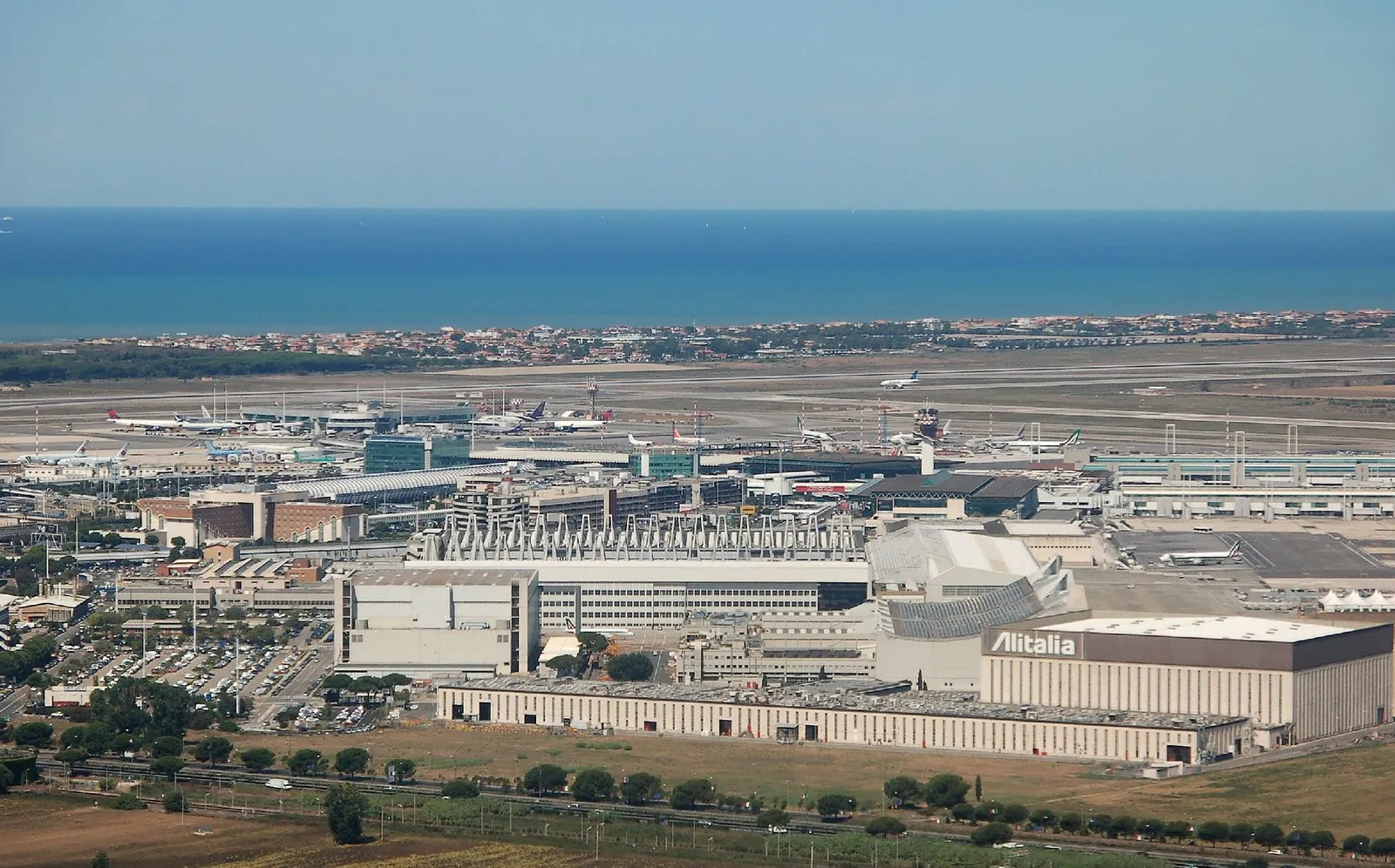
Practically, this means allowing a little extra time at passport control at Rome Fiumicino, Milan Malpensa or Venice Marco Polo, especially at peak arrival hours while queues adjust to the technology. The system also makes the 90/180 math automatic: the days are counted for you, so accidental overstays are far more visible than in the stamp era.
Two consequences are worth planning around. If you have a tight connection onto a non-Schengen flight, or you are arriving on a busy summer morning when several long-haul flights land together, give yourself more buffer than you would have a few years ago. And if you are travelling as a family or a group, expect to be processed individually, since each traveller registers separately.
ETIAS: not in force, and no date to plan around
ETIAS (European Travel Information and Authorisation System) is the EU’s planned online travel authorization for visa-exempt visitors, comparable to the US ESTA. When it eventually starts you will apply online, pay a fee of around 20 EUR (with exemptions for those under 18 and over 70), and receive an authorization valid for three years or until your passport expires.
The important part today: ETIAS is not in force, and there is currently no confirmed launch date. The timeline has slipped repeatedly, and rather than announce a new target the EU has removed the one it previously advertised. So there is nothing to apply for, nothing to pay, and no reason to trust the lookalike websites that will sell you an “ETIAS” this afternoon. Only the official EU application will ever count. Check the official EU pages in the weeks before you fly, and if it has gone live by then, apply directly.
Land with data for the entry kiosks and beyondAn eSIM installed before departure means maps, bookings and translations work the moment you clear passport controlPassport validity and what officers may ask
Two hard rules apply to your passport: it must be valid for at least three months after the date you plan to leave the Schengen area, and it must have been issued within the past ten years. Airlines enforce this at check-in, so a renewal now beats a refusal at the gate.
At the border, officers rarely ask more than the purpose of your visit, but they are entitled to request proof of onward travel, accommodation details, sufficient funds and travel insurance. Keep your return booking and first hotel confirmation reachable on your phone.
Insurance: what the rule actually says
For visa applicants, travel medical insurance is not optional: a Schengen short-stay visa application must include cover of at least 30,000 EUR for medical treatment and repatriation, valid across the whole zone for the length of the stay. That is a documented requirement rather than a suggestion.
For visa-exempt visitors, there is no equivalent form to fill in, but a border officer is still entitled to ask for proof of cover, and the deeper reason to have it has nothing to do with the border at all. Entitlement to state healthcare in Italy varies enormously by passport: EU citizens carrying a European Health Insurance Card and UK residents with a GHIC can access public treatment on local terms, while travellers from the US, Canada, New Zealand, South Africa and elsewhere should check whether any reciprocal arrangement exists for them at all, and should assume it does not. Our guide to travel insurance for Italy explains what a policy normally covers, what it does not, and the timing rule that catches people out, which is that cover bought after something has already gone wrong is no cover at all.
Travelling with children and other document questions
A child needs their own passport, and the same validity rules apply to it. Beyond that, requirements for minors travelling without both parents vary by the child’s nationality, by the airline and sometimes by the border, and can include a notarised consent letter from the absent parent or a birth certificate showing the relationship. It is not a Schengen-wide single rule, so check with both your own authorities and the airline before you book rather than at the desk.
Two smaller document points. If your name differs across your passport, your ticket and your booking, for instance after a marriage, carry the document that connects them. And if you are carrying 10,000 EUR or more in cash into or out of the EU, that must be declared at customs, which is a rule people break by accident rather than by design.
Entry requirements at a glance
| Item | The rule in 2026 |
|---|---|
| Visa-free stay | 90 days in any 180-day window, all Schengen combined |
| Schengen visa (if required) | Type C, apply 4 to 8 weeks ahead via the Italian consulate |
| Passport validity | 3+ months beyond departure, issued within 10 years |
| EES biometrics | Fingerprints and facial image at first border crossing; fully live since April 2026 |
| ETIAS | Not in force, no confirmed start date; verify official status before flying |
| Insurance | Mandatory for visa applicants; wise for everyone |

If something goes wrong
Two situations are worth thinking about once, before you travel, so you are not working them out in an airport. If your passport is lost or stolen during the trip, you report it to the police, obtain the report, and contact your own country’s embassy or consulate for an emergency travel document. Which cities have representation for your nationality varies, so if this matters to you, look it up for your own passport before you fly rather than assuming there is a consulate in the city you are visiting.
If you are refused entry, the decision comes in writing on a standard form that records the ground for refusal and sets out how to appeal it. Arguing at the desk rarely helps; having the return booking, the accommodation and the funds ready usually prevents the situation arising in the first place.
For everything more urgent than paperwork, our guide to emergency numbers in Italy covers who to call and what to expect when you do, and it is a much better read before a trip than during one.
Timing, and how the rules interact with your plans
The 90-day pot is generous for a holiday and tight for a European tour, and the practical consequence is about pacing rather than paperwork. A first-timer week split between Rome, Florence and Venice barely dents it. A three-month summer moving around the continent will use nearly all of it, and will leave you unable to return to the zone for a while afterwards.
Season matters here too, because the months you would most want for a long stay are also the busiest and priciest. If you have flexibility about when to spend your days, our month-by-month guide to Italian weather sets out which parts of the year give you the best conditions in each region, which is worth reading alongside the 90-day arithmetic rather than after it.
Practical tips for a smooth arrival
Fly into Italy as your first Schengen stop and your entry checks happen there; if you connect through Frankfurt, Paris or Amsterdam, border control happens at that first airport instead, and your Italian leg is treated as a domestic Schengen flight. Carry a pen-and-paper note or an app tally of your Schengen days if you travel to Europe often. And if your plans include several countries, remember the 90-day pot is shared.
The short version
Many visitors enter Italy visa-free for up to 90 days in any 180-day Schengen window; South Africans, Indians, Chinese nationals and others apply for a Schengen visa well ahead. Expect biometric EES registration at the border, ignore anyone selling you an ETIAS because it does not exist yet, and make sure your passport has three months of validity beyond your departure and is under ten years old. Count both your arrival and departure days, carry proof of onward travel and cover, and check the rules for minors separately if you are not travelling as a whole family. Rules change and passports differ, so the final word always belongs to the official source for your own nationality.