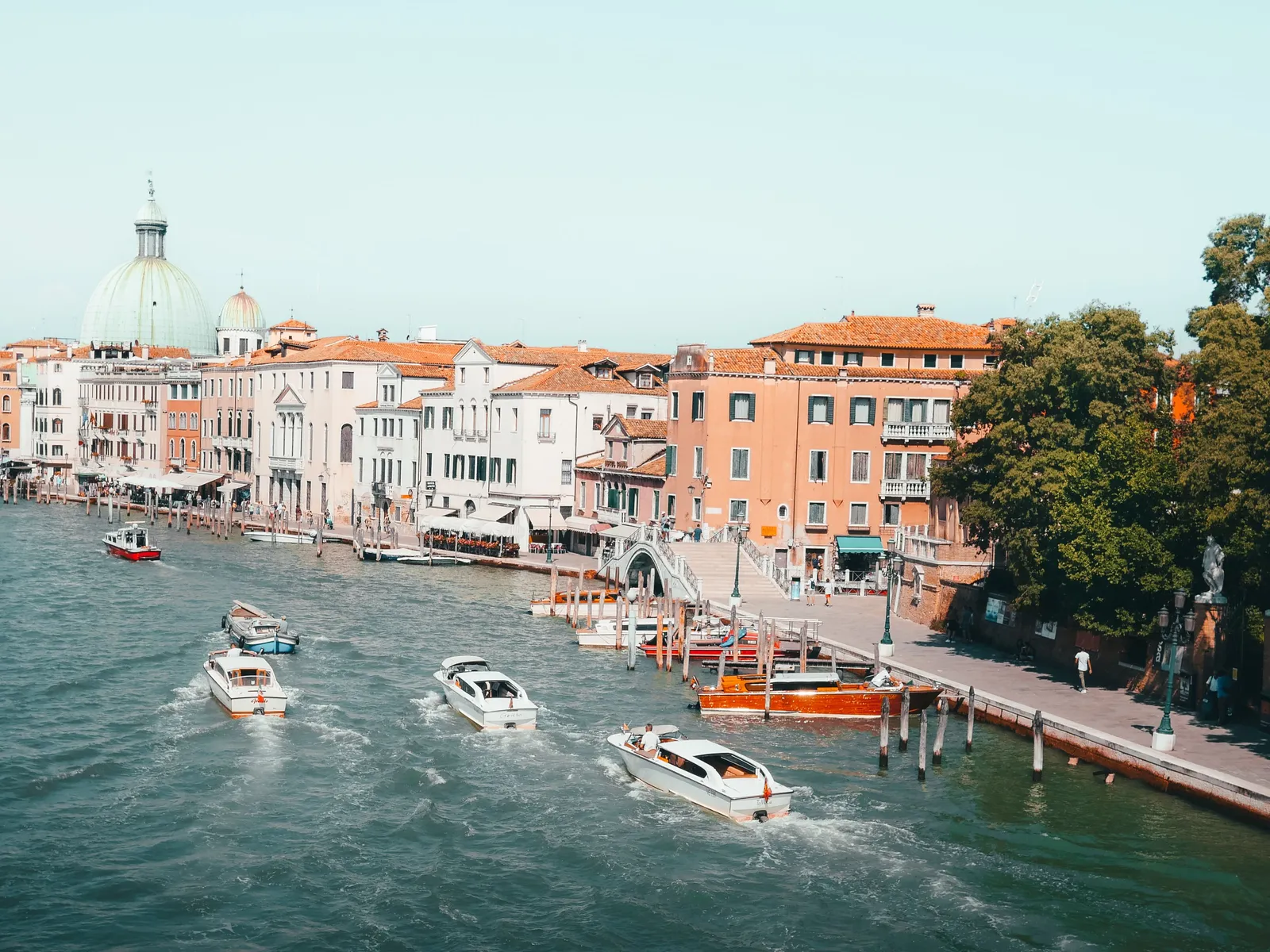
Venice introduced a charge for day visitors on selected busy dates, the first city of its kind to do so, and it has been revised more than once since. That makes it the single most misreported practical detail about visiting the city: articles written in one year describe rules that no longer apply, and confident answers on forums are frequently a season out of date. This page explains what kind of scheme it is and what to check, and deliberately does not print a price or a date list, because those are exactly the parts that go stale.
What the scheme is
A charge on day visitors, not a general entry fee for the city.
It applies on selected dates, published in advance, concentrated on the busiest periods of the year rather than running continuously.
You register in advance through the official municipal system and carry the confirmation, which is checked at the main arrival points.
Exemptions exist for a number of categories, most importantly for people staying overnight in accommodation within the city, and also for residents, workers, students and various other cases.
It is enforced with spot checks and fines, which is the practical reason to bother rather than gamble.
Why the details are not in this article
This is a deliberate choice and it is worth explaining.
The amount has changed since the scheme started, and has been set at different levels depending on how far in advance you book.
The list of dates has changed from year to year.
The exemption categories have been refined more than once.
Any specific figure or date list here would be right for a while and wrong afterwards, and a confident wrong number is worse than no number, because it stops you from checking. The correct source is the official municipal booking site for your own travel dates.
What it means for planning
If you are staying overnight in Venice, this is mostly an administrative step rather than a cost, and your accommodation is the right first question.
If you are coming for the day, budget the few minutes to register and treat the charge as part of the cost of the day, which it barely moves.
If you were undecided about staying the night, this nudges the decision, and it nudges it in the direction the city itself deserves. Our first-time guide to Venice sets out why the evening and early morning are the whole argument for sleeping there.
If you are visiting the outer islands, they sit within the lagoon and the arrangements apply to the historic centre, so check where the boundary falls for your route. Our guide to Murano and Burano covers how the island day works.
The wider point about Venice
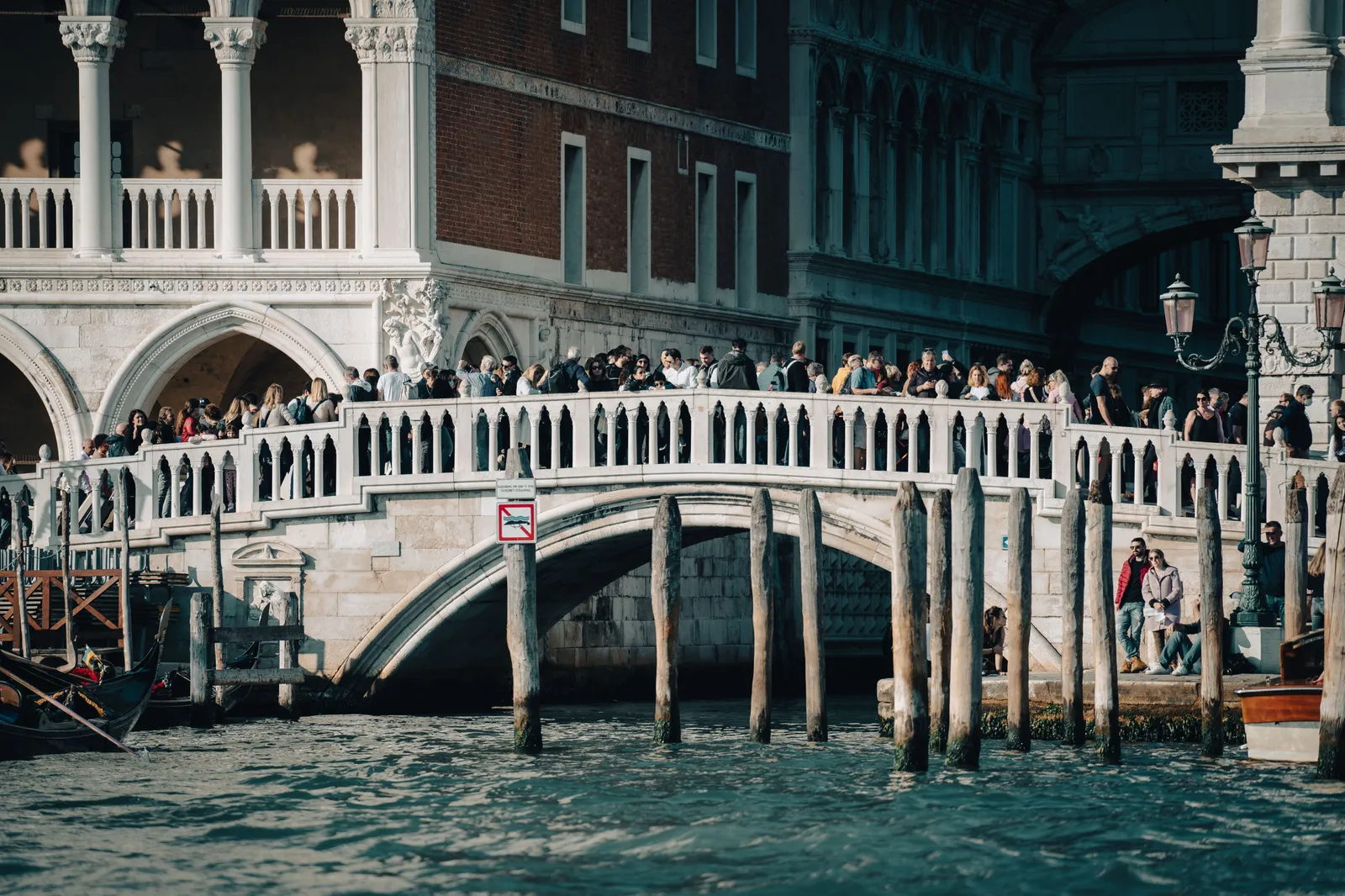
The charge exists because Venice has a small resident population and an enormous number of visitors, many of whom arrive for a few hours, use the busiest streets and spend little in the city.
The pressure is real. Residents have left in large numbers over decades, housing has shifted to short-term letting, and the daily peak crowd is the thing that makes the centre unpleasant for everybody in it.
Whether a charge fixes that is genuinely debated, in Venice as much as anywhere else, and reasonable people disagree.
What is not debated is that spreading visits across the day and the year, and staying overnight rather than passing through, is better for the city and better for the visitor. That is worth knowing regardless of what any scheme charges.
Practical notes
Register in advance where it applies and keep the confirmation offline as well as online, since signal in the city is patchy in crowds.
Carry proof of your accommodation if you are claiming the overnight exemption.
Arrive early or late on a charged date, since those are by definition the busiest days.
Consider a shoulder month. Many of the charged dates fall in the peak, and Venice in November or February is a considerably better city to walk around.
For everything else a first Italian trip assumes, from the train network to eating hours and opening times, our first-time guide to Italy covers the groundwork.
The short version
Venice charges day visitors on a published list of busy dates, with exemptions including people staying overnight in the city. Check the official municipal booking site against your own dates rather than trusting any article, register if it applies, and save the confirmation. If you are staying the night, ask your accommodation what they handle. And treat the whole thing as one more reason to sleep in the city rather than pass through it, which is the better trip anyway.