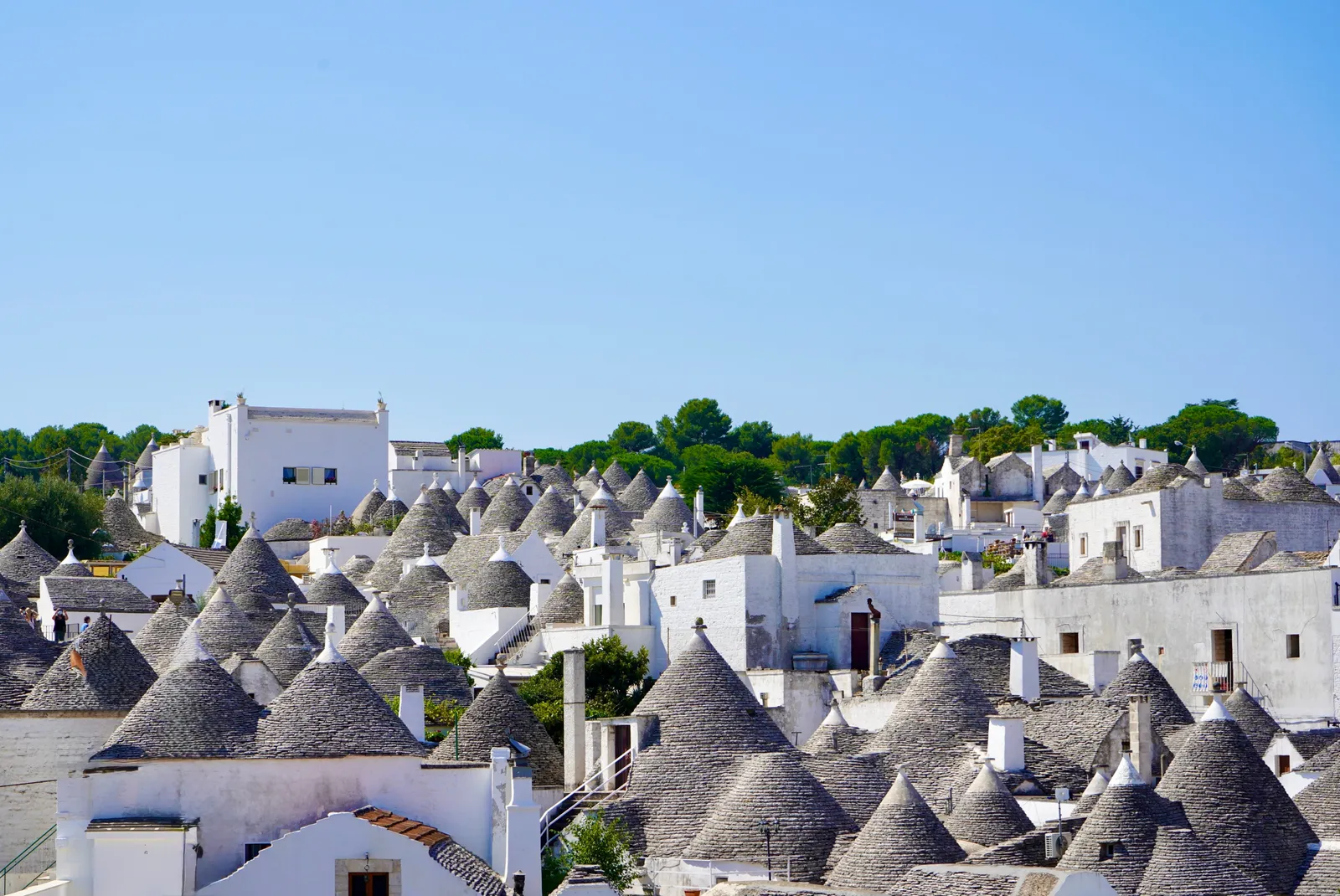
There is a town in the middle of Puglia where an entire hillside is built out of small round houses with pointed stone roofs, thousands of them, packed together in white terraces. Alberobello looks invented, or at least reconstructed for visitors, and it is neither. The trulli are a genuine vernacular building tradition of this corner of Italy, they were ordinary working buildings, and there are thousands more scattered across the surrounding countryside where nobody is photographing them at all.
What trulli actually are
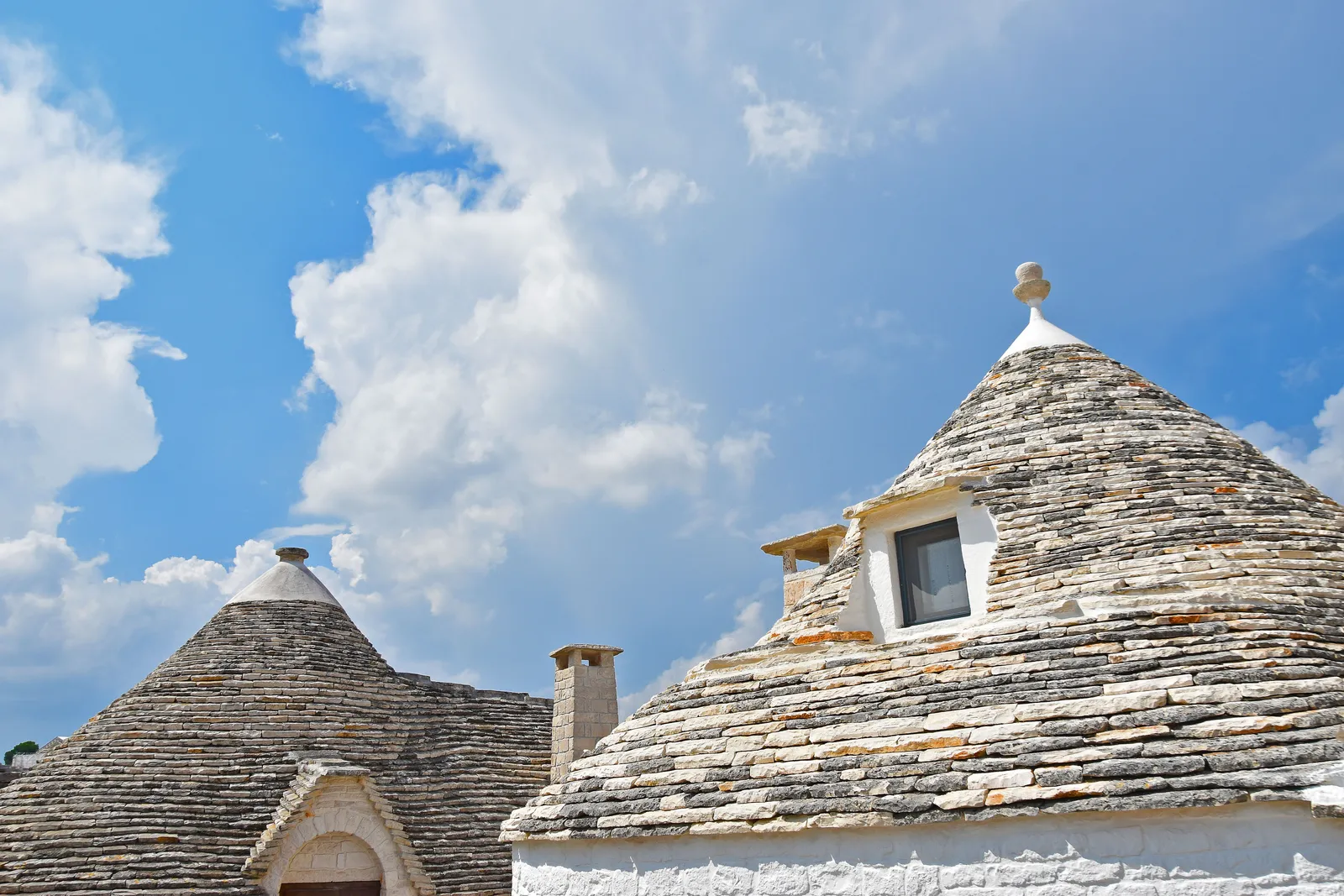
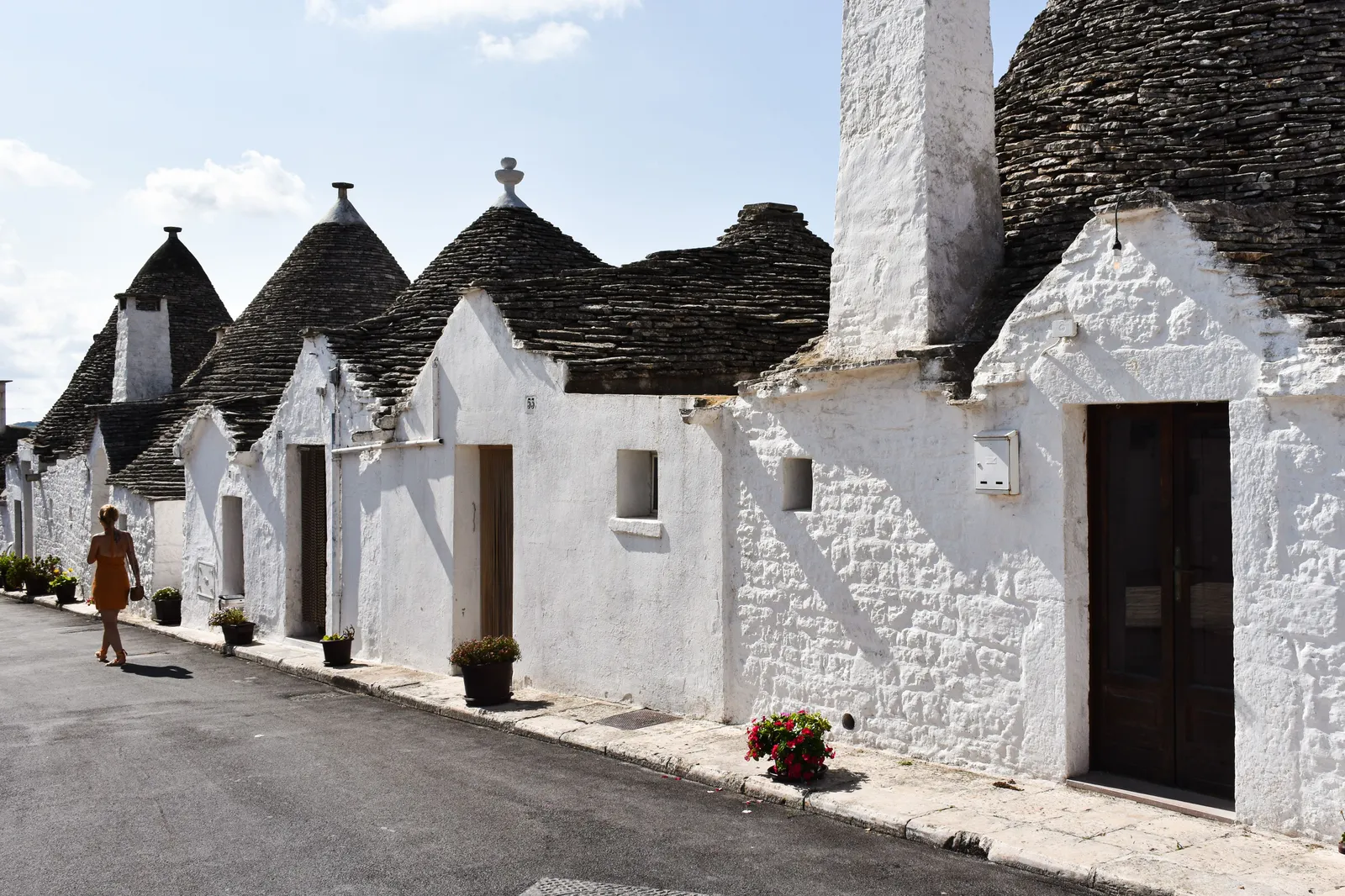
Dry stone buildings, made from the flat limestone that this landscape produces in enormous quantity, with whitewashed walls and a conical roof laid in overlapping courses without mortar.
They were farm buildings and houses, not follies, used for storing produce, sheltering animals and living in.
The mortarless roof is the technical point: a corbelled cone that holds itself up by geometry, and that can be taken apart quickly.
The tax story is the explanation everybody repeats: that a building which could be dismantled did not count as a permanent dwelling for tax purposes. It has a real basis in the region’s history and how literally it applied is debated, so treat it as a good story rather than settled fact.
The symbols painted on many roofs are a mixture of religious, astrological and protective marks, and interpretations of them vary.
Visiting the town
Two districts. The larger one, on the main slope, is the commercial half, with souvenir shops occupying most of the ground floors. The smaller one across the valley is residential and much quieter.
Walk both. The contrast is the visit, and most day visitors only see the first.
Two to three hours is enough, plus lunch.
Going inside is easy: several trulli are open as small museums or shops with an upstairs, and one large complex shows how several were joined into a house.
The viewpoint from the terrace on the far side of the valley is where the photograph of the whole roofscape comes from.
The countryside, which is the better half
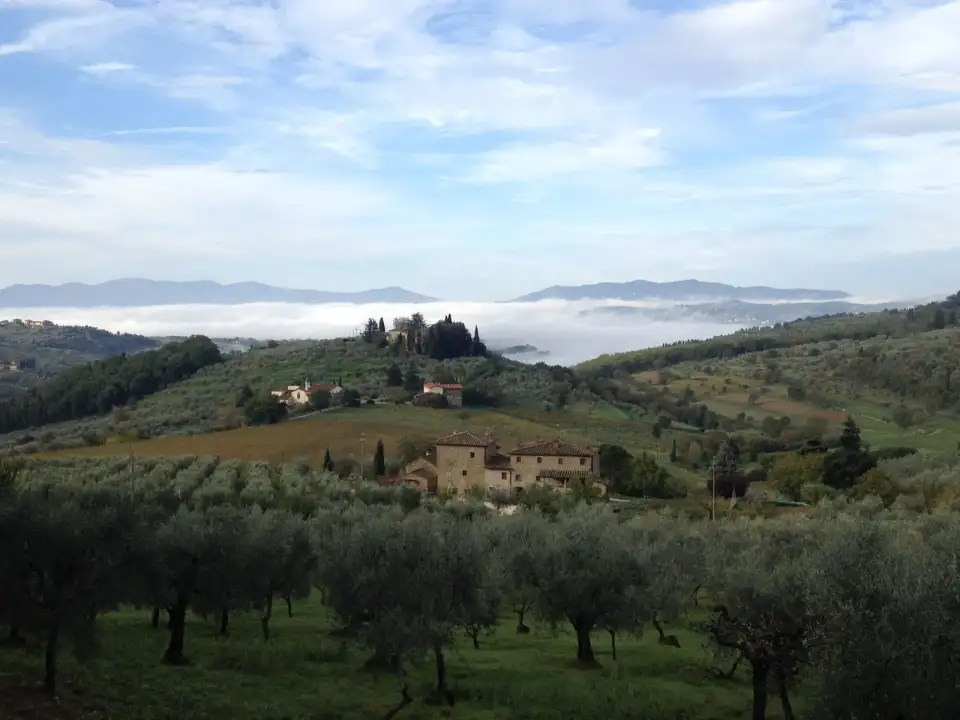
The trulli did not stop at the town boundary, and the landscape around it is full of them.
Standing alone in olive groves and fields, singly or in small clusters, across the whole Valle d’Itria.
Along the back roads between the white towns, where you pass dozens in an hour of driving.
Converted into houses, with pools and terraces, which is how most visitors end up sleeping in one.
In various states of repair, from immaculate to collapsing, which is a more honest picture of a working building tradition than the restored town.
Driving the small roads between the white towns with no particular destination is one of the better afternoons in southern Italy, and it costs nothing.
Practical notes
Getting there. A regional railway serves the town from Bari, slowly, and a car is much more useful for the surrounding area. Our guide to trains in Italy covers what the regional network can and cannot do.
Parking is outside the historic districts, as everywhere in Italy, and signposted.
It gets hot and the white streets reflect it, so the middle of a July day is uncomfortable as well as crowded.
Combine it with one or two of the white hill towns nearby rather than making it the whole day.
Buy carefully. Most of what is sold on the main lane is generic; the local food products are the better souvenir.
Where it fits in a southern trip
Alberobello is one stop in a region that deserves a week, and it is not the highlight of it.
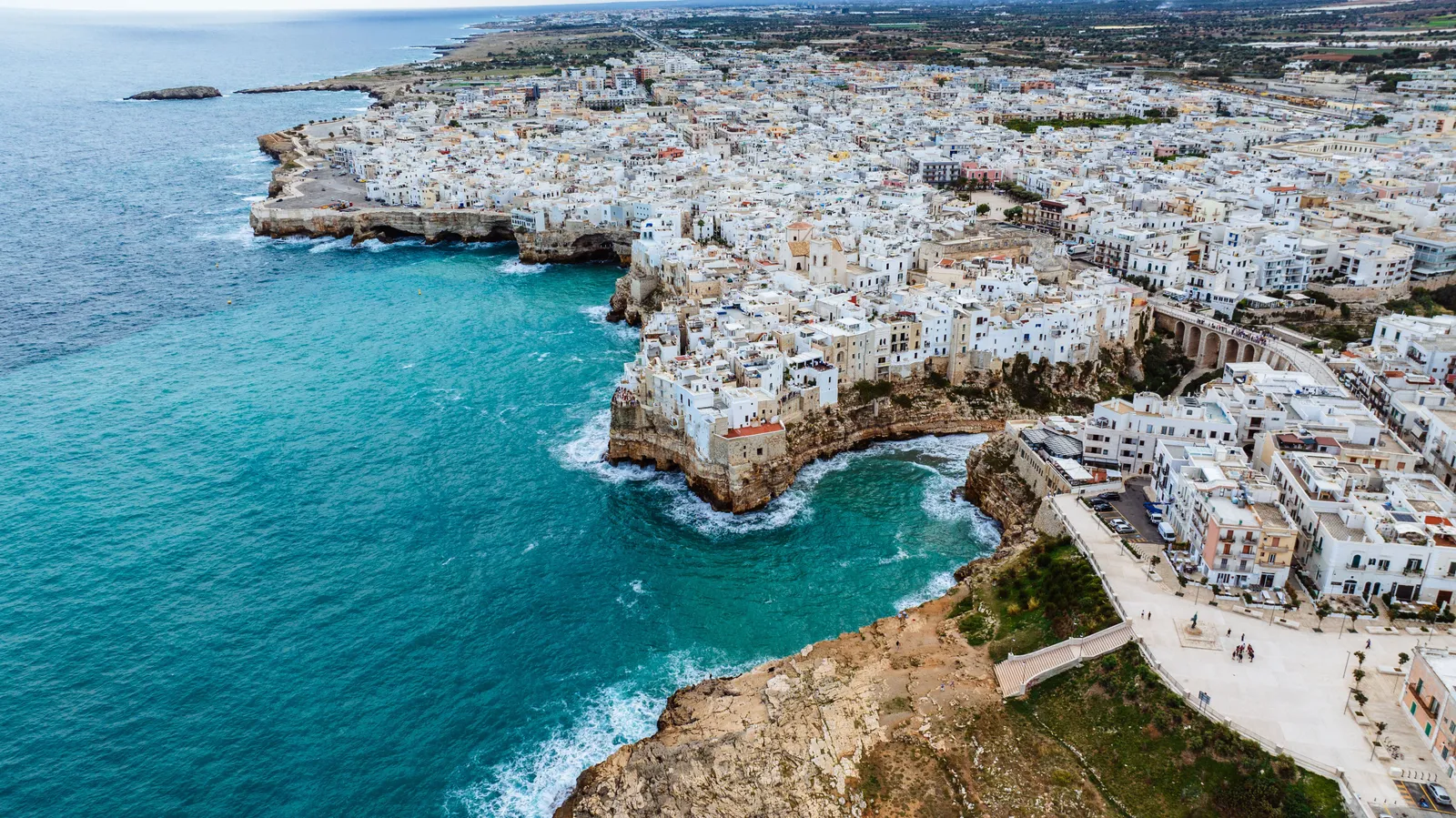
Our guide to Puglia covers the whole region, how to split it between the centre and the far south, and why the drives here are so much easier than elsewhere in southern Italy.
And if you are choosing between a Puglian road trip and the bigger southern option, our guide to Sicily covers the island that takes twice the time and gives you three thousand years of history for it.
The short version
Give Alberobello two to three hours, not a day, and go at eight in the morning or in the evening rather than at midday with the coaches. Walk both districts, since the quiet residential one across the valley is the better half. Go inside a trullo to see how the roof works. Then get in the car and drive the back roads between the white towns, where the trulli stand alone in the olive groves and nobody is looking at them. And if the building itself fascinates you, sleep in one out in the countryside rather than queueing to photograph one in the town.