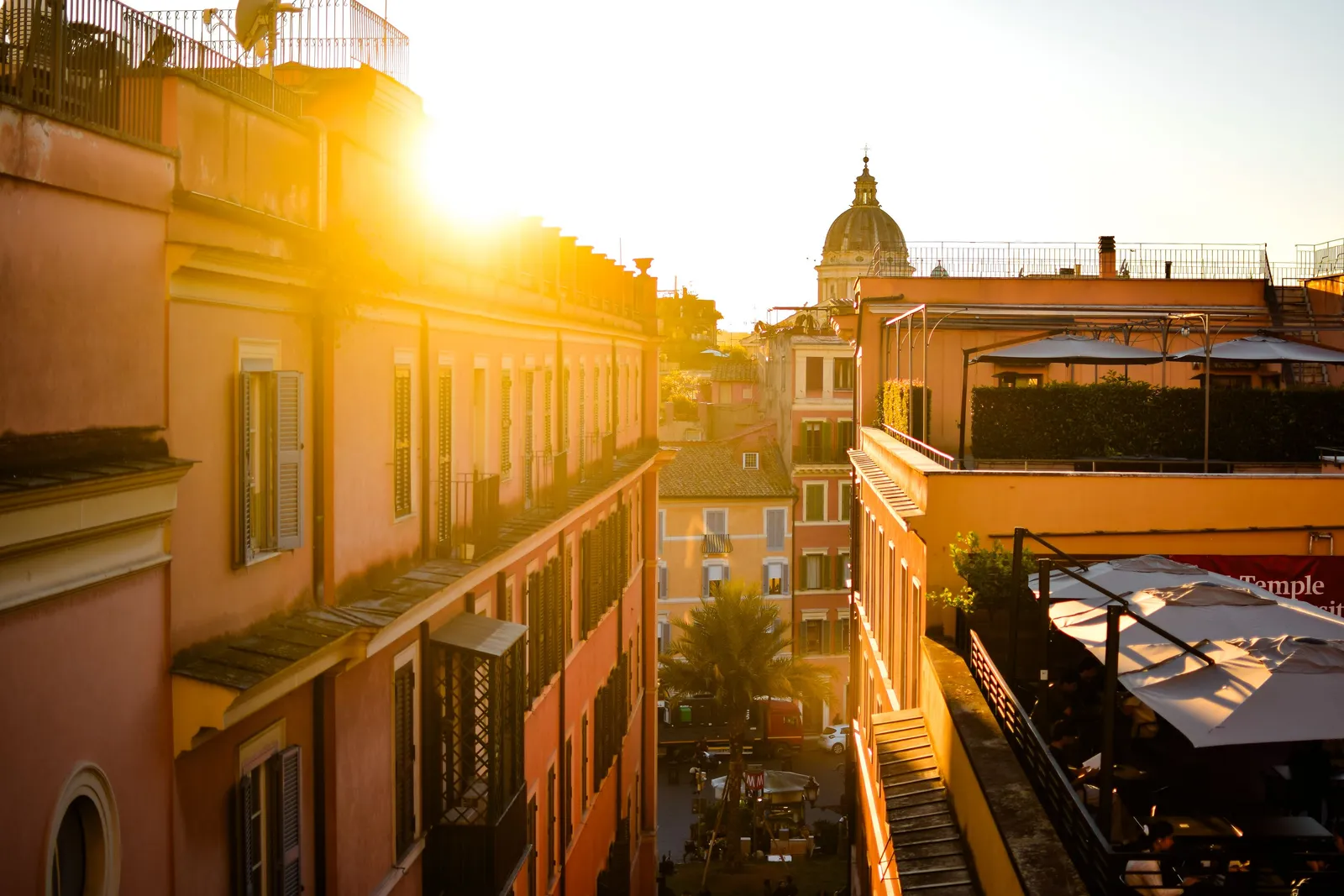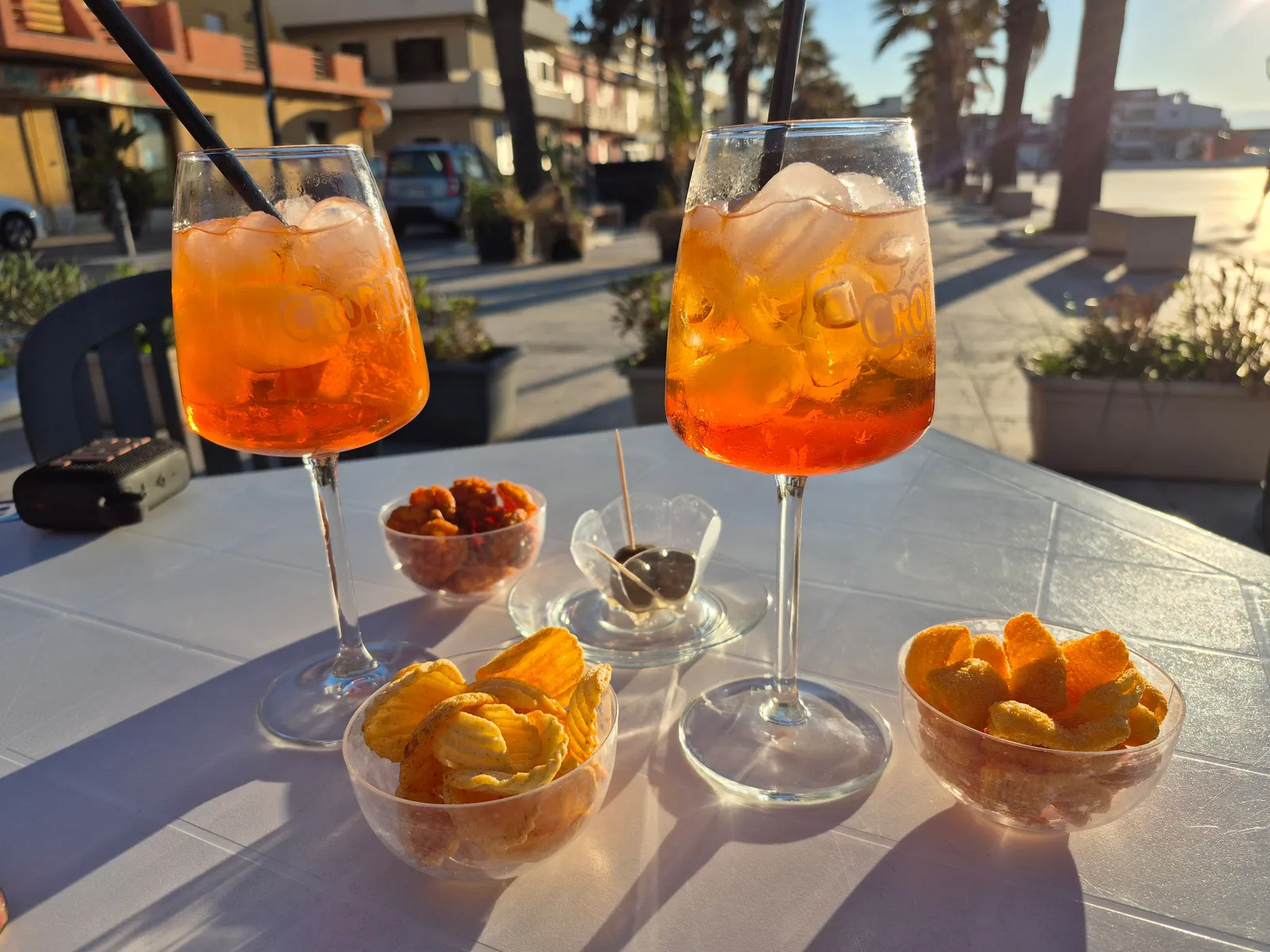
Milan has a reputation as the Italian city that works rather than the one that enjoys itself, which is unfair mostly in the evening. The city invented the modern aperitivo hour as a commercial format, and between six and nine it is genuinely one of the busiest drinking cities in Europe.
Most of that happens in a handful of districts, and the one everybody names is Navigli.
What the Navigli actually are
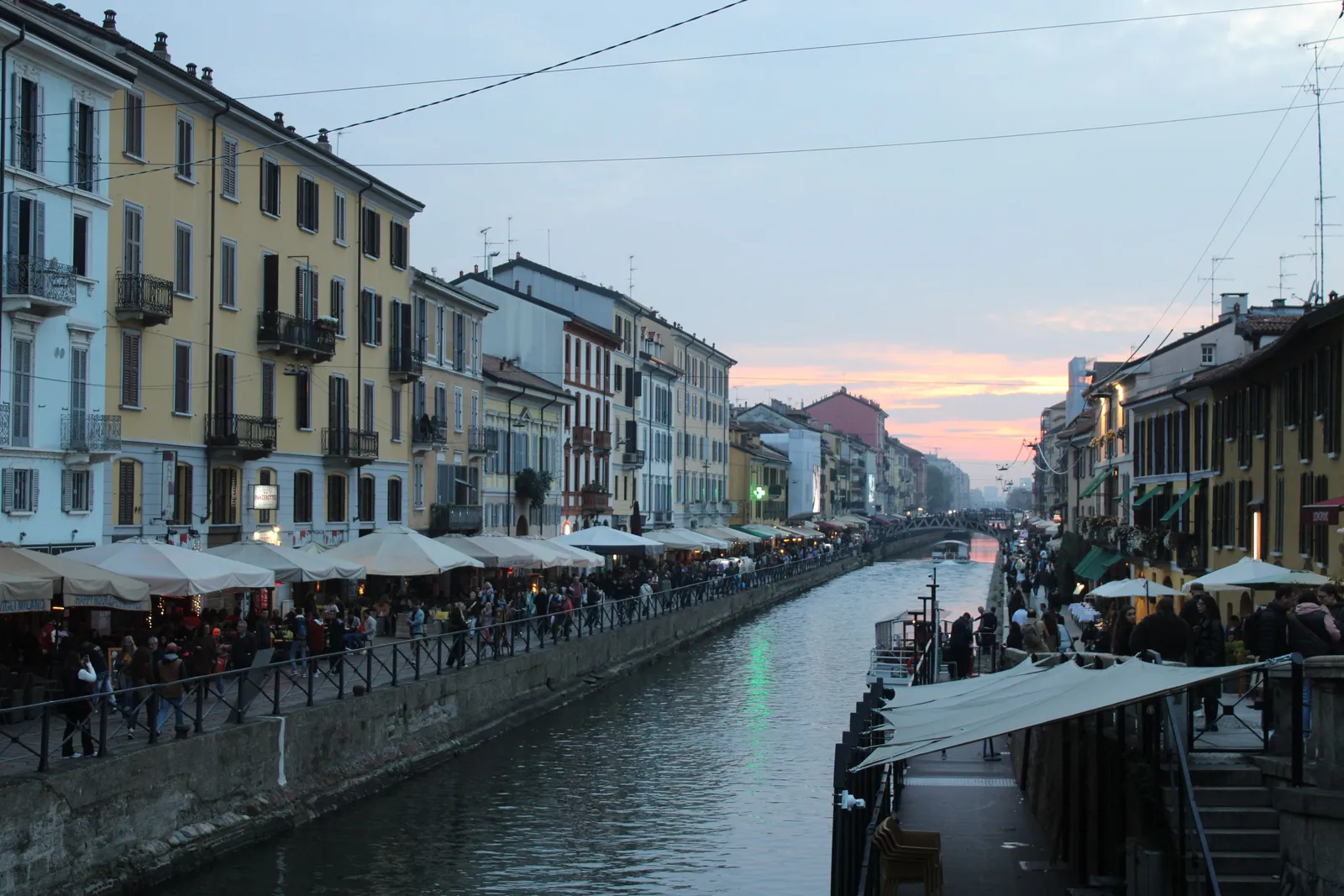
The Navigli are canals, a surviving fragment of a much larger medieval system that once connected Milan to the rivers and lakes and carried the marble that built the Duomo. Two remain in the city: the Naviglio Grande and the Naviglio Pavese, meeting near the Darsena, the old dock basin.
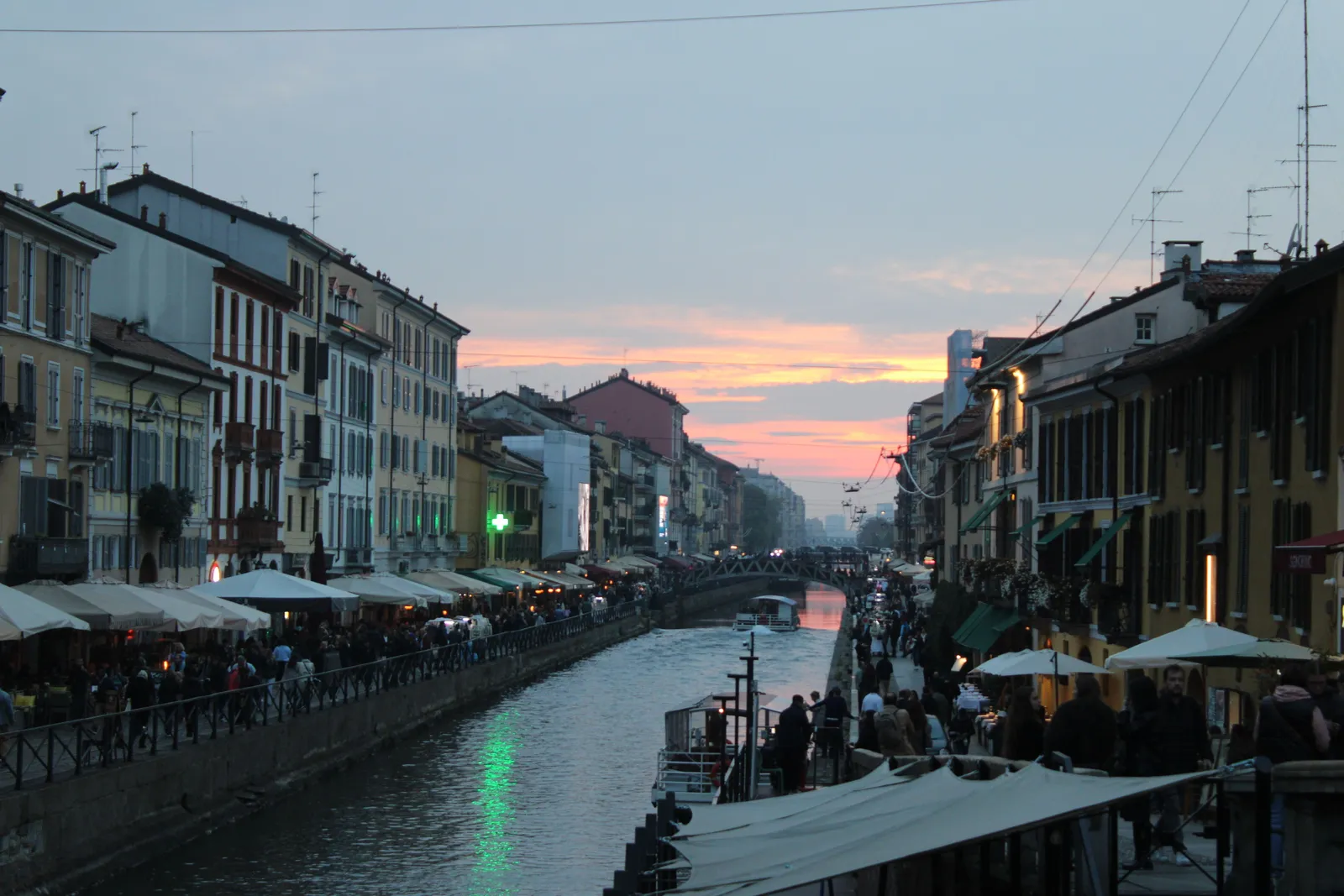
The nightlife is arranged along the water. Bars line both banks of the Naviglio Grande in a near-continuous strip for well over a kilometre, with tables out along the towpath in warm weather, and the Darsena end is where the density is highest. It is not a subtle district. On a Friday in June the canalside is shoulder to shoulder, and that crowd is the attraction rather than a side effect.
Away from the water, one street back, it quietens sharply, and some of the better bars are in those side streets rather than on the strip.
Apericena and what it costs you
Milan is where aperitivo became apericena, and it is worth understanding before you order.
You pay a set price for one drink, and the bar puts out a buffet: pasta, rice, cured meats, focaccia, sometimes hot dishes. The price of the drink is higher than at an ordinary bar precisely because the food is inside it. The etiquette is one plate at a time, and you buy the drink before you go to the food, not after.
Done well it is a good deal and a genuinely social way to spend an evening. Done badly, at the most tourist-facing places on the canalside, it is a tray of reheated pasta and an overpriced spritz. The signal is the crowd: a bar full of people who plainly came from an office nearby is doing it properly, and one full of people with day bags and cameras is not.
If you want the smaller, older version of the ritual rather than the buffet, our guide to aperitivo across Italy covers how it differs elsewhere in the country.
How the evening moves
The rhythm along the canals is fairly consistent. From six the after-work crowd arrives and the buffets go out. Between seven and nine the strip is at its fullest and hardest to get a table on. From around nine the aperitivo crowd thins as people leave to eat properly or go home, and the bars that stay busy shift to a later, younger crowd, with music venues and clubs picking up from around eleven.
That structure means you can have a completely different night depending on when you turn up, and it also means an early evening here is easy to combine with an early start the next day. If your Milan stop is really a stop, our guide to Milan and the lakes covers what fits around it, and the Last Supper and Duomo guide covers the two bookings worth making before the drinking starts.
The other districts worth the tram
Navigli is the loudest option, not the only one.
Brera, north of the Duomo, is the opposite in almost every respect: narrow streets, small bars with a handful of outside tables, an older and better-dressed crowd, and higher prices. It is where you go for a conversation rather than a crowd.
Isola, north of Porta Garibaldi and in the shadow of the new towers, has become the district where a lot of the interesting cocktail bars ended up, mixed in among ordinary neighbourhood places. It is less scenic than the canals and generally better for what is in the glass.
Porta Romana and the streets around Corso di Porta Ticinese sit between the two, busy with students and locals, cheaper than Brera and calmer than the canalside.
Porta Venezia has a strong bar and club scene and is the centre of the city’s LGBTQ+ nightlife, with a run of venues along and around Via Lecco.
Getting home
This is the part that catches people out. The Milan metro stops running before the bars do, and the last trains are earlier than the peak of the evening on a weekend. After that you are on night buses, a few tram routes, or a taxi.
Taxis in Milan are taken from ranks or booked by phone or app rather than hailed in the street, and on a busy Saturday night the wait around Navigli can be long because everybody is leaving at once. Walking back to a central hotel is often faster than waiting, which is a good reason to stay somewhere you can walk to.
If you are travelling on the next day, note that the last regional trains out of Milan are earlier than you might assume; our guide to Italian trains covers how the timetables work.
Practical points
Seasonality matters here more than in most Italian cities. In August a large share of Milanese bars close for two or three weeks while the city empties, and the canalside is noticeably quieter. In winter the outside tables disappear and the strip becomes an indoor scene, smaller and more manageable.
The canals themselves are drained periodically for maintenance, usually in the colder months, which is not a disaster but does change the photographs considerably.
And the price gap between the canalside and one street back is real. If the evening is about the view of the water, pay it. If it is about the drink, walk sixty seconds inland.