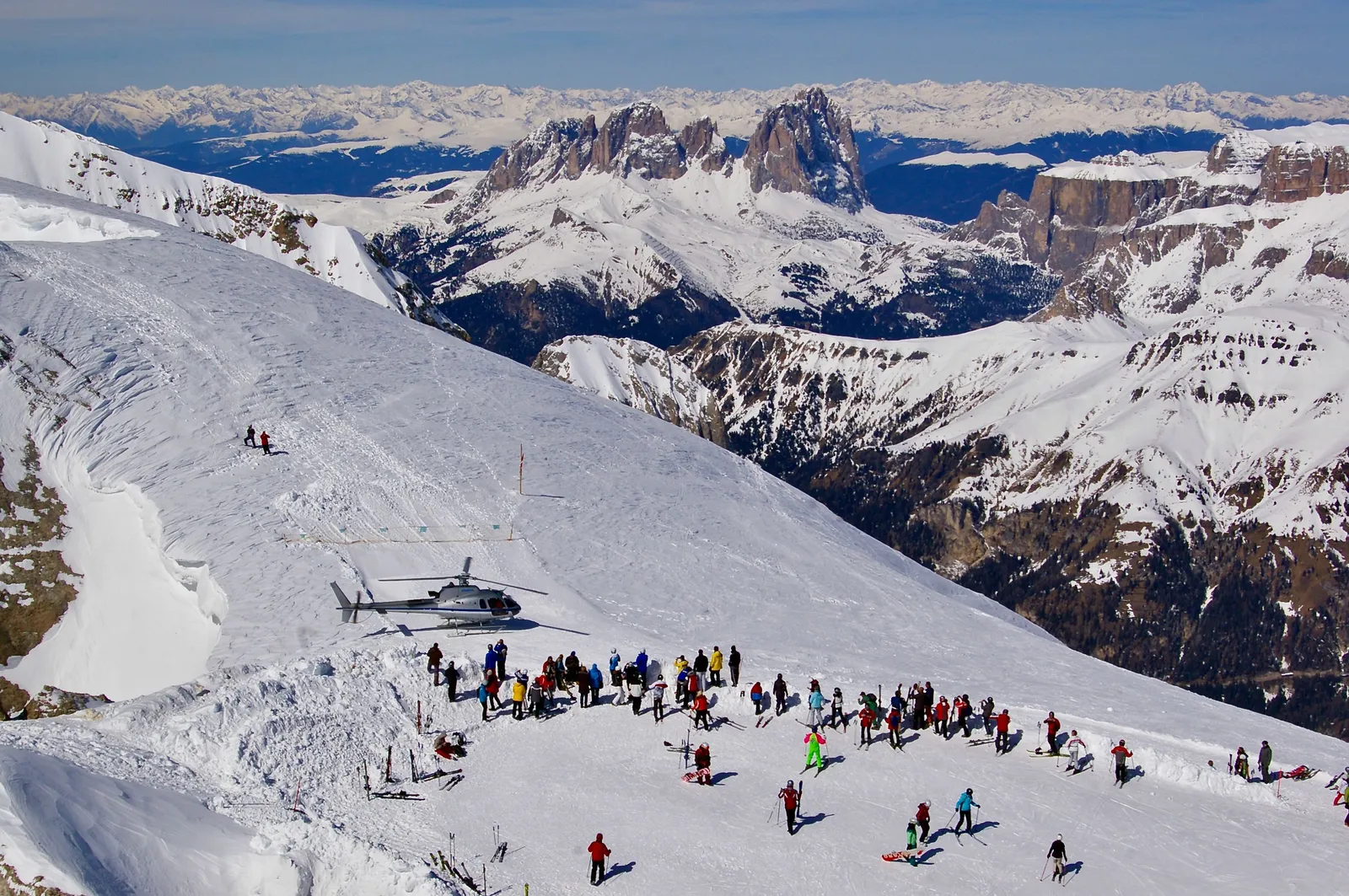
The Dolomites are not a single ski resort, and thinking of them as one is the fastest way to plan a trip around the wrong valley. What you are actually choosing between is a network of linked ski areas, each with its own character, spread across several valleys that share lifts, pistes and a joint pass but are otherwise quite different places to spend a week.
Understanding how that network fits together, and how the season itself changes from December to April, matters more here than picking a famous name off a map and hoping it works for the kind of skiing you actually want to do. For the wider picture on the region beyond the pistes, the Dolomites guide covers the towns, valleys and summer trails the same peaks look after once the snow has gone.
How the linked area works
The Dolomiti Superski pass is what ties the region together: a single ticket that covers lift access across a large network of connected ski areas rather than one resort alone. This is the feature that makes the Dolomites unusual among European ski destinations, letting a confident skier cross between valleys on skis over the course of a day rather than being confined to a single mountain.
Not every valley links directly to every other by lift and piste alone, and some connections work better for strong intermediate and advanced skiers than for beginners still finding their feet. It is worth checking the current trail map for the specific route between the valleys you are considering rather than assuming full connectivity everywhere.
Passes are generally sold in flexible blocks rather than as a single fixed product, with options ranging from a single day up to a full week or longer, and some versions let you choose a set number of days within a wider window rather than requiring consecutive use. Which structure suits you depends on whether you are staying put for a fortnight or splitting a shorter trip between skiing and other plans, and it is worth comparing the options for your specific dates rather than assuming the standard weekly pass is automatically the best value.
Choosing a valley
| Traveller | What to look for |
|---|---|
| Beginners | A valley with a wide beginner base and dedicated nursery lifts |
| Families | Short transfers from village to lift, and a mix of easy runs |
| Confident intermediates | A base within the well linked heart of the network |
| Ski touring and off piste | Valleys known for backcountry access and guiding services |
Beginners and families generally do better in a valley with a genuinely wide base of gentle terrain close to the village, rather than one built around the dramatic high altitude runs the Dolomites are famous for in photographs. Those photogenic routes are usually a highlight for a stronger skier travelling in from a more central base, not a beginner’s first few days on snow.
Driving here in winter
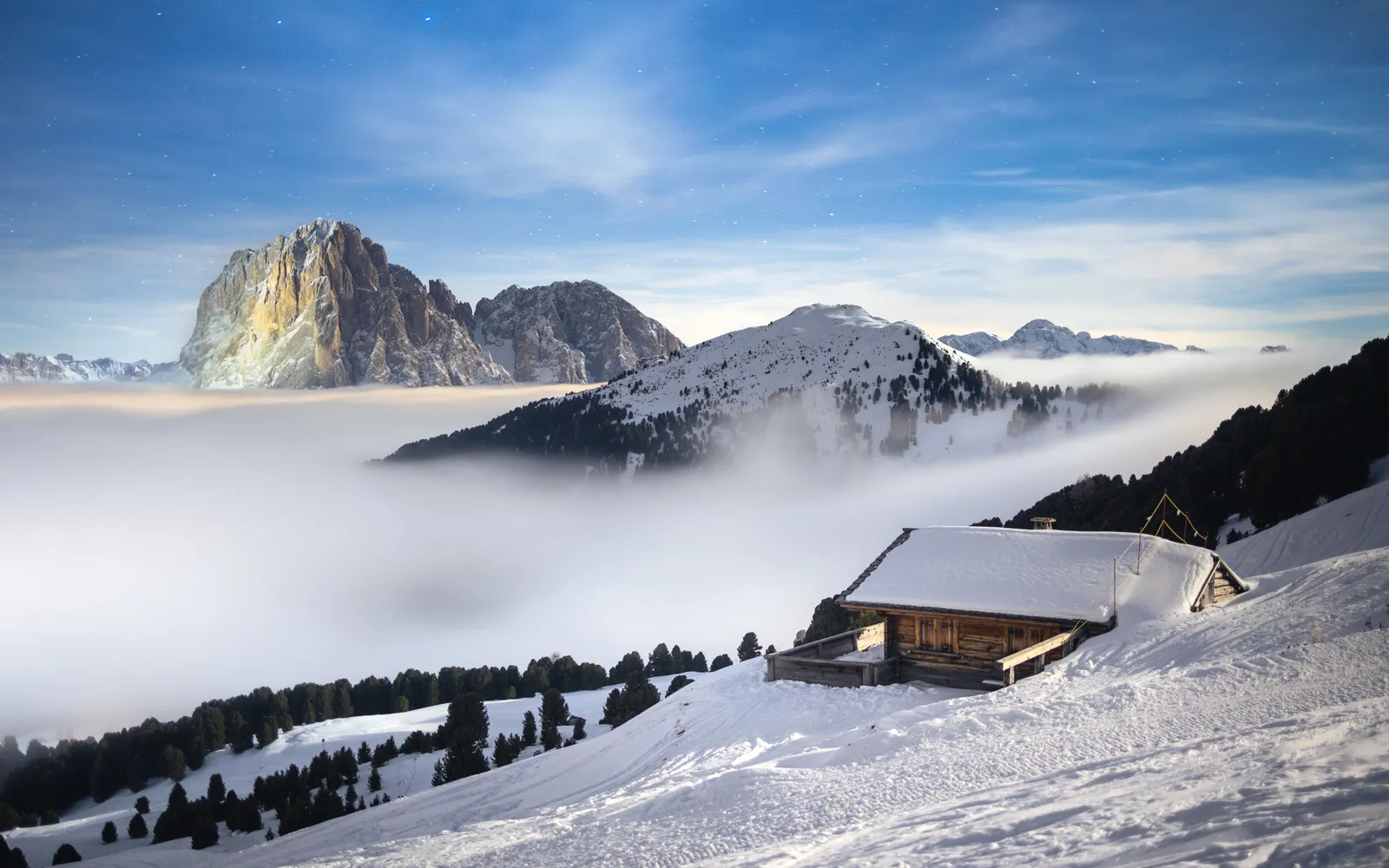
A number of valleys are well connected by ski bus between village accommodation and the lift base, which removes the need for a car entirely if you are staying in one place for the week. Reaching more remote resorts, or splitting a trip between two separate valleys, is considerably easier with your own car.
Winter driving in the Dolomites means mountain roads with real gradient and, at times, snow or ice directly on the surface. Winter tyres, or snow chains carried as a backup, are the standard expectation rather than an optional extra, and the fuller picture on driving in Italy is worth reading before you go if this is your first winter behind the wheel here.
Early season against the peak weeks
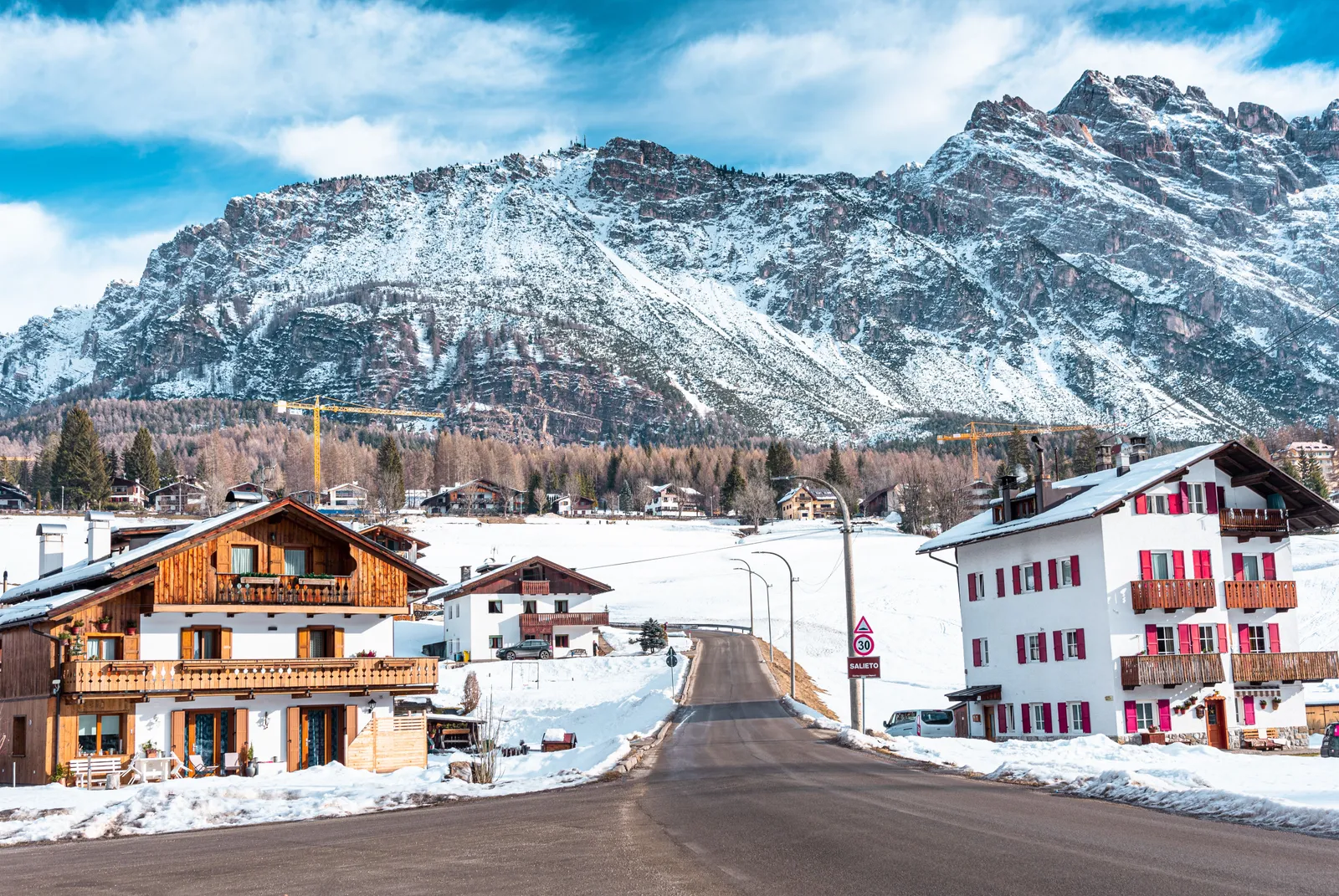
The Dolomites ski season runs broadly from early December through to the start of April, though the exact opening and closing dates move each year with snowfall, and this is genuinely not a fixed calendar you can plan around blind. The broader month by month weather picture for Italy is a useful cross check if you are weighing a ski week against other plans either side of the season.
Early season, roughly the opening weeks in December, tends to mean a narrower range of open runs, more reliance on snowmaking at the lower altitudes, and noticeably thinner crowds and shorter queues. It suits a traveller who prioritises a quieter mountain and lower prices over having the full terrain available on day one.
Peak weeks, around Christmas, New Year and the February half term periods, bring the complete network of open runs, a livelier atmosphere in the villages, and correspondingly busier lifts, fuller restaurants and higher prices across accommodation and passes alike. Both rooms and lift tickets for the most popular valleys can sell out well ahead of these weeks, so booking early matters here more than at almost any other point in the season.
Late season, into March and the first part of April, sits somewhere between the two, with generally reliable snow at altitude, milder days and a return to quieter slopes once the peak weeks have passed, though lower runs become the first to close as the season winds down.
What to book ahead, and what can wait
Lift passes and accommodation for the peak weeks are the two things worth securing well in advance, since availability in the most established valleys genuinely does run out. Equipment hire, lessons and restaurant tables can usually wait until closer to the trip, or even until you arrive, outside those specific weeks.
Weekends throughout the season bring a smaller version of the same crowding, as day visitors and weekenders from nearby cities add to the numbers, so a midweek base for at least part of a trip is worth building in if your schedule allows it.
Equipment hire and lessons are worth a mention of their own. Ski schools in the busier valleys book up for the peak weeks, particularly for children’s group lessons and for popular instructor languages, so if lessons are central to your plan they belong on the same advance booking list as the pass and the room rather than something sorted on arrival. Equipment hire itself is rarely the bottleneck, and most resorts have enough stock to handle walk in demand outside the very busiest days.
Putting a trip together
A first Dolomites ski trip works best built around one well connected valley rather than an ambitious tour of the whole network in a single week. Pick a base with the terrain that matches your ability, check the connectivity to neighbouring areas if you want the option of exploring further, and treat driving conditions and booking timelines as part of the plan rather than an afterthought.
Once you have skied one valley properly, the appeal of the wider network becomes obvious, and a second trip built around exploring further along the linked system, rather than repeating the same base, tends to be how regular visitors treat the region after their first visit.
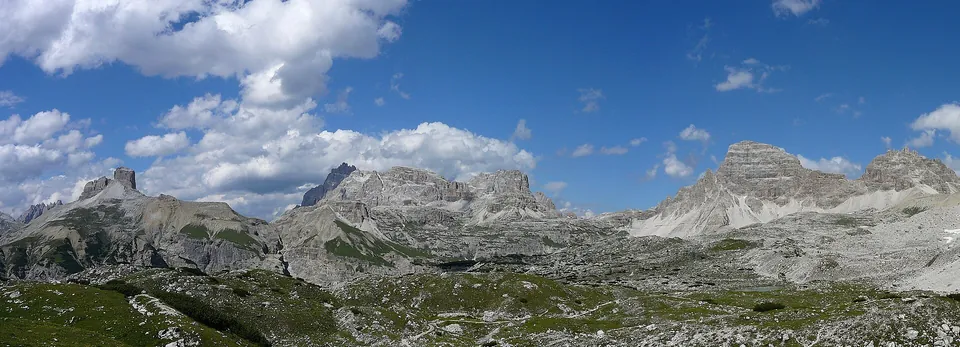
The scenery is the part that needs no persuading, jagged limestone towers rising directly above the pistes in a way genuinely unlike any other ski region in Europe. Getting the valley, the season and the logistics right is what turns that scenery into a week that actually works.
Snow reliability is worth a final word, since it shapes almost every other decision on this list. Higher altitude valleys and north facing slopes tend to hold natural snow more consistently through a variable winter, while lower resorts lean more heavily on snowmaking, particularly early and late in the season. If guaranteed snow matters more to you than a specific village, weight your choice of valley towards altitude first and everything else second, and check recent snow reports for your chosen area rather than relying on its general reputation.
None of this needs to be complicated. Most first time visitors overthink the choice of valley and underthink the calendar, when in practice the season you travel in shapes the trip at least as much as the resort name does.