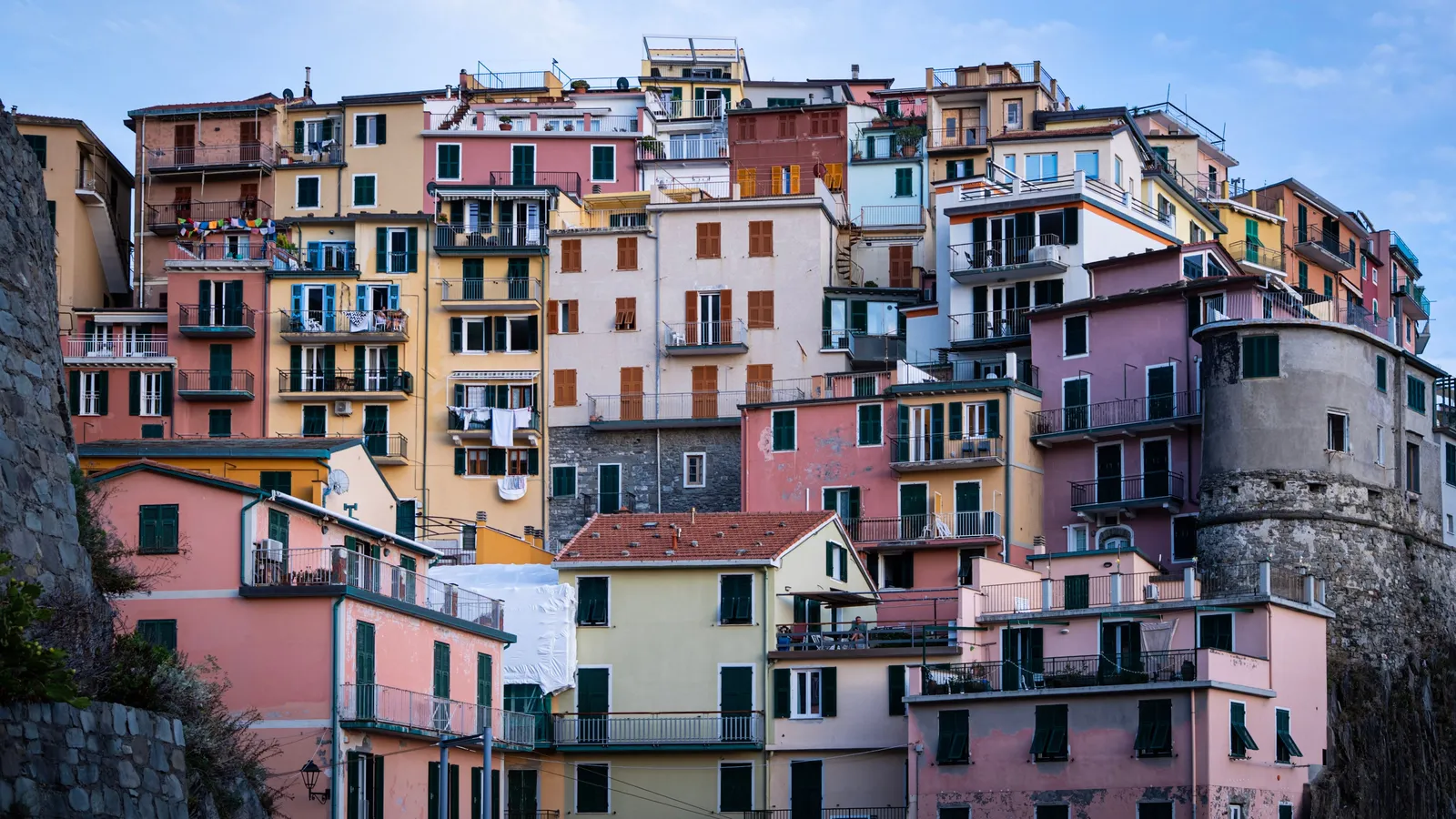
Five villages, a short stretch of Ligurian coast, and one railway line doing most of the work. Cinque Terre reads on a map like five separate destinations and behaves like a single one: you sleep in one village, eat in another, and let the train and the footpaths move you between the rest. Understanding that system, and the card that gates parts of it, is most of the planning done.
The line that holds it together
From south to north the villages run Riomaggiore, Manarola, Corniglia, Vernazza and Monterosso al Mare. Regional trains work the coastal line between La Spezia and Levanto, tunnelling straight through the headlands, so a hop between neighbouring villages takes a few minutes rather than the half hour the cliffs suggest. Services are frequent through the warm months and noticeably thinner in winter, and timetables are revised seasonally, so check current times on the official railway site for your own dates.
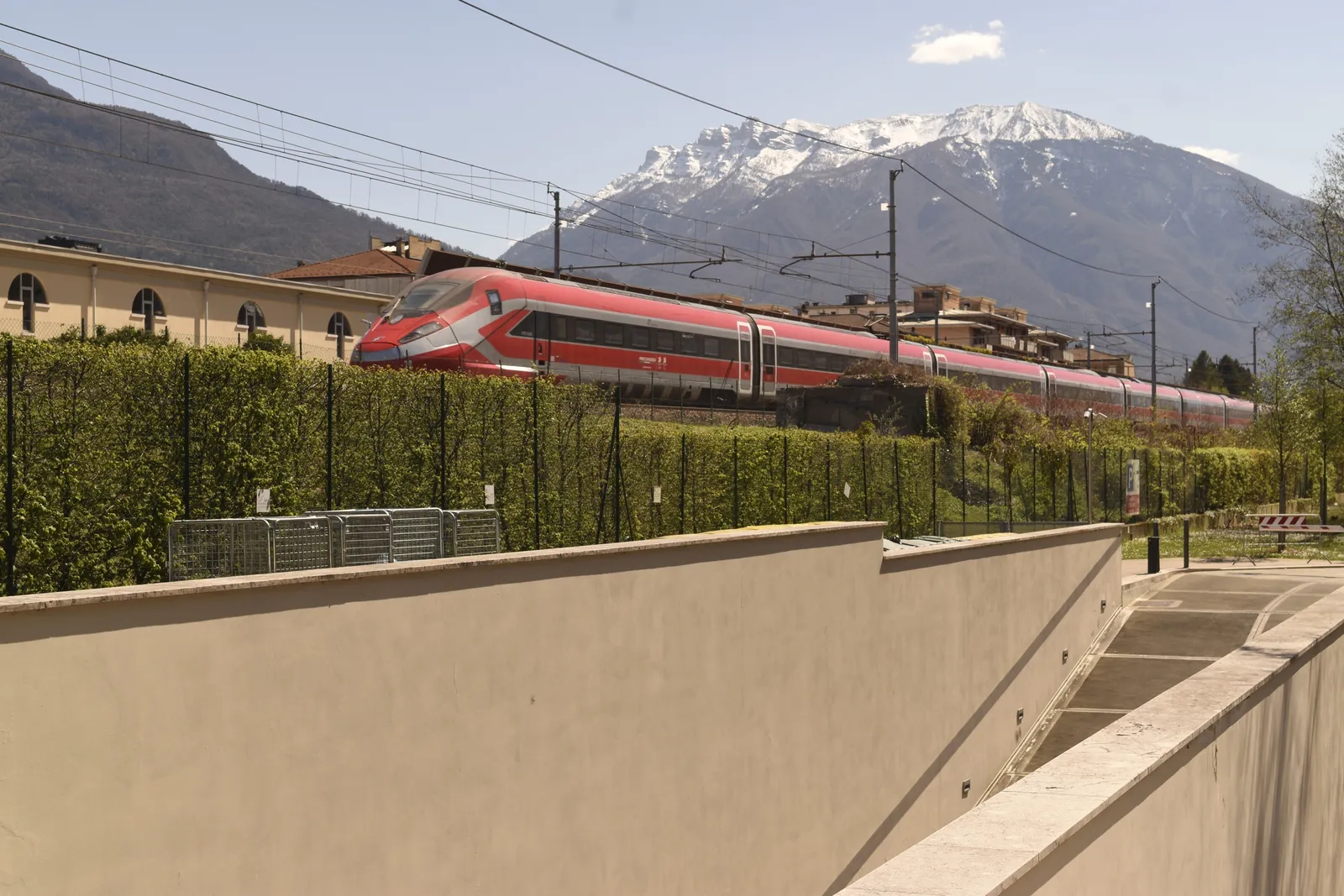
Regional fares work differently from the fast intercity trains, which matters here because almost every journey you make inside the park is a regional one. Our guide to Italy’s trains covers the ticket types, the validation rule that catches people out and when booking ahead is worth it.
One village breaks the pattern. Corniglia is the only one that does not sit at sea level: its station is down by the water and the village is on the clifftop above, reached by a long staircase or by the shuttle bus that meets trains. It is a fine place to stay and a miserable one to arrive at with a heavy case.
Choosing the village you sleep in
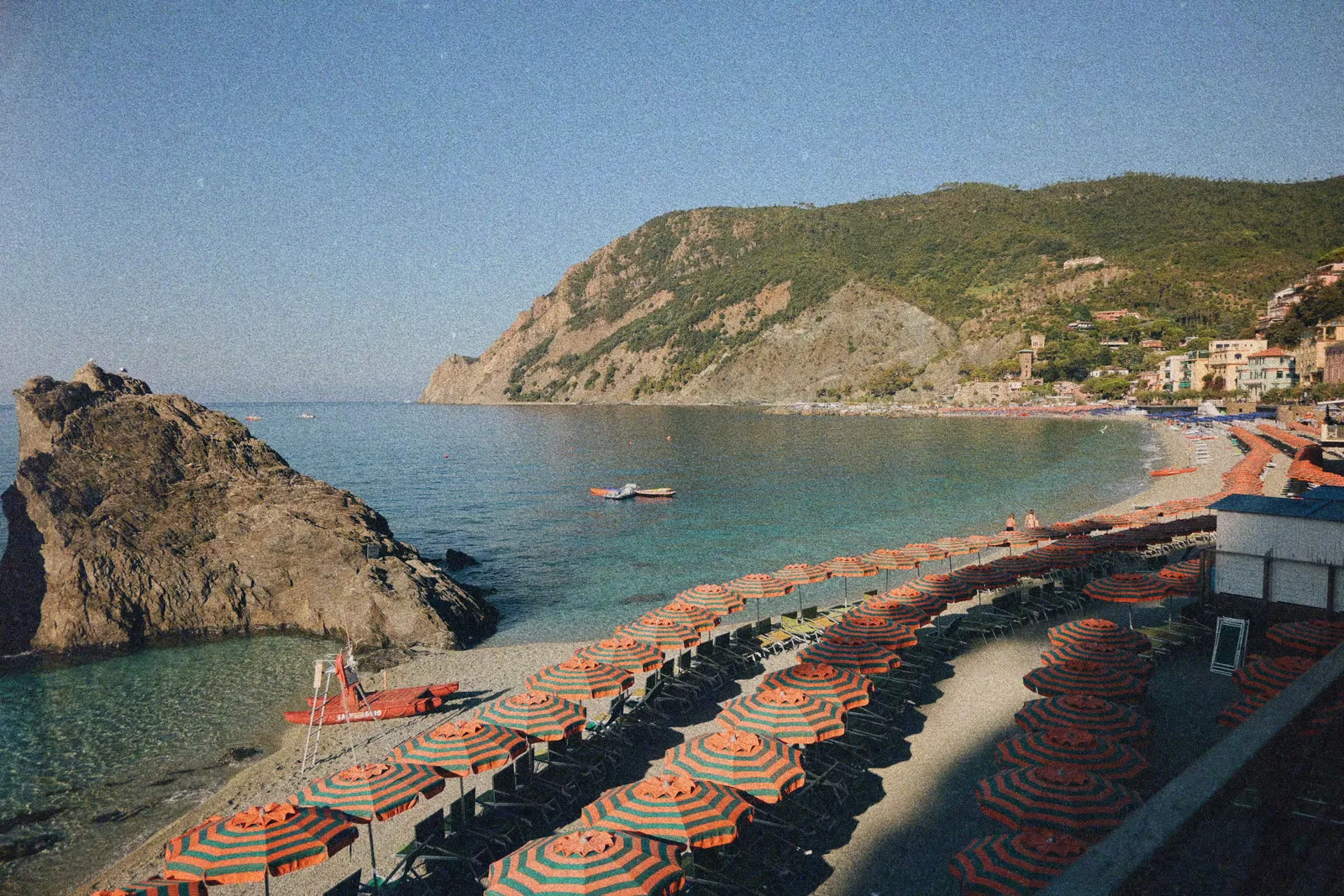
Monterosso al Mare is the largest and the flattest, holds the only real beach in the park, and has the widest choice of rooms, restaurants and shops. It is the easiest base by some distance, particularly with luggage or with children, and the least storybook of the five.
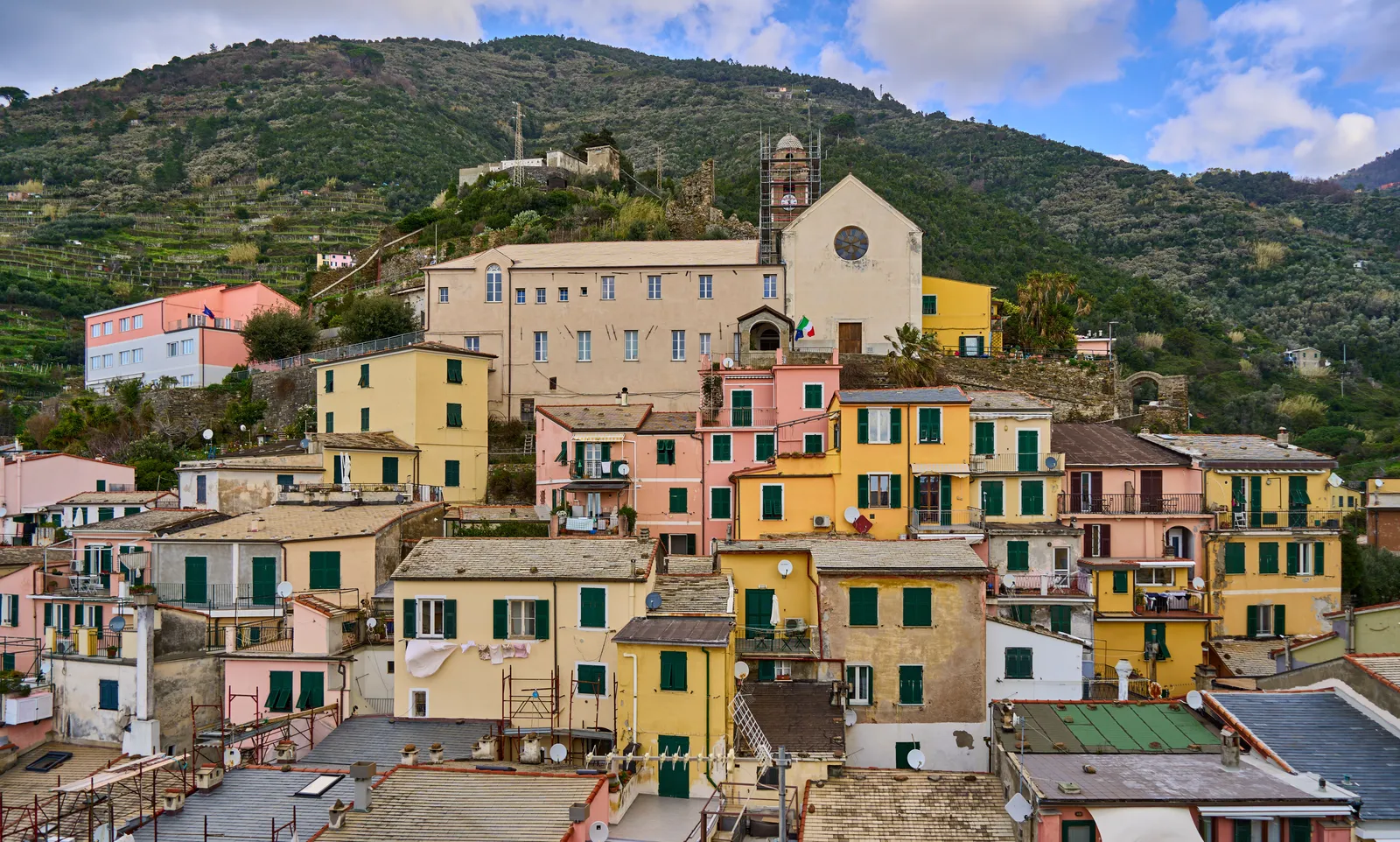
Vernazza has the harbour that appears on every photograph of this coast, a small natural amphitheatre of a village that is genuinely lovely at breakfast and at dusk. Beds are limited and go early. Manarola is smaller again, is the classic golden hour viewpoint, and has very few rooms. Riomaggiore is the busiest of the southern pair, steep, and the natural base if the southern path is your priority. Corniglia is the quietest and often the best value, with the staircase as the price of admission.
The village rooms are the scarce partFive small villages hold a limited number of beds, and the sea view ones go firstThere is also the option of not sleeping inside the park at all. La Spezia and Levanto sit at either end of the line, have far more rooms at gentler rates, and put you a short regional hop from the villages. What you give up is the evening, which is the single best thing about staying inside.
The Cinque Terre Card, and what it gates
The card is run by the Cinque Terre National Park and is the mechanism that controls access to the paid coastal footpaths. It is generally sold in two broad forms: a trekking version covering the paths, and a version that adds unlimited regional train travel between the villages and out to Levanto and La Spezia. Cards are sold at park offices, usually inside the station buildings, and online.
Whether it saves you money is arithmetic rather than principle. If your day involves two or three train hops plus a walk on a paid path, the train version normally pays for itself. If you are staying in one village and walking a single stretch, the trekking card alone may be all you need. Prices, seasonal validity and exactly which services are bundled change from season to season, so confirm the current terms on the national park site before you buy rather than working from any figure you read elsewhere.
Via dell’Amore and timed entry
The short cliff path between Riomaggiore and Manarola is the most famous walk on this coast and the most tightly managed. Since March 2026 its access has been included in the standard Cinque Terre Card, which ended the separate supplement that was charged on top of the card in 2024 and 2025.
Timed entry has not gone away. Numbers are capped at roughly 200 people per thirty minute slot, and the path is walked one way, from Riomaggiore towards Manarola. That single detail shapes the day more than anything else: you need to be at the Riomaggiore end when your slot opens, and you come back by train rather than on foot. Slot availability and the hours the path operates shift with the season and with the weather, so check them against your own dates.
Walking the rest, and what nobody can promise you
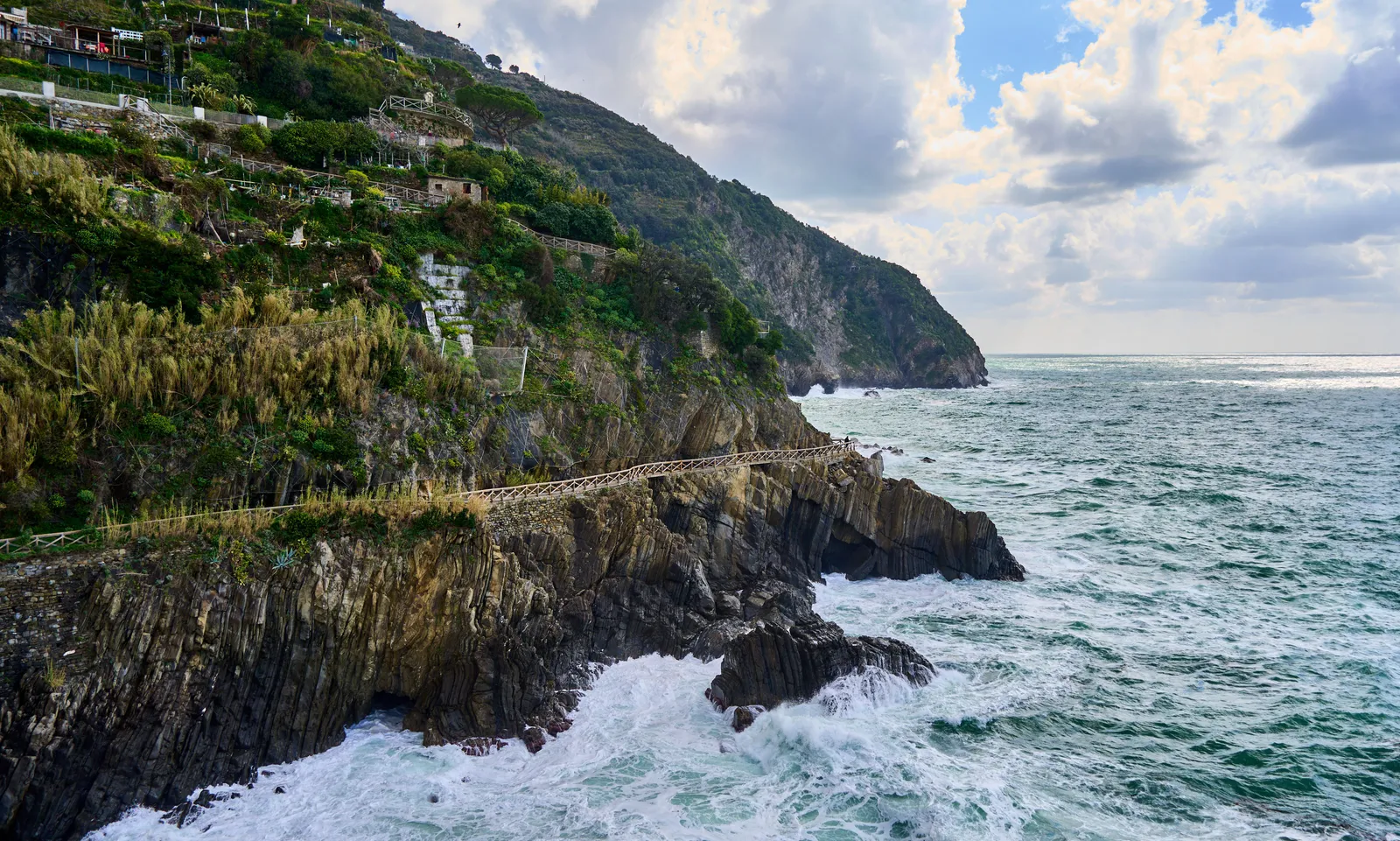
The Sentiero Azzurro is the coastal route that links the villages, and the honest description is that it is not one continuous walk. Parts of it have been closed for years following landslides, other sections open and shut again after storm damage and repair work, and any published list of what is currently walkable goes out of date quickly, including this one. Build your walking day from the park’s own current trail status, checked close to your travel dates, and never from an article.
Two things are durable enough to plan around. In peak periods some stretches are run one way to manage numbers, and the Monterosso to Vernazza section operates one way from 09:00 to 14:00 at busy times, which decides the direction of your morning. And the higher inland paths, which are longer, steeper and much quieter, are often walkable when the coastal route is not. Off season the whole picture changes again, and our look at the coast in winter sets out what closes and what carries on.
Wear proper shoes rather than sandals, carry more water than feels necessary, and accept that shade is scarce on the exposed sections.
Getting there, and the day trip trap
Fast trains reach La Spezia Centrale from Florence, Pisa, Milan and Genoa, and Levanto covers the northern approach. From either, the regional line takes over. Driving is the one approach that makes life harder: the villages are pedestrian, and the parking that exists is above them, limited and expensive in season.
Cinque Terre absolutely works as a long day trip, which is exactly why the middle of the day feels the way it does. Day visitors arrive in one wave from mid morning and drain away through the late afternoon, and the villages become quiet, ordinary and beautiful once the last of them have gone. If you are still weighing this coast against the other famous one further south, our comparison of the Amalfi Coast and Cinque Terre settles it by trip shape rather than by scenery.