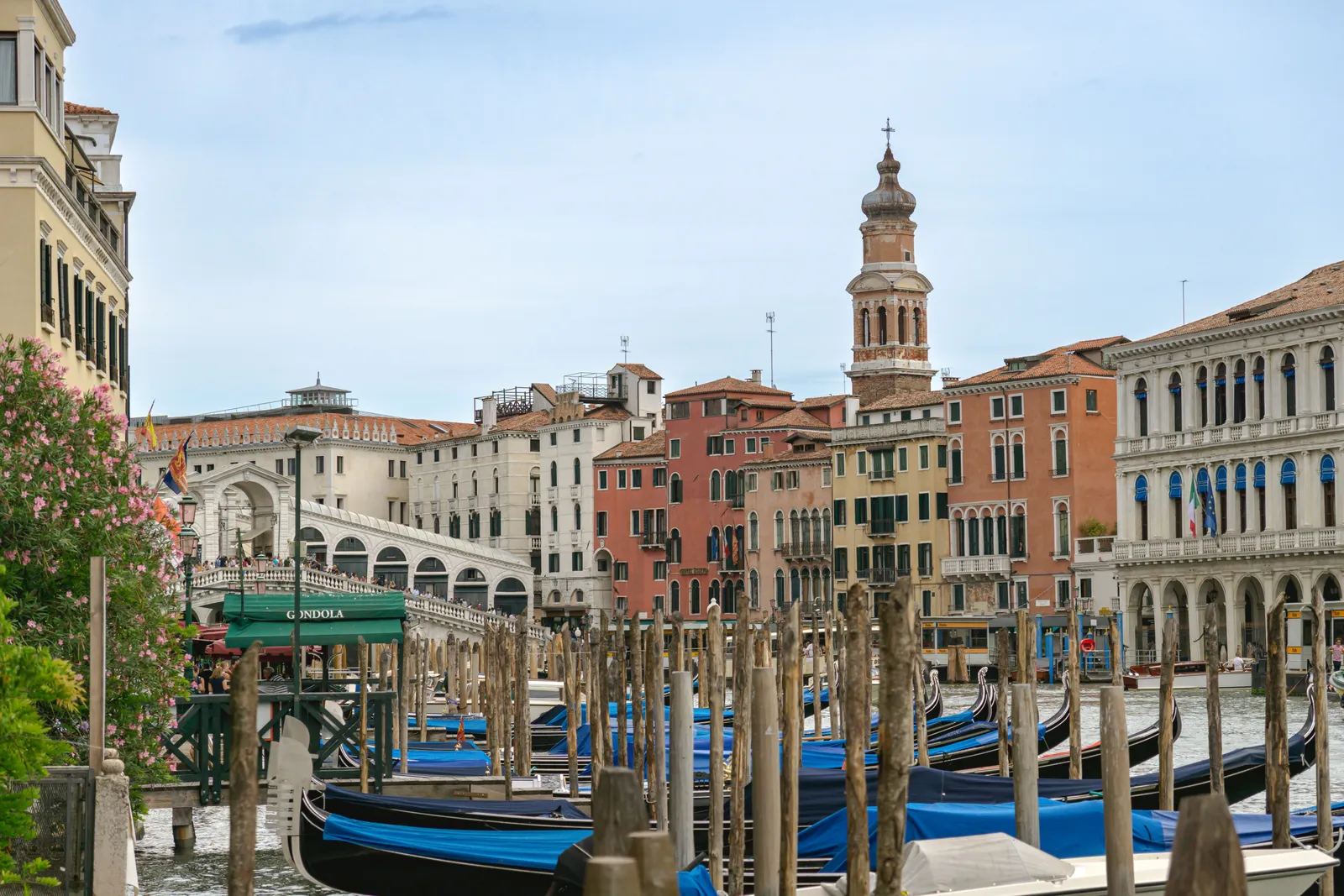
Venice rewards travellers who slow down enough to see past the postcard view, and five days gives you room to do both: the essential sights inside the historic centre, and a couple of days that reach further into the Veneto. This route starts with St Mark’s Square and the Rialto, spends a day in Dorsoduro and out on the lagoon islands including Murano and Burano, then heads inland to Verona’s Roman arena and finishes on Lake Garda or in Padua. If this is your first time in the city, our Venice first-timer’s guide is worth reading before you pack, and check our note on the Venice access fee if you are arriving for the day rather than staying overnight.
Itinerary at a glance
| Day | Base | The signature experience |
|---|---|---|
| 1 | Venice | St Mark’s Square and a spritz at a bacaro counter |
| 2 | Venice | Dorsoduro’s quiet workshops and the Zattere waterfront |
| 3 | Venice lagoon | Murano glass, Burano’s houses and the historic Ghetto |
| 4 | Verona | The Roman arena and Piazza delle Erbe |
| 5 | Lake Garda or Padua | Sirmione’s castle or the Scrovegni Chapel frescoes |
Day 1: Venice, the classic sights
Land in Venice and go straight to the headline sights while the morning light is soft. St Mark’s Square opens onto the Basilica di San Marco, its mosaic-covered interior compressed under five domes, and the Doge’s Palace next door, where the state rooms and the Bridge of Sighs trace how the Republic ran itself for a thousand years. Book timed entry for both online if you can, since queues build fast once the day-trip crowds arrive. From the square, walk the short distance to the Rialto Bridge, still lined with the market stalls that gave the district its name, and pause on the bridge itself for the classic view down the Grand Canal.
For lunch, do as Venetians do and stand at the counter of a bacaro, one of the small bars that serve cicchetti, bite-sized snacks of fish, cheese or vegetables on bread, alongside a glass of wine at a modest price. It is a faster and cheaper way to eat well than sitting down in a tourist-facing restaurant near the square. In the early evening, order a spritz, the orange aperitif that started here, at the same kind of counter and watch the passeggiata drift past.
Food: cicchetti and a glass of wine standing at a local bacaro, then a spritz at the counter as the evening starts.
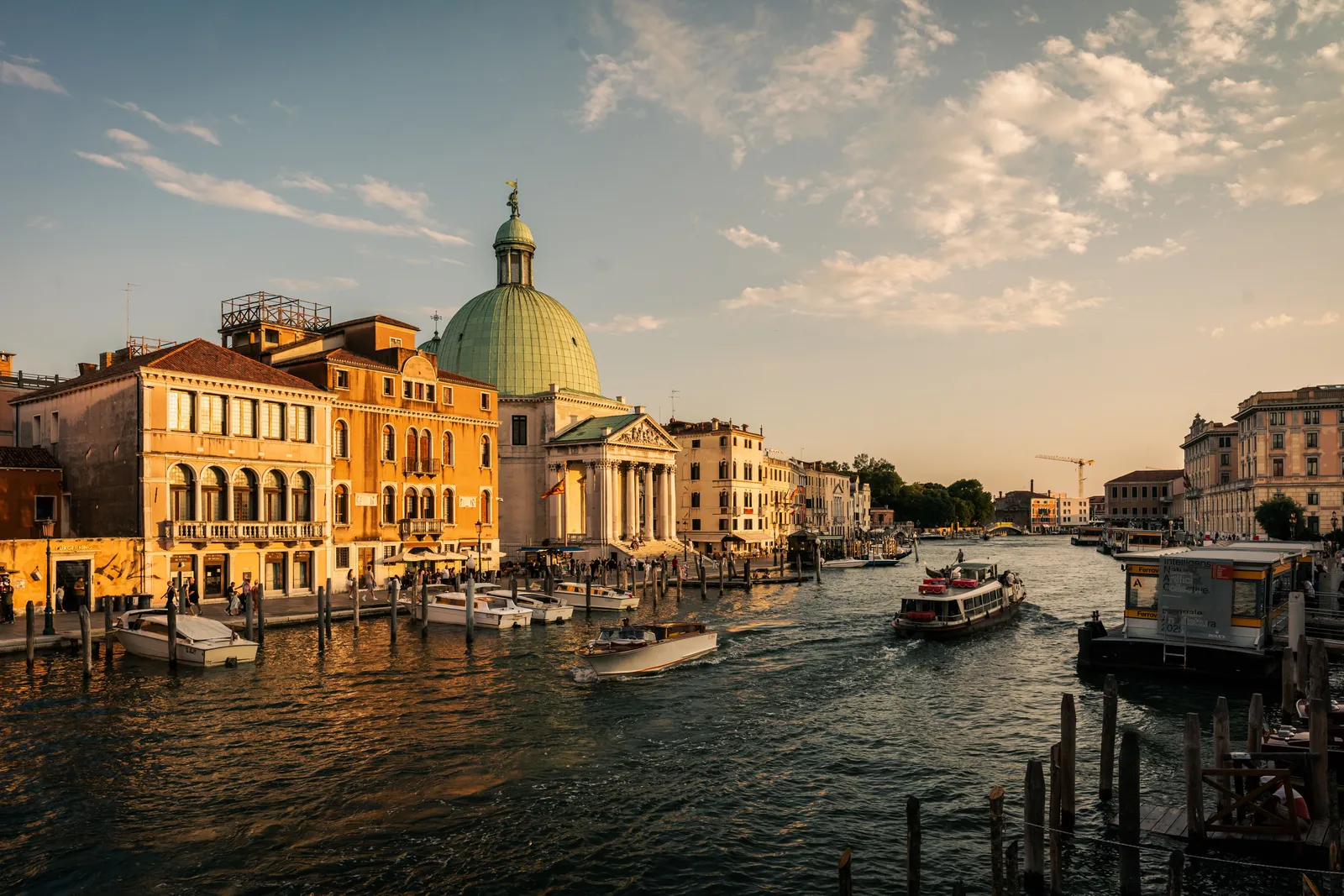
The signature experience: riding the vaporetto down the Grand Canal at golden hour, which costs a fraction of a private gondola and gives a better, longer view of the palaces on both banks.
Optional tour: a guided walk through the Doge’s Palace that explains the state rooms and the route prisoners once took across the Bridge of Sighs.
Day 2: Venice beyond the postcard
With the big three sights behind you, cross into Dorsoduro, the quieter university district on the far side of the Grand Canal. The Gallerie dell’Accademia holds the finest collection of Venetian painting anywhere, worth a slow couple of hours if art interests you, and the streets around it are calmer than anything near St Mark’s. Walk the Zattere waterfront, a long promenade that catches the sun for most of the day and looks out over the Giudecca Canal, then look for a squero, one of the small boatyards where gondolas are still built and repaired by hand using centuries-old methods; a couple stay visible from public bridges even though they are working yards, not attractions.
Eat well away from the square today. A canal-side osteria in Dorsoduro or nearby San Polo is the better bet for seafood, since kitchens here cook for residents as much as visitors. Start the day instead with a proper Venetian bakery breakfast, a simple pastry and a coffee taken standing up, before the sightseeing begins.
Food: seafood at a canal-side osteria away from the main square, and a bakery pastry with coffee to start the day.
The signature experience: wandering Dorsoduro’s quieter lanes and the Zattere waterfront, Venice at the pace locals actually keep.
Optional tour: an Accademia gallery tour with an art historian, which makes sense of the Byzantine and Renaissance paintings without a guidebook in hand.
Day 3: The lagoon islands and the Ghetto
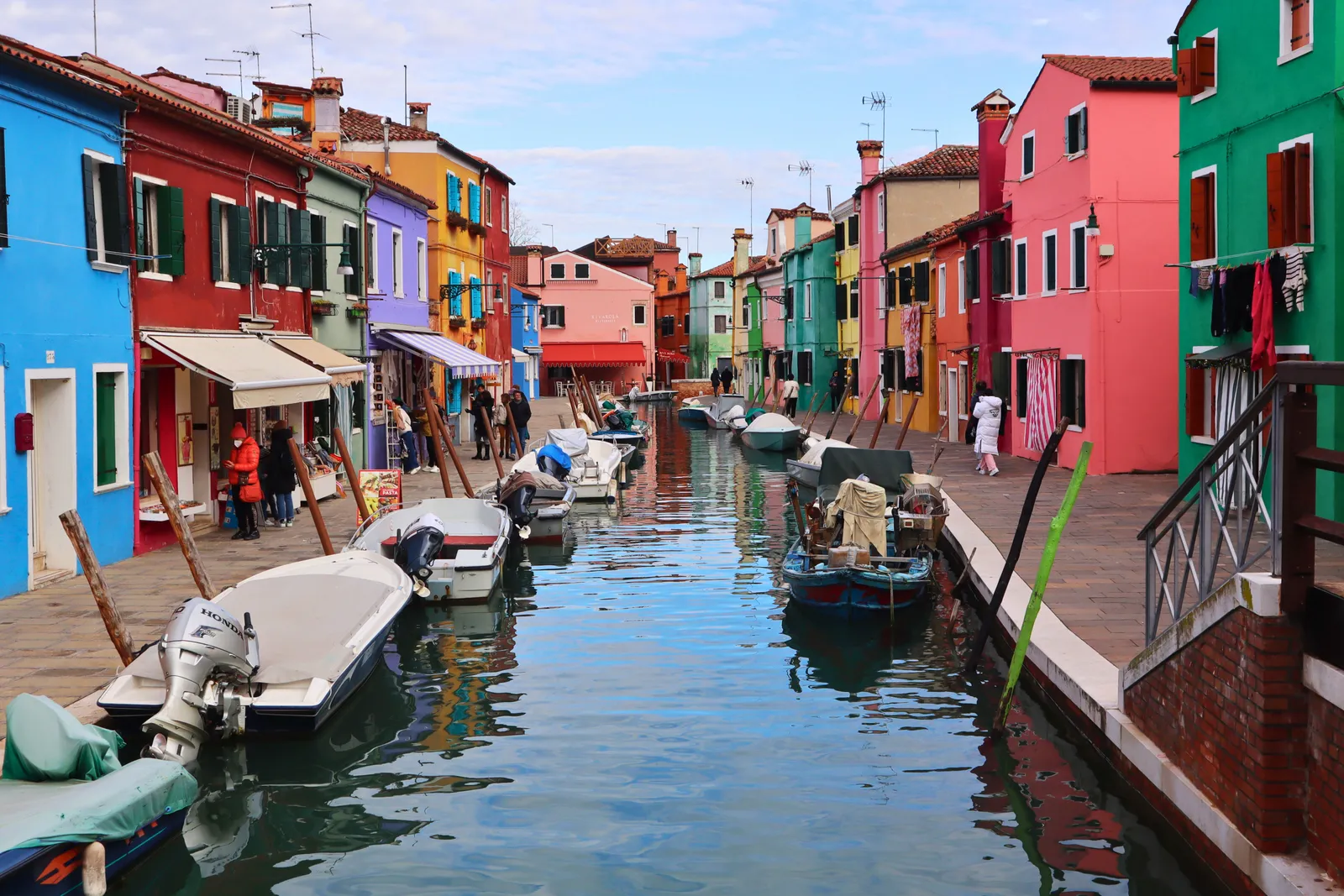
Take the vaporetto out into the lagoon for a day among the islands. Murano is where Venetian glassmaking has been based for centuries, and watching a live demonstration in a working furnace is worth the trip on its own. Burano, a short hop further out, is famous for the intensity of its house colours, a working fishing village that happens to be one of the most photographed places in Italy. If time allows, add Torcello, the quietest of the three, where the ancient mosaics inside the cathedral predate Venice’s rise to power.
Back in Venice for the evening, walk into the Ghetto, in the Cannaregio district. Established in 1516, it was the first Jewish ghetto in the world, and the word itself comes from this neighbourhood. Five historic synagogues, most built into the upper floors of ordinary-looking buildings so as not to draw attention, are still active and can be visited on a guided route; the small museum on the square gives context to what you are looking at.
Food: seafood in Burano, where several kitchens work with the morning’s catch from the lagoon.
The signature experience: the Venetian Ghetto’s synagogues, tucked into buildings that give no hint from the street of what they hold inside.
Optional tour: a guided walk through the Ghetto led by someone who can open the synagogues and explain the community’s five centuries here.
Wow moment: the Ghetto is the first in the world in the modern sense of the word, and its five synagogues, built into the upper floors of ordinary looking buildings during centuries when the community’s worship had to stay unannounced from the street, are still active today.
Day 4: Verona
Take the train inland to Verona, easily done as a day trip or, better, with an overnight stay if the schedule allows. The Arena di Verona, a Roman amphitheatre from the first century, still hosts opera under the stars in the summer season and is otherwise open to wander through by day. The walkable historic centre spreads out from Piazza delle Erbe, a market square that has been in continuous use since Roman times, ringed by frescoed buildings and cafe tables.
Verona sits in the heart of wine country, and the local reds are worth seeking out at lunch: a glass of Amarone, made from grapes dried before pressing, or a plate of risotto all’Amarone cooked with the same wine. Add a stop at the balcony traditionally linked to the Romeo and Juliet story if you want the photo, though the building’s connection to the play is more folklore than fact.
Food: a glass of Amarone and, if it is on the menu, risotto all’Amarone, the local way of cooking with the same wine.
The signature experience: standing inside the Roman arena, still in use two thousand years after it was built.
Optional tour: if your dates land in summer, book an opera performance in the arena well ahead, since the good seats sell out early.
Day 5: Lake Garda or Padua
Choose your last day based on what you have not yet had enough of. Lake Garda, Italy’s largest lake, is a short drive from Verona and centres on Sirmione, a spa town on a narrow peninsula with a moated castle at its tip and Roman ruins at the far end. Alternatively, Padua, closer still, holds the Scrovegni Chapel, a plain building on the outside that hides one of the most complete fresco cycles Giotto ever painted, covering the walls floor to ceiling; entry is by timed slot and numbers are capped to protect the frescoes, so book ahead regardless of which day you plan to visit.
Either option makes an easy final day before flying home from Verona or Venice. If you choose the lake, save time for a walk around Sirmione’s old town after the crowds thin in the late afternoon; if you choose Padua, the university town’s cafes and porticoed streets are worth an unhurried hour before you head back.
Food: lake fish on a terrace in Sirmione, or a coffee in one of Padua’s old porticoed cafes.
The signature experience: Sirmione’s castle moat and the Roman ruins at the tip of the peninsula, or the Scrovegni Chapel’s frescoes seen in one uninterrupted room.
Optional tour: a Scrovegni Chapel entry that includes the introductory film, which most visitors are required to watch before the timed slot inside the chapel itself.
Practical tips
Book the Doge’s Palace, the Scrovegni Chapel and any summer opera tickets as early as you can, since all three are capped and sell out well ahead of the date. Venice can charge day visitors an access fee on certain peak dates, though the details and the calendar change from year to year, so check the official rules before you travel regardless of whether you are staying overnight. Trains link Venice, Verona and Padua quickly and often, and are the easiest way to move between the bases in this itinerary; a car adds little here, and if you do bring one, check the ZTL rules before driving into Verona’s old centre, where parking is restricted. Confirm all opening hours, ticket prices and seasonal closures with the official sites before you go, since they shift through the year. If Venice is only one leg of a first trip rather than the whole of it, our one-week Rome, Florence and Venice route sets out how those seven days split, and what that pace costs you.