Eastern Sicily is best seen with a car, and five days is enough to link its two headline draws, Taormina and Mount Etna, with ancient Syracuse, the baroque towns of the southeast and Catania’s fish market. Roads here are workable but distinctly Sicilian, so read our guide to driving in Italy before you collect the keys. Our wider Sicily guide is worth a look too if you are still deciding how much of the island to cover on this trip.
Itinerary at a glance
| Day | Base | The signature experience |
|---|---|---|
| 1 | Taormina | Sunset from the Greek theatre with Etna in view |
| 2 | Mount Etna | Walking the lava fields with a licensed guide |
| 3 | Syracuse | The Ear of Dionysius in the archaeological park |
| 4 | Southeast Sicily | The golden baroque towns of Noto and Ragusa Ibla |
| 5 | Catania | The fish market beneath an active volcano |
Day 1: Taormina
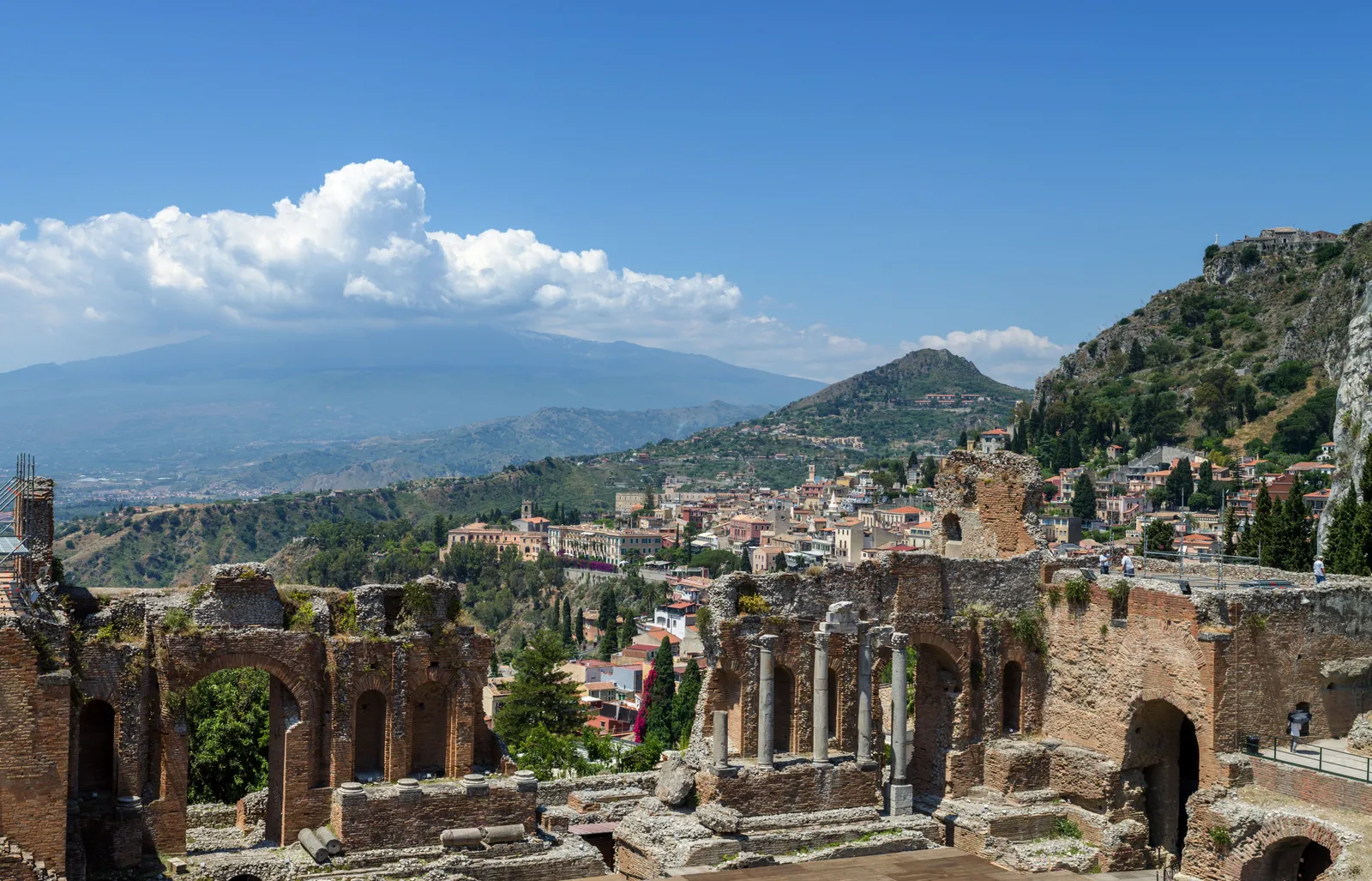
Settle into Taormina, perched on its clifftop above the sea, and start at the Teatro Antico, a Greek theatre later rebuilt by the Romans that frames Mount Etna directly behind the stage, one of the more startling backdrops any ancient theatre still has. The town itself is compact and largely pedestrian, its main street lined with balconies and small squares that open onto sea views without warning. In the afternoon, head down to Giardini Naxos, the beach town below Taormina, for a swim and a change of pace from the clifftop crowds.
For food, order arancini, Sicily’s fried rice balls stuffed with ragu or cheese, as a snack anywhere in town, and save room for cannoli, the ricotta-filled pastry that Sicily does better than anywhere it has since travelled to. In the morning, do as locals do and have granita with a warm brioche bun for breakfast instead of a pastry, dipping the bread straight into the iced fruit or coffee granita.
Food: arancini and cannoli through the day, and granita with a brioche bun for breakfast, the proper Sicilian way to start the morning.
The signature experience: watching the sun set from the Greek theatre with Etna’s outline still visible behind the ancient stage.
Optional tour: a small-group Taormina walking tour that covers the theatre’s history and the town’s mix of Greek, Roman and medieval layers.
Day 2: Mount Etna
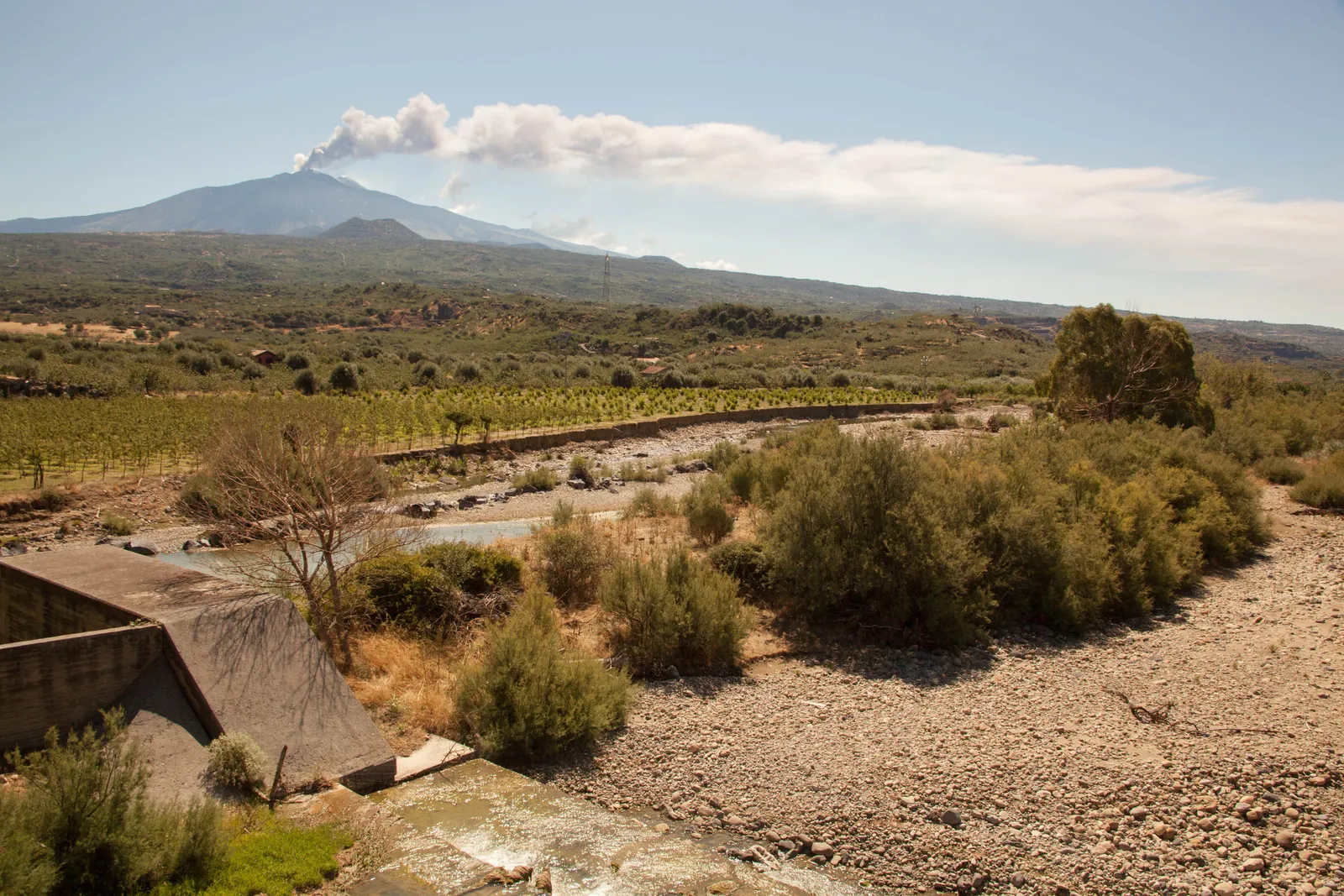
Give the day to Etna, Europe’s most active volcano and a constant presence on the skyline for the rest of the trip. A cable car covers the lower slopes, and a four-wheel-drive transfer with a licensed guide continues up towards the craters; walking above a certain altitude on the upper mountain requires a guide by law, both for safety and because the terrain and access change depending on recent activity. The lava fields lower down, black and otherworldly, are worth walking even if you do not go all the way up, especially where older flows have started to green over.
The volcano’s slopes are also wine country. Vines grow in black volcanic soil at real altitude here, and a tasting on a winery terrace, usually paired with local cheese and preserves, is a relaxed way to end the day looking back down at the coast. Note that Etna is active and its upper access can close at short notice depending on conditions, so treat a summit approach as a bonus rather than the plan for the day.
Safety note: Etna is active and the upper mountain closes to visitors without notice when conditions require it, so build flexibility into the day, follow the guide’s call on how high to go, keep Italy’s emergency numbers saved, and check that your travel insurance covers guided mountain activity before you book the excursion.
Food: local cheese and preserves alongside an Etna wine tasting on a winery terrace.
The signature experience: walking the black lava fields with a licensed guide, required by law above a certain altitude on the mountain.
Optional tour: a cable car and four-wheel-drive Etna excursion with a certified volcano guide, the only way to reach the higher craters safely.
Day 3: Syracuse and Ortigia
Drive south to Syracuse, once one of the most powerful cities in the ancient Greek world and still, in Ortigia, its small historic island centre, one of Sicily’s most atmospheric places to wander. Cross onto Ortigia over the short bridge and get lost in its lanes, which open onto the Piazza del Duomo, a baroque square built directly over the columns of an older Greek temple, still visible fused into the cathedral’s outer wall.
Back on the mainland side, the Parco Archeologico della Neapolis holds the Greek theatre, still used for performances in season, and the Orecchio di Dionisio, an enormous ear-shaped limestone cave with remarkable acoustics, named for the legend that a tyrant used it to eavesdrop on prisoners. For lunch, the covered market on Ortigia is the place for seafood eaten more or less where it was landed, and almond granita here is a specialty worth trying at least once.
Food: seafood at the Ortigia market, and almond granita, a local specialty worth seeking out.
The signature experience: stepping into the Ear of Dionysius, an artificial cave whose acoustics still surprise visitors who test them.
Optional tour: an Ortigia and archaeological park walking tour that ties the Greek, Roman and baroque layers of the city together.
Day 4: The baroque southeast
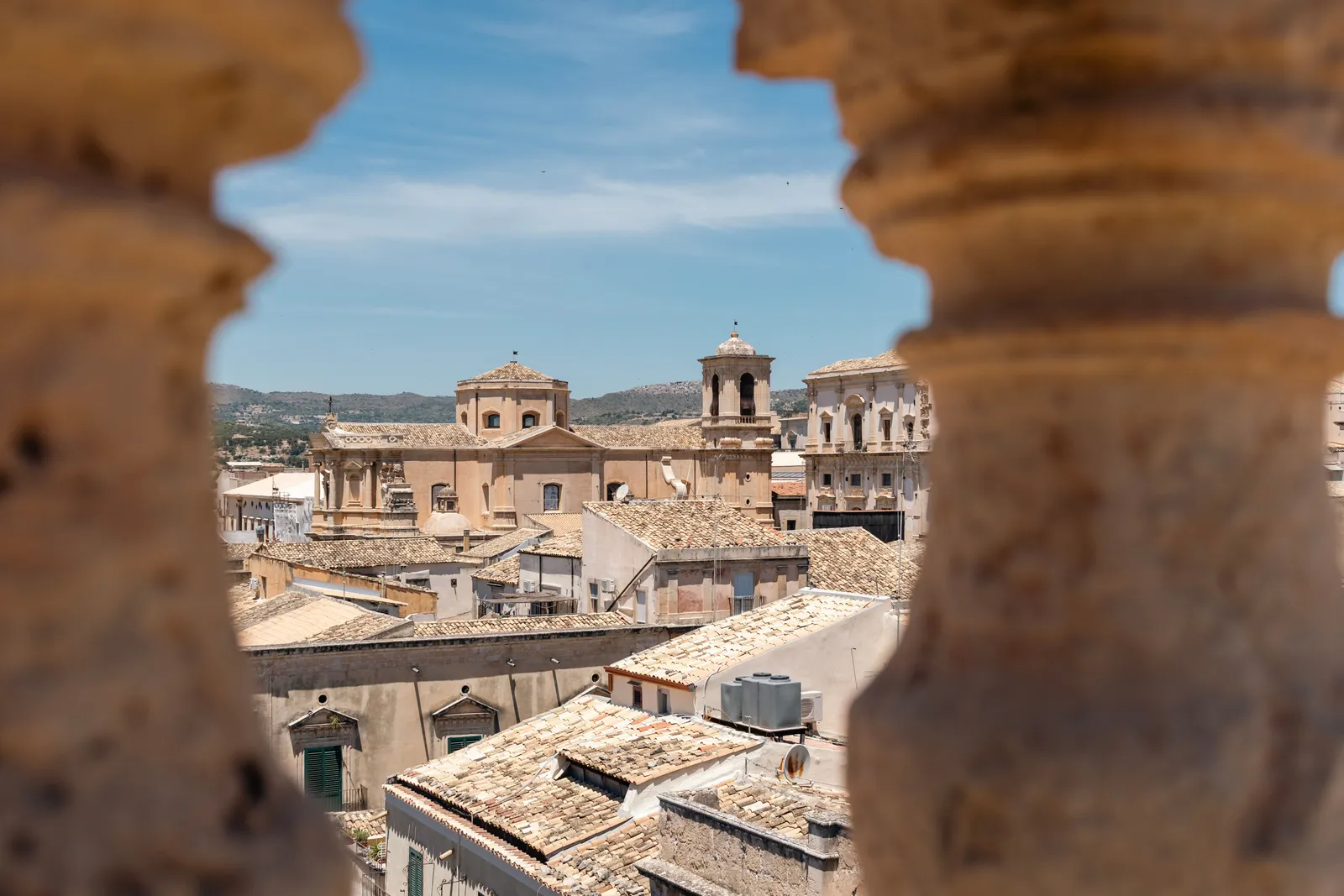
Head into Sicily’s baroque heartland, a cluster of towns rebuilt in a single, confident style after a devastating earthquake in 1693. Noto is the most complete example, its main street a continuous run of honey-coloured stone facades and balconies carved with grotesque figures. Modica, built across a ravine and connected by steep staircases, and Ragusa Ibla, the old lower town perched on its own hill, both reward slow walking more than a checklist of sights.
Modica is also the place for chocolate made the old way, cold-processed without refining the sugar smooth, which gives it a grainy texture unlike any other chocolate in Italy; it is worth buying a bar to take home. Pair it with a ricotta pastry from a local bakery, and, if the heat allows, a slow coffee in one of Ragusa Ibla’s small squares before the drive back.
Food: Modica’s cold-processed chocolate, made the old way with a distinctive grainy texture, and a ricotta pastry alongside it.
The signature experience: walking Noto’s honey-stone main street, rebuilt after the 1693 earthquake in one unified baroque style.
Optional tour: a baroque towns day tour covering Noto, Modica and Ragusa Ibla, useful if you would rather not drive the connecting roads yourself.
Day 5: Catania
Spend your last day in Catania, built from the same black lava stone as the volcano that looms over it. The fish market, held every morning near the cathedral square, is one of the most theatrical in Italy, stallholders calling out prices over ice-packed swordfish and tuna in a scene that has barely changed in generations; go early, since it winds down by midday. The historic centre’s black and white facades, built from Etna’s own stone banded with pale limestone, give the city a distinct look among Sicily’s baroque towns.
For a last Sicilian meal, order pasta alla Norma, the aubergine, tomato and salted ricotta dish said to have been named here after Bellini’s opera, and named for a reason: it is the dish Catania is proudest of. If your flight allows, a final granita or gelato near the market is a fitting way to close five days built around this island’s food as much as its ruins and its volcano.
Food: pasta alla Norma, the dish Catania claims as its own, and a last granita or gelato before you fly.
The signature experience: the fish market in the early morning, working in the shadow of the volcano that shapes the whole region.
Optional tour: a Catania food market tour that includes tastings and an explanation of what you are looking at among the stalls.
Practical tips
Book any Etna guide or cable car slot ahead in peak season, and always check current access conditions before you drive up, since the mountain’s upper reaches close without warning. A car is close to essential for this route, and Sicilian driving has its own rhythm, so read up before you collect the keys, budget more time than a map suggests for the mountain and coast roads, and watch for a ZTL zone before driving into the old centres of Ortigia, Noto or Ragusa Ibla. Confirm opening hours for the archaeological sites and any seasonal closures with official sources, since Sicily’s summer heat, covered in our Italy weather by month guide, also makes an early start worth planning around, particularly on days that include walking at Etna or in the ruins at Syracuse.