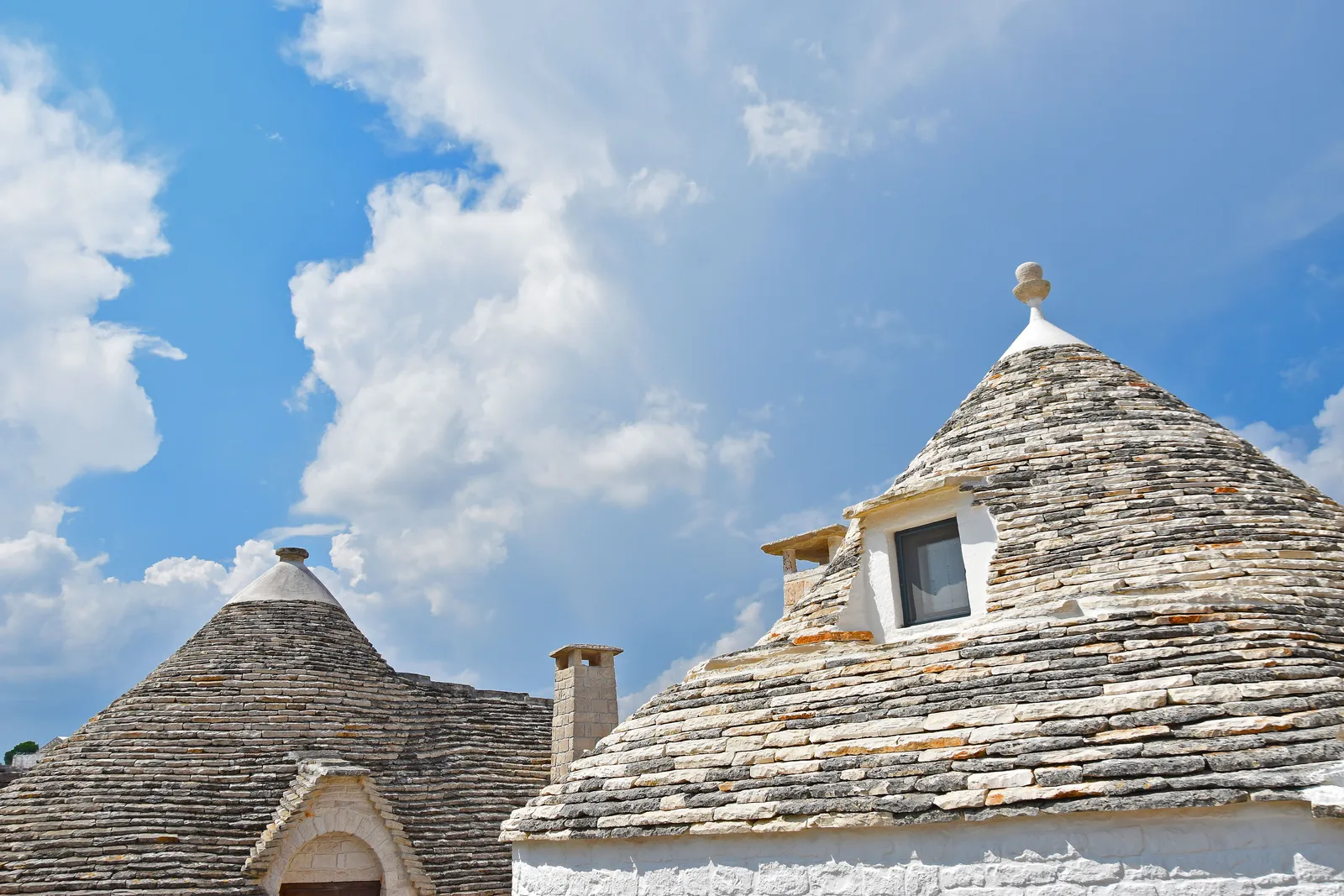
Puglia, the heel of Italy, is a road trip region above all else, and five days gives you time to move slowly between the conical roofs of Alberobello, the whitewashed hill towns, baroque Lecce and the clifftop coast. A car is close to essential here, so our guide to driving in Italy is worth reading before you collect the keys. Our broader Puglia guide covers more of the region if five days leaves you wanting to come back.
Itinerary at a glance
| Day | Base | The signature experience |
|---|---|---|
| 1 | Alberobello and the Itria valley | A night sleeping inside a restored trullo |
| 2 | Polignano and Ostuni | The clifftop terrace above Polignano’s cove |
| 3 | Lecce | The extravagant baroque of the town centre |
| 4 | Salento coast | The two seas of the peninsula |
| 5 | Matera | Sleeping inside the ancient Sassi cave district |
Day 1: Alberobello and the Itria valley
Start in Alberobello, the town built almost entirely from trulli, whitewashed conical-roofed houses unique to this part of Puglia, still used as homes, shops and, increasingly, small hotels. Walk the Rione Monti district in the morning before the day-trip buses arrive, and again in the evening once they have left, since the town changes character completely between the two. From there, drive the short loop through the Itria valley, stopping in Locorotondo, a circular hill town of tight white lanes, and Martina Franca, larger and quieter, with a baroque centre worth an hour’s walk.
For lunch, order orecchiette with turnip tops, Puglia’s defining pasta shape paired with its most Puglian vegetable, bitter and simple in a way that sums up the region’s cooking. Burrata, still warm and only made properly this far south, is worth having on its own with good bread rather than buried under other ingredients, alongside a glass of Primitivo, the local red. If it is available where you are staying, book a night inside a restored trullo itself, cool stone walls and a domed ceiling overhead, one of the more distinctive places to sleep in Italy.
Food: orecchiette with turnip tops, burrata still warm, and a glass of Primitivo.
The signature experience: a night sleeping inside a restored trullo, its thick stone walls and domed ceiling built without mortar in the traditional way.
Optional tour: a trulli and Itria valley countryside tour that explains how and why these unusual houses were built.
Day 2: Polignano and Ostuni
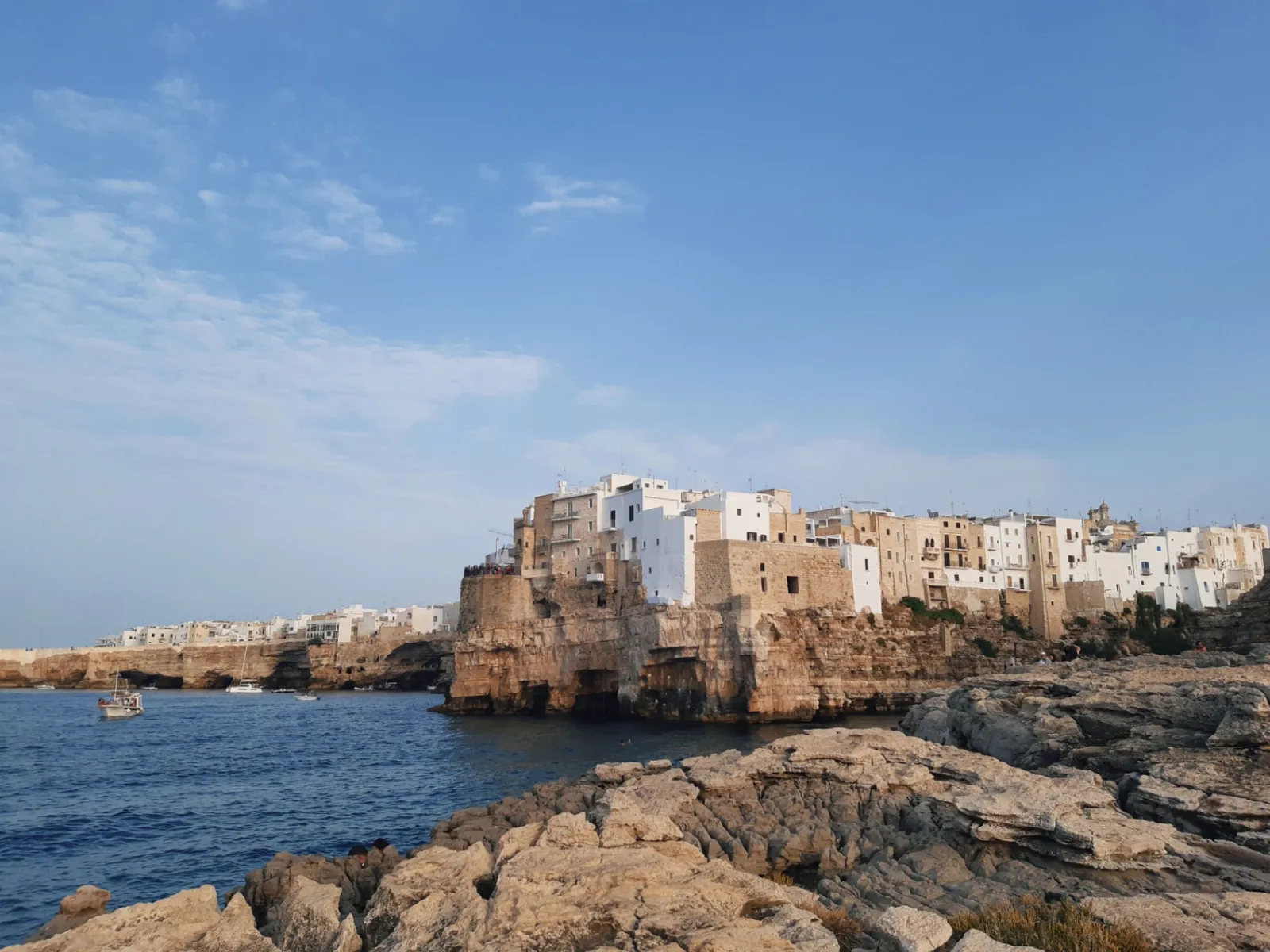
Drive to Polignano a Mare, a town built directly on limestone cliffs above the Adriatic, with a small cove beach tucked beneath the old centre that draws swimmers and cliff divers through the summer. Wander the whitewashed lanes above, then find one of the terraces that look straight down into the cove’s clear water, the view the town is known for. In the afternoon, continue to Ostuni, the whitewashed hill town visible for miles across the surrounding countryside, and walk its steep, layered old centre up to the cathedral at the top.
In Polignano, sea urchins and other raw fish are a local specialty for anyone happy to eat seafood this fresh and this simply prepared, and gelato on the main square afterwards is the natural way to cool down. Ostuni’s old town has its own small bakeries and wine bars worth a stop as the afternoon slows down.
Food: sea urchins and raw fish in Polignano if you are game, and gelato on the square afterwards.
The signature experience: the terrace above Polignano’s cove, where the cliffs drop straight into clear water below the old town.
Optional tour: a Polignano coastal walk that takes in the viewpoints locals use, away from the single most photographed spot.
Day 3: Lecce
Give the day to Lecce, known as the Florence of the south for the sheer extravagance of its baroque architecture, carved from a local golden stone soft enough to work into elaborate detail and hard enough to last for centuries. Wander the historic centre’s churches and stone lanes without too fixed a route, and look up as much as ahead, since much of the best carving sits above eye level on facades and doorways.
Start the day with a pasticciotto, a shortcrust pastry filled with custard that is Lecce’s classic breakfast, and a coffee with almond milk, a distinctly local way of taking it that is worth trying even if it sounds unusual. In the afternoon, visit a papier mache workshop, a craft Lecce has been known for since the eighteenth century, where you can watch figures for local festivals and churches being built by hand.
Food: a pasticciotto and a coffee with almond milk for breakfast, the Lecce way to start the day.
The signature experience: wandering Lecce’s baroque centre, its golden stone carved into detail that rewards looking closely.
Optional tour: a papier mache workshop visit where a local craftsperson explains a tradition that is genuinely still practised here.
Day 4: The Salento coast
Drive down into Salento, the southernmost tip of the peninsula, where two seas meet: the Adriatic on the east coast and the Ionian on the west, each with a different colour and character. Otranto, on the Adriatic side, has a fortified old town and a cathedral with an enormous medieval mosaic floor covering the entire nave. Further south, Santa Maria di Leuca marks the very tip of the heel, where a lighthouse and a grand staircase down to the water mark the meeting point of the two seas.
This is a day for the coast rather than a checklist, so leave room to stop wherever the water looks good, since much of Salento’s coastline is a mix of low cliffs, sea caves and small coves with public access; keep Italy’s emergency numbers saved if anyone in the group plans to swim near the rocks. For lunch, grilled fish in a small port town is the simplest and most reliable option along this stretch, cooked plainly and served with little more than lemon and olive oil.
Food: grilled fish in a small port town, simply prepared and eaten close to the water.
The signature experience: Salento’s two seas, the Adriatic and the Ionian, each with a noticeably different colour along this stretch of coast.
Optional tour: a Salento coast day tour that covers both Otranto and Santa Maria di Leuca without the driving.
Day 5: Matera
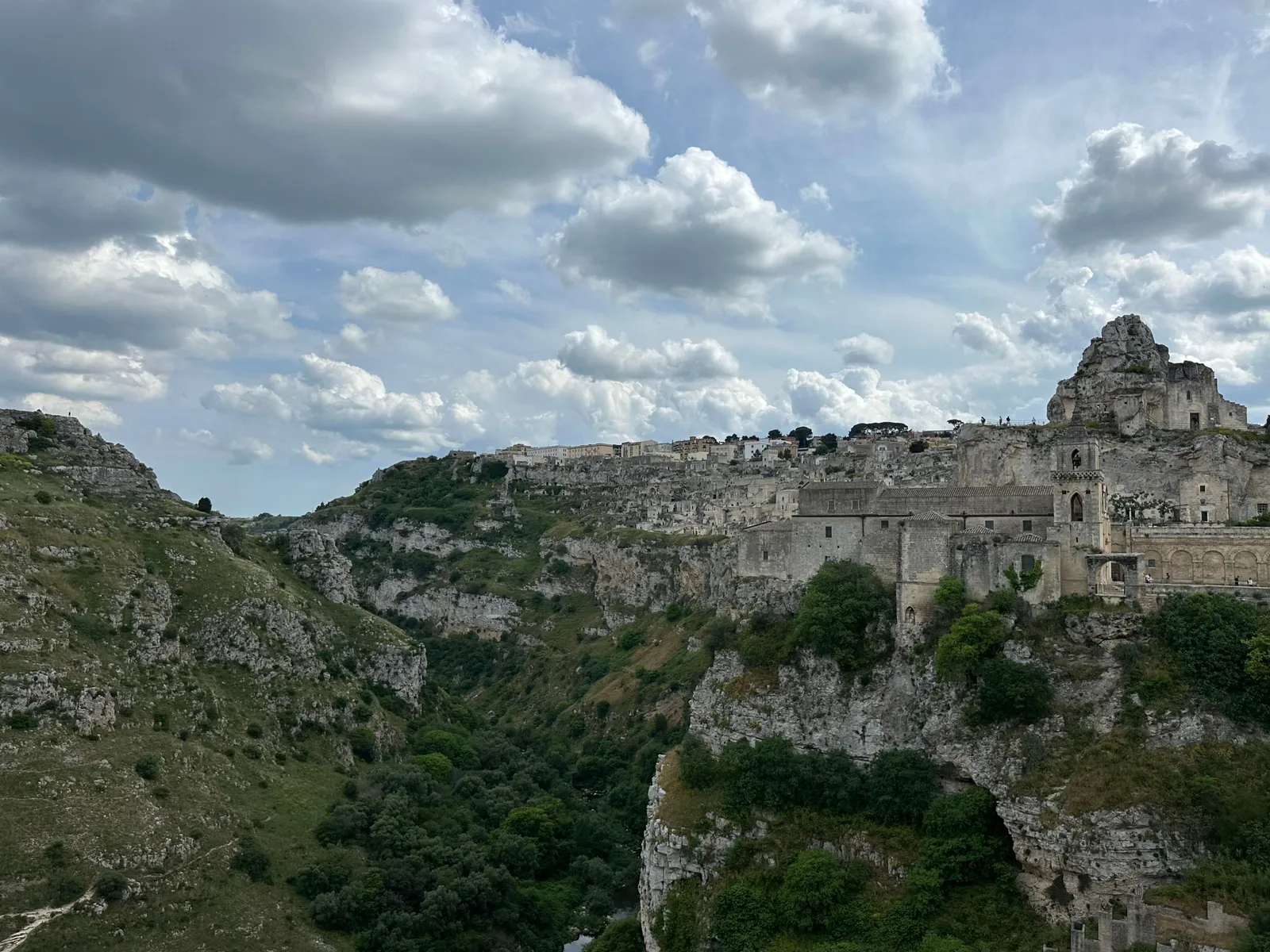
Cross the regional border into neighbouring Basilicata for Matera, one of the oldest continuously inhabited settlements in the world and, within living memory, a byword for rural poverty in Italy. The Sassi, two cave districts carved directly into the ravine’s limestone, were emptied and resettled in the mid-twentieth century as a public health measure, then slowly restored from the 1980s onwards; many are now boutique hotels and restaurants, a transformation as striking as the setting itself.
Walk down into the Sasso Caveoso, the more untouched of the two districts, and look for one of the rock churches cut into the cliff face, their interiors still holding traces of Byzantine-era frescoes. For food, try Matera bread, baked in large, dense loaves that traditionally lasted a family a week, and a cialledda, a simple salad built on stale bread, tomatoes and olive oil that turns leftovers into something genuinely good.
Food: Matera bread and a cialledda, the local way of using it up.
The signature experience: walking down into the Sassi, ancient cave dwellings now restored into some of Italy’s most distinctive places to eat and sleep.
Optional tour: a Sassi walking tour that includes one of the rock churches and their surviving Byzantine frescoes.
Wow moment: the Sassi of Matera were, within living memory, an emblem of poverty stark enough that the population was resettled by the state, and are now a UNESCO World Heritage site where you can book a room built into the same rock.
Practical tips
A car is close to essential for this route, since public transport between the trulli towns, the coast and Matera is limited and slow. Puglia’s roads are generally easier than Sicily’s, but town centres are often narrow and restricted, so check for a ZTL zone before you drive into the old centre of Lecce, Ostuni or Matera and park outside the walls instead. Confirm opening hours for the Sassi’s rock churches and any museums against our Italy weather by month guide, since several keep limited or seasonal hours, book a stay inside the Sassi well ahead if that experience matters to you, since the best-known cave hotels fill up months in advance, and take out travel insurance before you go given how much of the week is spent behind the wheel.