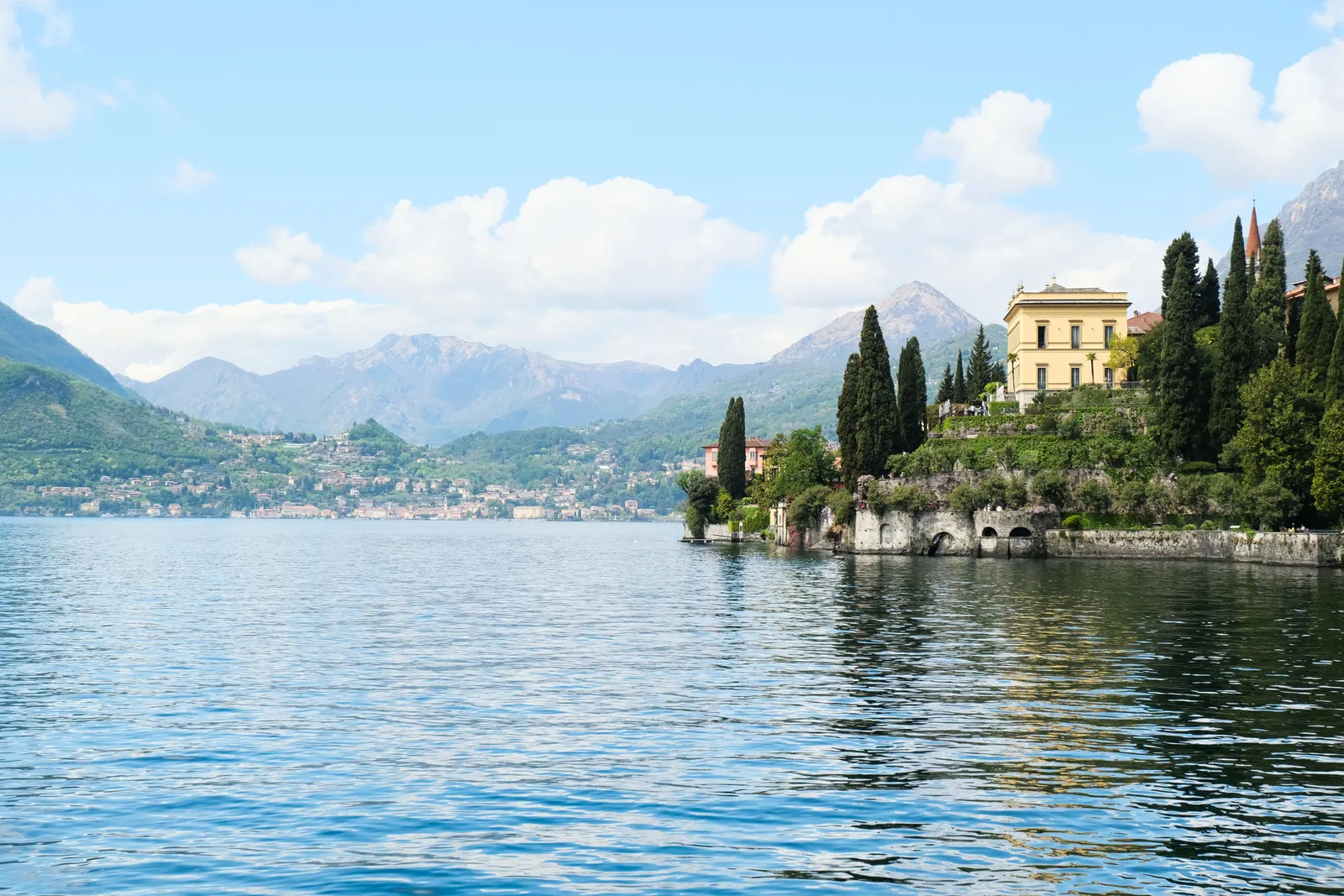
Milan makes an efficient base for both a fashion capital and some of Europe’s most photographed lakes, and five days is enough to properly cover both without feeling rushed. This route spends the first two days in the city, centred on the Duomo and, if you can secure a booking, Leonardo da Vinci’s Last Supper, before heading out to Lake Como and a second lake of your choosing. Our wider Milan and the lakes guide has more on planning the trip if this is your first time in the region.
Itinerary at a glance
| Day | Base | The signature experience |
|---|---|---|
| 1 | Milan | The rooftop walk among the Duomo’s spires |
| 2 | Milan | Leonardo’s Last Supper, booked months ahead |
| 3 | Lake Como | The ferry triangle between Bellagio and Varenna |
| 4 | Lake Maggiore or Garda | The Borromean islands, or Sirmione’s castle |
| 5 | Bergamo or Lake Orta | The walled upper town, or the quietest of the lakes |
Day 1: Central Milan
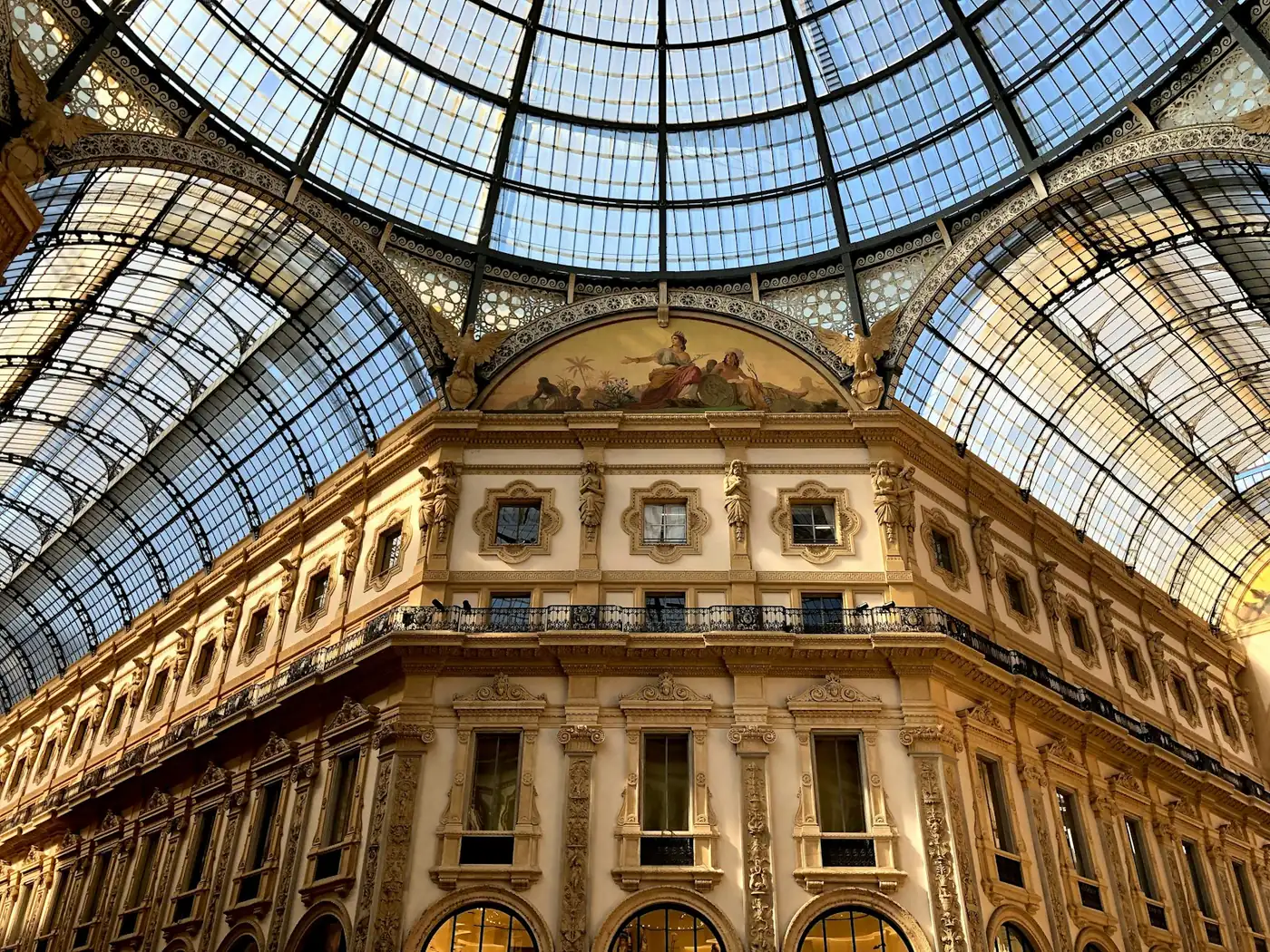
Start at the Duomo di Milano, the vast Gothic cathedral at the city’s centre, and climb to the rooftop, where a forest of marble spires and statues opens up around you with the city spread out below; book the rooftop ticket in advance, since it is a separate, timed entry from the cathedral itself. Beside it, the Galleria Vittorio Emanuele II, one of the oldest shopping arcades in the world, is worth walking through for the glass-domed ceiling and the mosaic floors alone.
In the afternoon, head to Brera, the gallery and artists’ district north of the centre, for quieter streets and a change of pace from the crowds around the Duomo. For lunch, order risotto alla milanese, the saffron-yellow risotto that is the city’s defining dish, and in the evening join the crowd for aperitivo in Navigli, the canal district where the price of one drink usually comes with a generous spread of food included.
Food: risotto alla milanese for lunch, and an aperitivo in Navigli in the evening, where the drink usually comes with food included.
The signature experience: the rooftop walk among the Duomo’s spires, close enough to the statues to see the detail carved into marble never meant to be seen from the ground.
Optional tour: a Duomo rooftop and cathedral tour that also covers the archaeological area beneath the square, closed to visitors without a guide.
Day 2: Leonardo and Milan’s other side
The Last Supper, Leonardo da Vinci’s mural in the refectory of Santa Maria delle Grazie, is the single hardest ticket in this itinerary. Entry is limited to a small group at a time for a strictly timed fifteen minutes, which is why slots sell out months ahead; book the moment your dates are fixed, and be ready with a backup plan if you cannot get in. Afterwards, spend the rest of the day on the Quadrilatero della Moda, Milan’s fashion quarter, whether or not shopping is the goal, since the window displays and the architecture along these streets are worth seeing on their own.
The Castello Sforzesco, a moated Renaissance fortress a short walk from the centre, holds several museums and a large park behind it, useful if you want a couple of quieter hours away from the shopping streets. If football is more your interest than fashion, a stadium tour of San Siro is a straightforward alternative for the afternoon. For lunch, a historic cafe inside the Galleria is expensive by local standards but worth it once, for the setting as much as the coffee.
Food: a coffee at a historic cafe inside the Galleria, one splurge worth making for the setting.
The signature experience: standing in the room with Leonardo’s Last Supper for a strictly timed fifteen minutes, one of the most tightly controlled art viewings anywhere in the world.
Optional tour: a Last Supper and city tour bundle, which is often the more reliable way to secure a slot once the direct booking window has closed.
Wow moment: the Last Supper’s fifteen-minute, small-group entry is so tightly capped that the wait for a slot can run for months, which is exactly what makes standing in the room, finally, feel like an event.
Day 3: Lake Como
Take the train to Como and pick up a ferry into the lake. Bellagio, on the point where the lake’s three branches meet, is the classic stop, with steep lanes climbing from the waterfront and views down all three arms of the water. Varenna, across the lake, is quieter and, for many visitors, prettier, a pastel-coloured village with a lakeside walkway built into the cliff. The ferry ride between the two, with the mountains rising straight from the water on both sides, is as much the point of the day as either destination.
If time allows, add a stop at the gardens of Villa Melzi in Bellagio or Villa del Balbianello on the lake’s western shore, both set directly on the water with the kind of manicured grounds that made this lake a retreat for the wealthy for centuries. Lunch anywhere on the water should feature lake fish, and gelato on the promenade is the natural way to close the afternoon.
Food: lake fish for lunch on the water, and gelato on the promenade in Bellagio or Varenna.
The signature experience: the ferry triangle between the lake towns, with the mountains rising straight up from the water on both sides.
Optional tour: a villa gardens tour covering Melzi and Balbianello, which are otherwise easy to miss without knowing which boat stop to use.
Day 4: Lake Maggiore or Lake Garda
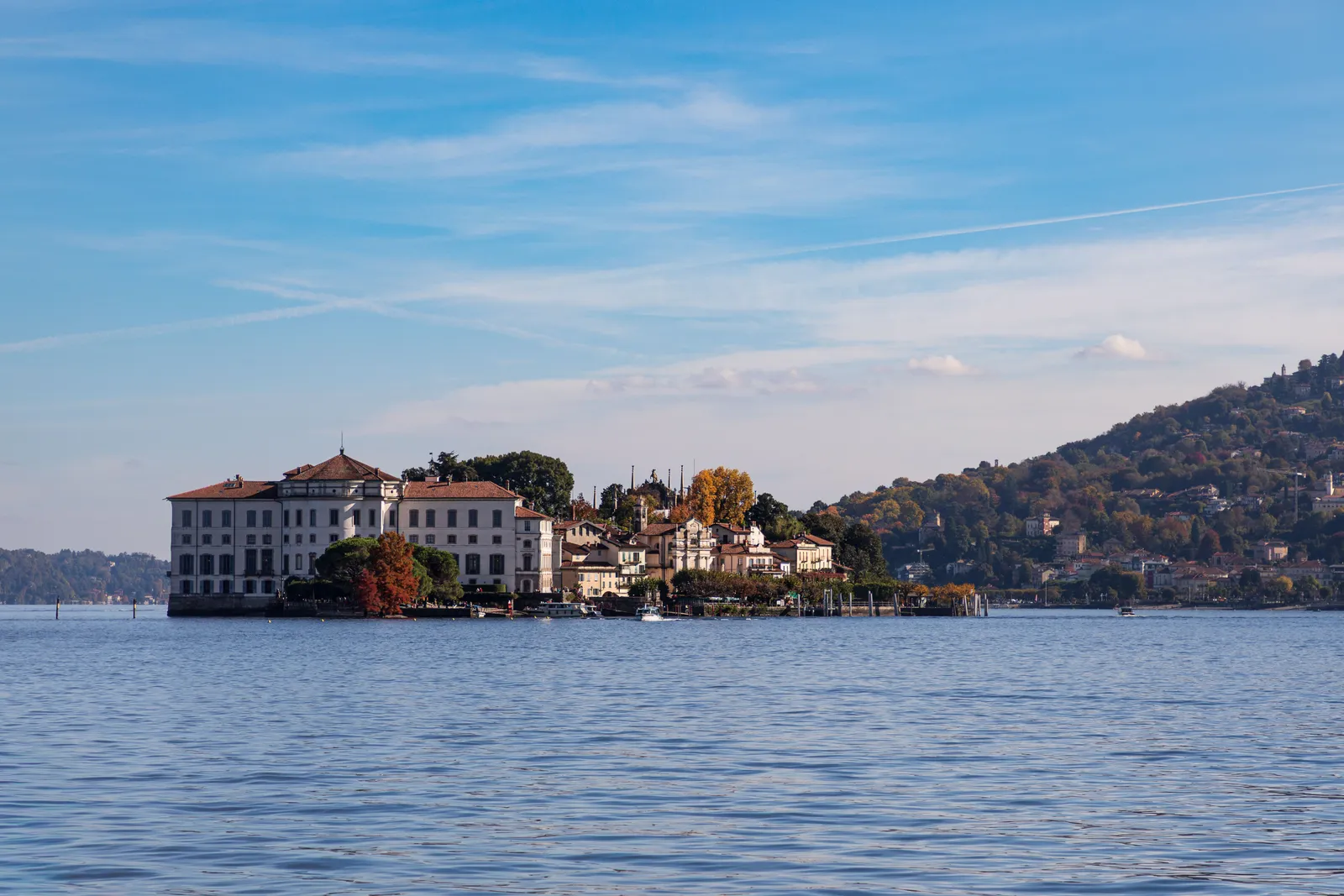
Choose a second lake for a change of scenery. Lake Maggiore’s Borromean Islands, reached by a short boat ride from Stresa, hold a baroque palace and terraced gardens on Isola Bella, and a quieter fishing village feel on Isola dei Pescatori next door. Lake Garda, further east and closer to Verona than to Milan, centres on Sirmione, a spa town on a narrow peninsula with a moated castle guarding the approach and Roman ruins at the far tip.
Both lakes work as a long day trip from Milan by train and boat, though Garda is the longer journey of the two. Either way, pasta with lake fish is the meal to look for, simply cooked and rarely found this fresh away from the water.
Food: pasta with lake fish, whichever lake you choose.
The signature experience: the palace and gardens of Isola Bella on Lake Maggiore, or Sirmione’s castle and Roman ruins on Lake Garda.
Optional tour: a Borromean Islands boat tour that covers both Isola Bella and Isola dei Pescatori in one ticket.
Day 5: Bergamo or Lake Orta
Save the last day for whichever side trip suits your pace. Bergamo’s upper town, a walled medieval centre reached by funicular from the newer city below, is compact, quiet compared with Milan, and easy to see thoroughly in a day, with views out over the plain from the old ramparts. Lake Orta, west of Como and far less visited than any of the other lakes on this list, centres on the tiny island of San Giulio and the village of Orta San Giulio, a slow, small-scale alternative if the bigger lakes have felt busy.
Whichever you choose, treat the day as a wind-down rather than another packed sightseeing list. A coffee on Bergamo’s Piazza Vecchia or a quiet walk around Orta’s lakeside square is the right note to end the trip on, before the train back to Milan for your flight home.
Food: a coffee on Bergamo’s Piazza Vecchia, or a simple lakeside lunch in Orta San Giulio.
The signature experience: Bergamo’s walled upper town reached by funicular, or the stillness of Lake Orta, the quietest of the northern lakes.
Optional tour: a Bergamo old town walking tour that covers the Venetian walls and the funicular history.
Practical tips
Book Leonardo’s Last Supper the moment your travel dates are fixed, since it is the one ticket in this itinerary that can sell out months ahead, and have a backup plan for that afternoon in case slots are gone. Trains link Milan to Como, Stresa and Bergamo quickly, and ferries handle the lakes themselves, so a car adds little unless you plan to explore beyond the main towns. Confirm ferry timetables and villa opening hours before each day, since both are reduced outside the summer season, and check our Italy weather by month notes before you pack, since conditions in the mountains above the lakes can turn quickly even when Milan itself is clear.