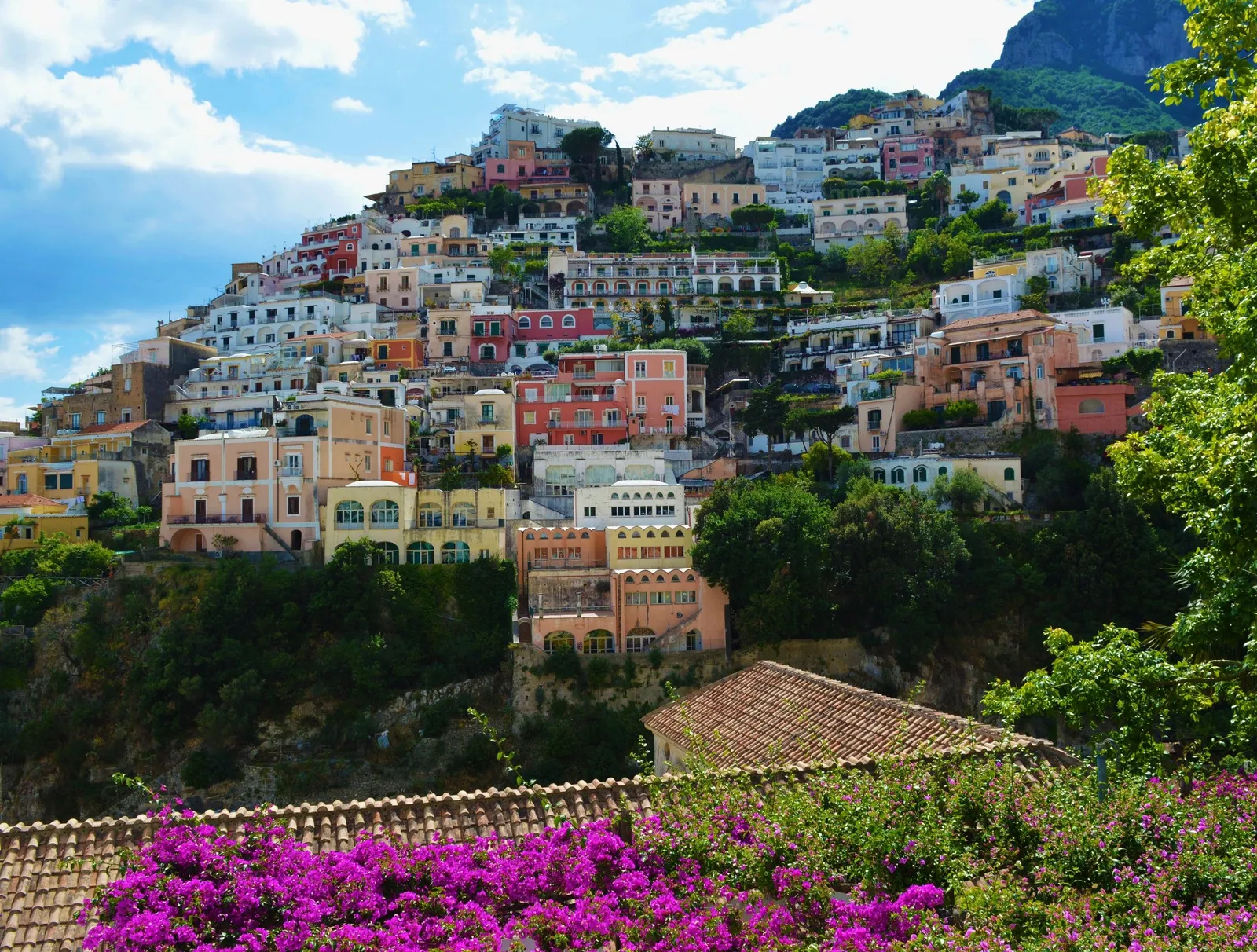
Campania rewards a base rather than a moving itinerary, and Sorrento, on its own headland between the bay and the Amalfi Coast, is the easiest place to stay for five days without ever needing to drive yourself. From there you can reach the buried city of Pompeii and the crater of Vesuvius, the cliffside towns of Positano and Amalfi, the island of Capri and underground Naples, all by ferry, bus or a short train ride. Read our Naples first-timer’s guide if you plan to spend any real time in the city itself, since it deserves more than a passing afternoon.
Itinerary at a glance
| Day | Base | The signature experience |
|---|---|---|
| 1 | Sorrento | Walking the frescoed streets of Pompeii |
| 2 | Amalfi Coast | The viewpoint over the coast from Ravello |
| 3 | Capri | The single-seat chairlift up Monte Solaro |
| 4 | Naples | Underground Naples and the archaeological museum |
| 5 | Sorrento or Paestum | The three Greek temples, older than most in Greece |
Day 1: Pompeii and Vesuvius
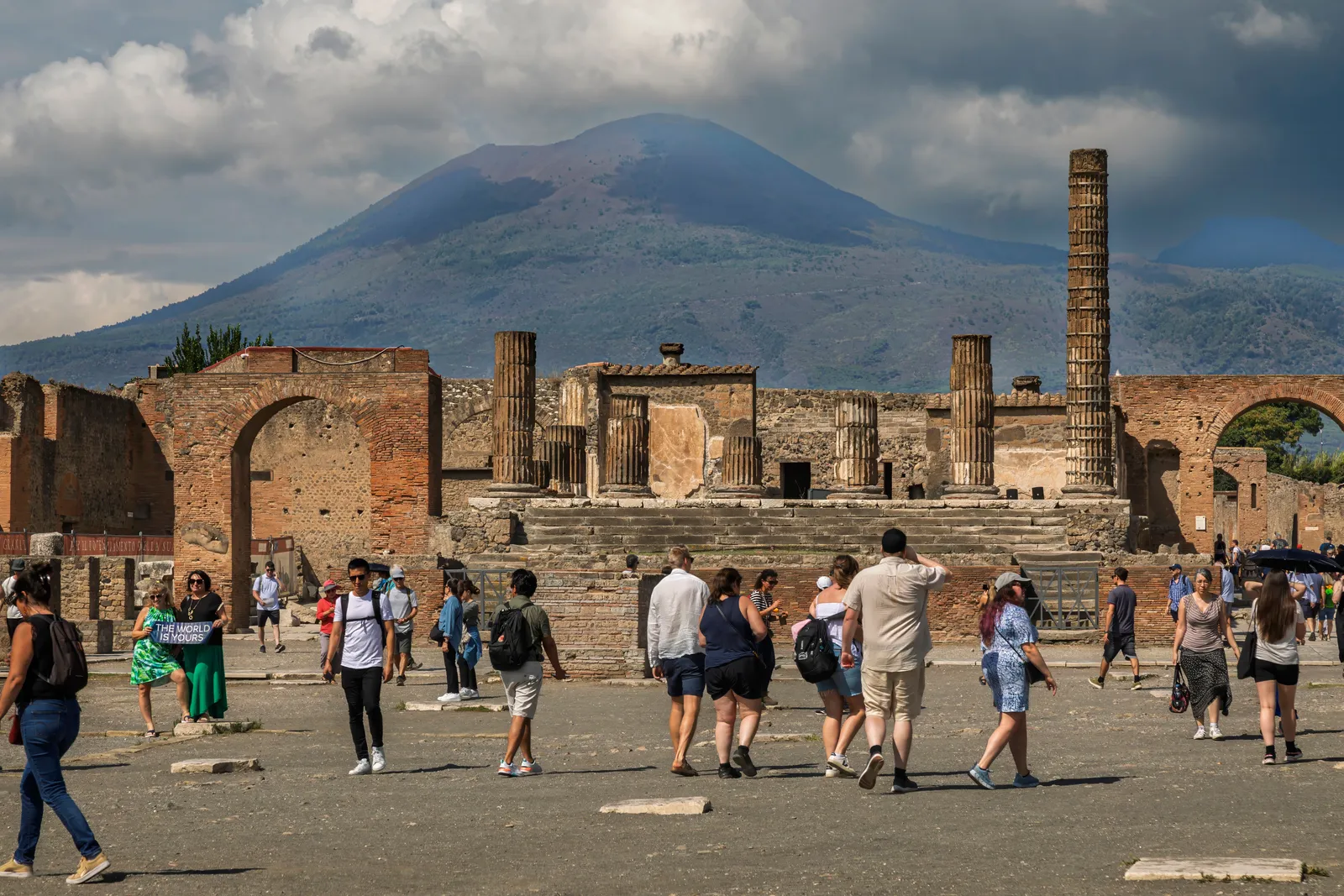
Give the morning to Pompeii, the Roman city buried and preserved by the eruption of Vesuvius in AD 79. The site is large, roughly the size of a small town, and a guide who can read the frescoes and the plaster casts of the victims turns a field of ruins into a place people actually lived; without one, pick up the site plan and focus on the forum, the amphitheatre and a couple of the better-preserved villas rather than trying to see everything. In the afternoon, continue up to Vesuvius itself. The road climbs partway, then a marked path leads the rest of the way to the crater rim, where you can look down into the volcano that destroyed the city below; a timed ticket is required and numbers are capped, so book before you set out.
Stop for lunch on the way, ideally for a proper Neapolitan pizza, cooked fast in a wood-fired oven with a soft, blistered crust; the style was born in this region and the difference from pizza elsewhere is real. Wine grown on the volcano’s own slopes, using grapes that thrive in the mineral-rich soil, is worth a glass with the meal if you are not driving yourself.
Food: a wood-fired Neapolitan pizza on the way, and a glass of wine grown on Vesuvius’s own volcanic soil.
The signature experience: walking Pompeii’s streets and frescoed houses with a guide who can explain what you are looking at.
Optional tour: a combined Pompeii and Vesuvius day tour that handles the timed volcano ticket and the transfer between the two.
Day 2: The Amalfi Coast
Leave the driving to someone else today. The coast road between Sorrento, Positano and Amalfi is narrow, cut into the cliff face and famously slow, and going by ferry or the local bus is both less stressful and, on a clear day, a better view than being behind the wheel. If you would rather take it on yourself another day, our notes on driving in Italy cover the licence and rules you will need. Positano tumbles down to a small beach in tiers of pastel-coloured houses, and is best appreciated by walking down through it rather than trying to see it from a car. Amalfi itself, the town that gave the coast its name, has a striped cathedral worth a look and a slower pace once the day-trip boats leave.
Push on, by bus, up to Ravello, perched high above the coast. The gardens of its clifftop villas are the reason people come: terraces that drop straight to the sea, framed by columns and statues, with the whole gulf spread out below. Lunch anywhere along the coast should include lemon pasta, made with the enormous lemons grown on terraces above the sea, and the coast’s fried anchovies as a starter; finish with a proper limoncello, which is made from the same lemons and tastes nothing like the bottled version sold elsewhere.
Safety note: the coast road is narrow and prone to summer traffic jams, and ferries between the towns are weather dependent, so build slack into the day and have a backup plan if the sea is rough.
Food: lemon pasta and fried anchovies on the coast, and a limoncello made from the region’s own lemons.
The signature experience: the clifftop gardens of Ravello, terraces that drop straight down to the Gulf of Salerno.
Optional tour: a small-group Positano and Amalfi boat trip that gives you the coastline from the water, which is how it is meant to be seen.
Wow moment: the viewpoint from the gardens of Villa Cimbrone in Ravello, a terrace lined with statues that ends abruptly at a low wall with nothing but the Gulf of Salerno below.
Day 3: Capri
Take the ferry across to Capri for a full day. The Blue Grotto, a sea cave where sunlight reflected through the water turns everything an intense blue, is the island’s best-known sight, but access is by small rowing boat and depends entirely on the sea state; it can close at short notice, so treat it as a bonus rather than the plan. Away from the crowds around the main piazzetta, Anacapri, the quieter town higher up the island, is worth the detour for its slower pace and its own small sights.
For lunch, order insalata caprese, the tomato, mozzarella and basil salad that takes its name from the island and is said to have been invented here; it is naturally vegetarian and, without the bread that sometimes comes alongside, gluten-free too. Finish with gelato on the main piazzetta, watching island life go by, even if the seating there is not cheap.
Food: insalata caprese where the dish is said to have originated, and gelato on the piazzetta.
The signature experience: riding the single-seat chairlift from Anacapri up Monte Solaro, the highest point on the island, for a view that takes in the whole Bay of Naples.
Optional tour: a Blue Grotto boat trip bundled with a wider island tour, so the day still works if the grotto itself is closed.
Day 4: Naples
Take the train into Naples for a day in one of Italy’s most intense and rewarding cities. The historic centre is a dense grid of narrow lanes, baroque churches and street life that spills out of doorways, and it rewards walking without too fixed a plan. Descend into Napoli Sotterranea, the network of tunnels, cisterns and Roman-era passages that run beneath the modern streets, for a completely different view of the city’s history than anything at street level.
The Museo Archeologico Nazionale holds the finds from Pompeii and Herculaneum, including mosaics, frescoes and sculpture moved here for preservation, and is worth an hour or two if you want to understand what you saw on day one. For food, this is the birthplace of the pizza you had earlier in the trip, so have it again properly in the city itself, and try sfogliatella, the shell-shaped layered pastry filled with sweetened ricotta, alongside a strong Neapolitan espresso taken standing at the bar.
Food: sfogliatella and a Neapolitan espresso at the counter, and pizza again, this time in the city where it was born.
The signature experience: descending into Napoli Sotterranea, the tunnels and cisterns that run beneath the modern city.
Optional tour: an underground Naples tour that includes a stretch of Roman-era passage not open to visitors without a guide.
Day 5: Sorrento or Paestum
Use the last day either to slow right down in Sorrento itself, walking the clifftop gardens and the old town at a pace the rest of the week has not allowed, or to head south to Paestum for one of Campania’s genuine surprises. Paestum holds three Greek temples, built centuries before Pompeii existed, and they are better preserved than almost anything standing in Greece itself; the site is large, mostly open to the sky, and rarely crowded even in high season.
If you choose Sorrento, spend the morning in the old town’s lemon-scented lanes and the afternoon on the clifftop paths above the marina, with a last plate of local seafood before you leave. If you choose Paestum, pair it with the small on-site museum, which holds painted tomb frescoes found nearby that are among the most important surviving examples of ancient Greek painting anywhere.
Food: a final plate of local seafood in Sorrento, or a simple lunch near the temples if you head to Paestum.
The signature experience: standing among Paestum’s three Greek temples, or a slow last morning in Sorrento’s old town.
Optional tour: a Paestum and museum tour that connects the temples to the painted tomb frescoes found nearby.
Practical tips
Book Pompeii, the Vesuvius crater and the Blue Grotto ahead where you can, since all three depend on capped numbers or the weather and can sell out or close without warning. Ferries between Sorrento, Positano, Amalfi and Capri are the easiest way to move around and avoid the coast road, though schedules thin out and some routes stop altogether outside the summer season, so check current timetables against our Italy weather by month notes before you plan each day. Confirm opening hours and ticket prices with official sites, since they shift through the year, keep the plan flexible along the coast, especially if the sea is rough, and take out travel insurance before you go given how much of the week depends on boats and timed tickets.